[ad_1]
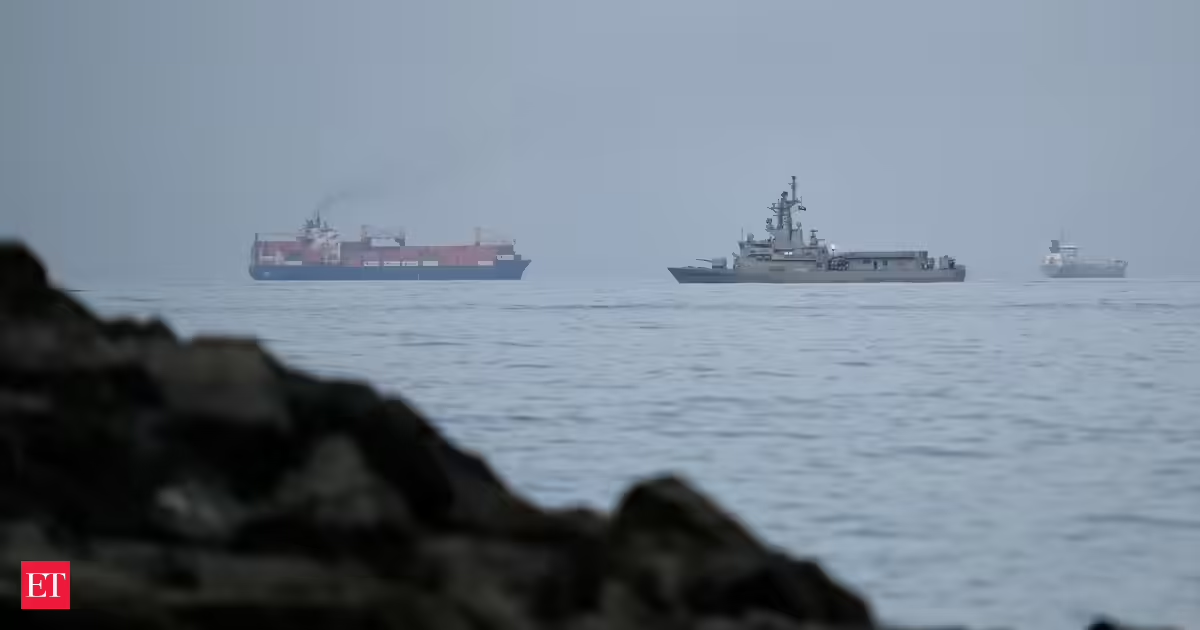
A trio of very large crude carriers — all without direct links to Iran — began to approach the narrow waterway from the Gulf of Oman late on Saturday, ship-tracking data show, arriving near Iran’s Larak island early on Sunday. At that effective checkpoint, Iraq-bound Agios Fanourios I and Pakistan-flagged Shalamar, destined for Das island in the United Arab Emirates, turned back.
ALSO READ | Bangladesh eyes India route to refine Russian crude amid supply crunch
A third VLCC, Mombasa B, moved ahead through the Iran-approved channel between Larak and Qeshm islands into the Persian Gulf and is not indicating a clear destination.
The reasons for the U-turns by the other vessels—and the successful passage of the third—remain unclear. Both Iraq and Pakistan had earlier secured Iran’s approval to transit the strait, but the reversals coincided with talks in Islamabad ending without an agreement.
The Strait of Hormuz is one of the world’s most important energy thoroughfares and its effective closure since the US and Israel began strikes on Iran six weeks ago has resulted in unprecedented supply disruption. Its reopening has been a crucial point of discussion during weekend negotiations, but remains an area of disagreement.
ALSO READ | Iran and US fail to reach a deal after 21 hours of negotiations in Pakistan, says J D Vance
Iran throughout the war exercised its global economic leverage by asserting control of the important maritime route, sending oil prices soaring and piling political pressure on Trump as Americans complained of rising costs at the pump.
The US military said Saturday that two Navy warships transited through the strait to begin clearing it of mines and ensure it is a “safe pathway” for tankers.
The Iranian military denied that any American warships had entered the waterway and threatened to respond if they do so.
The Revolutionary Guards’ Naval Command said Iranian promises of safe passage during a two-week ceasefire applied only to “civilian vessels under specific conditions”.
The United States is heavily impacted by soaring oil prices on global markets but imports less directly from the Gulf than many of its European allies — which Trump has berated for not joining a war that they were not consulted about beforehand.
“We’ll open up the strait even though we don’t use it, because we have a lot of other countries in the world that do use it that are either afraid or weak or cheap,” Trump said.
In recent weeks, several ships have attempted to transit the strait only to abort their efforts, reflecting a constantly changing security situation and persistently high risks. The vast majority have been attempting to leave the Persian Gulf, but empty tankers are also needed inside, to be loaded with new cargoes.
Two Chinese container ships U-turned late last month before finally successfully exiting, while a liquefied natural gas carrier turned back last week.
After hours of negotiations in Pakistan between US and Iran, talks have reached a stalemate as US Vice President JD Vance said that no agreement has been reached in talks with Iran. He said that while they would be returning to the US, the development is a “bad news for Iran” than it is for the United States.
Addressing reporters from Islamabad, Vance said that during the negotiations that took place for 21 hours, several substantial discussions were held however, no conclusions were reached.
“We’ve had a number of substance agreements with the Iranians- that is the good news. The bad news is that we have not reached an agreement. That is bad news for Iran, much more than it is bad news for the United States of America.”
(With inputs from agencies)
[ad_2]