[ad_1]
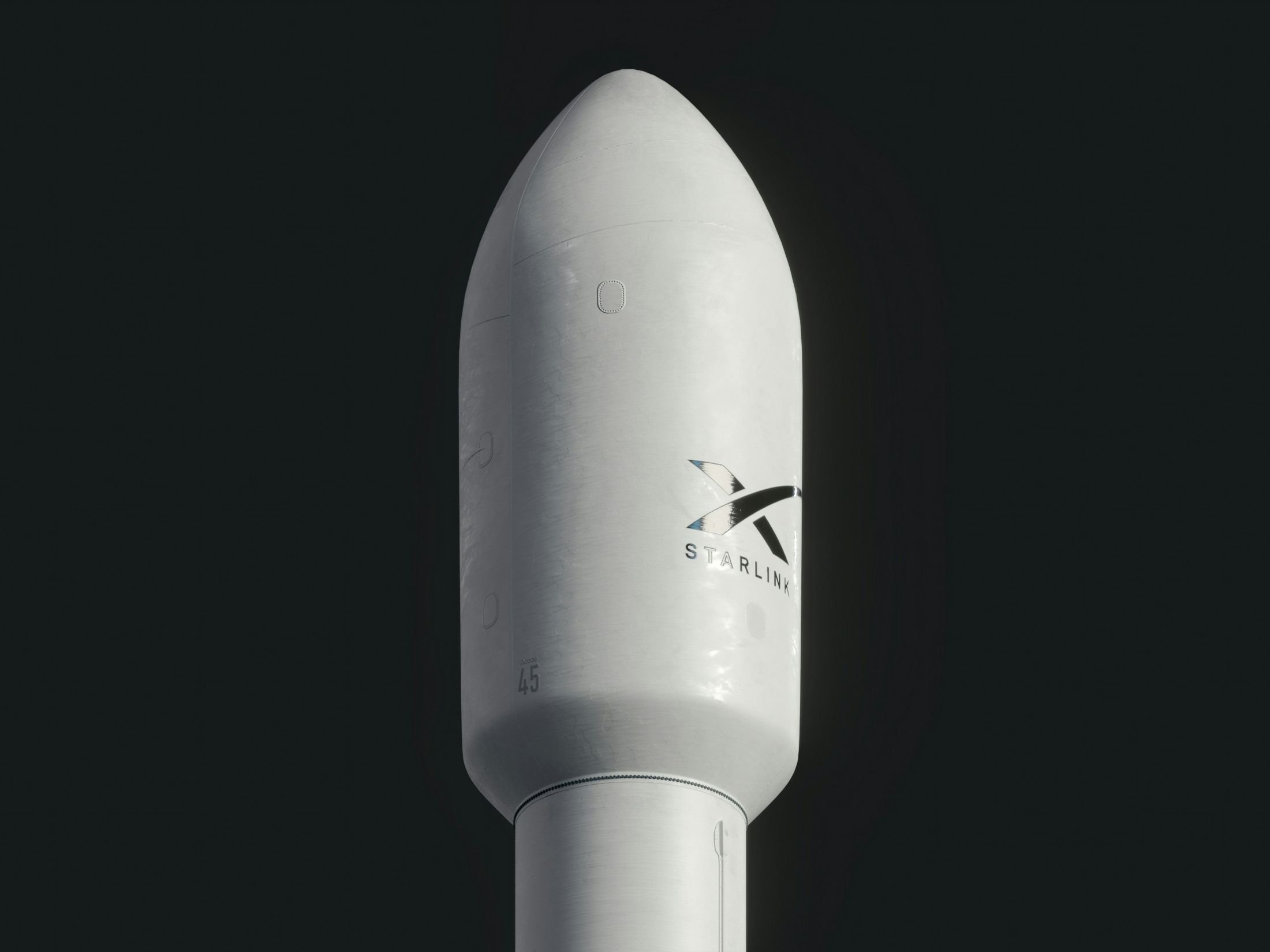
Deutsche Telekom has launched a satellite-based broadband offering for business customers using the Starlink LEO constellation.
The company is packaging the connection as a fully managed enterprise service to help businesses extend corporate Wide Area Networks (WAN) into geographically isolated areas where terrestrial infrastructure is too expensive.
Connecting remote sites like offshore wind farms, mines, or agricultural facilities usually required expensive physical fibre cabling or GEO satellite links. While GEO satellites offer wide coverage, their 35,000-kilometre orbit introduces latency often exceeding 600 milliseconds, making them unsuitable for industrial protocols that need real-time data.
Starlink’s LEO constellation orbits much closer, reducing latency to between 30 and 50 milliseconds. By offering this as a managed service, Deutsche Telekom handles satellite procurement and network routing, letting enterprises add LEO connectivity to their existing broadband and cellular contracts.
Edge automation challenges
Industry 4.0 relies on continuous telemetry. Sensors on heavy equipment, autonomous vehicles, and predictive maintenance algorithms need consistent uplink and downlink speeds. Without stable connections, systems default to offline operation, forcing local data batch-processing and delayed uploads.
This limitation often stalls edge automation projects. For example, an autonomous mining truck generates gigabytes of daily lidar and operational data. To coordinate safely, the truck must exchange time-sensitive packets with a control server. LEO connections ensure these messages arrive within the tight timeframes safety systems require.
Having a tier-one telecoms provider manage this is important for enterprise adoption. Buying a commercial Starlink dish is simple, but securely wiring it into a regulated corporate network requires dedicated IP addressing, enterprise-grade routing, and strict encryption.
Deutsche Telekom provides the integration, allowing traffic to route from the satellite receiver into the provider’s mobile core. Companies can broadcast a private 5G network over a remote site, using the satellite as a backhaul link to the corporate data centre to bypass the public internet entirely.
Starlink LEO backhaul architecture
Network architects cannot just attach a satellite receiver to a core switch and expect faultless reliability. Because the LEO constellation consists of thousands of rapidly moving satellites, the ground receiver must constantly track and hand off connections between nodes.
These handoffs can cause micro-outages or packet jitter. While a dropped packet during a video call is barely noticeable, industrial protocols like MQTT or OPC UA react poorly to inconsistent delivery and can trigger safety shutdowns. To prevent this, enterprises deploy Software-Defined Wide Area Networking (SD-WAN) appliances at the edge, directly behind the satellite terminal.
SD-WAN controllers monitor link health in milliseconds. By deploying a satellite terminal alongside a secondary connection, the SD-WAN router can steer high-priority control traffic over the most stable path, pushing lower-priority traffic through the alternative route to maximise uptime.
“Reliability is our promise: with Starlink, the sky becomes the backup line. The solution ensures connectivity exactly where it is essential for operations – on large construction sites, in remote areas or in crisis situations,” says Klaus Werner, Managing Director of Business Customers at Deutsche Telekom.
Security architecture also changes. Starlink encrypts traffic at the hardware level, but enterprise security usually requires overlay encryption. Building IPsec tunnels over a satellite connection introduces packet overhead, slightly reducing available throughput. Network administrators need to account for this when provisioning bandwidth for peak periods.
Remote connectivity economics
Extending an enterprise network into isolated terrain usually involves high capital expenditure. Funding base stations, backhaul trenching, or microwave towers can be prohibitively expensive.
Managed LEO services shift this financial model. Capital expenditure drops to the cost of the edge router and satellite terminal, while the remaining expense transitions to a monthly operating cost governed by a service level agreement (SLA).
This structure allows companies to standardise deployments globally. A multinational firm can specify the same network hardware and satellite backhaul for every location, reducing configuration variations, lessening IT support burdens, and accelerating deployment.
Companies evaluating this approach should audit their remote site infrastructure. This starts by mapping facilities dependent on legacy VSAT (Very Small Aperture Terminal) networks or private microwave links to weigh early termination penalties against the gains of migrating to LEO.
IT departments also need to check the lifecycle of their edge routers. Older equipment may lack the processing power to manage modern SD-WAN protocols and encryption at LEO gigabit speeds, making upgrades necessary.
Organisations must negotiate strict terms with providers to account for unpredictable space variables like atmospheric drag or solar weather. Contracts need specific assurances regarding acceptable packet loss, maximum jitter, and hardware replacement times. Treating the satellite link as a standard managed utility helps businesses push automation to the edges of their operations.
See also: Microsoft brings sovereign edge AI to Industry 4.0 private networks
Want to learn more about the IoT from industry leaders? Check out IoT Tech Expo taking place in Amsterdam, California, and London. The comprehensive event is part of TechEx and is co-located with other leading technology events including AI & Big Data Expo and the Cyber Security Expo. Click here for more information.
Telecoms is powered by TechForge Media. Explore other upcoming enterprise technology events and webinars here.
[ad_2]