[ad_1]
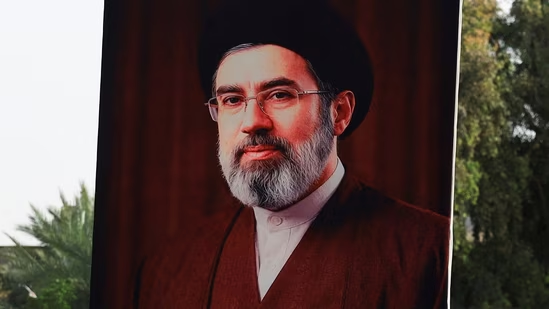
Mojtaba Khamenei, Iran’s newly elevated Supreme Leader, is undergoing treatment for a “severe” medical condition in Qom and is reportedly unconscious, according to a report by The Times citing an intelligence assessment.
The report, published Tuesday, said a diplomatic memo based on intelligence inputs from the United States and Israel — shared with Gulf allies — indicates that Khamenei is incapacitated and unable to participate in governance.
“The memo reveals for the first time that Mojtaba Khamenei is being treated in Qom in a severe condition, unable to be involved in any decision-making by the regime,” the newspaper reported, adding that it had reviewed the document.
Track Live Updates on US-Iran war here
The assessment has reportedly been circulated among Western and regional intelligence networks. National Security Agency, which processes global intelligence for Washington, has been contacted regarding the memo, along with Iran’s diplomatic representation in Washington, currently operating through the Pakistani embassy.
Where is Khamenei?
Mojtaba Khamenei has not made any public appearances since the outbreak of the ongoing West Asia conflict, with statements attributed to him instead being broadcast via Iranian state media, the report noted.
In a separate and unverified claim, the report also said that preparations are underway in Qom for the burial of Iran’s former Supreme Leader, Ali Khamenei.
Trump’s ultimatum to Iran
The development comes amid escalating tensions between Washington and Tehran. Donald Trump has issued a drastic ultimatum to Iran, demanding a deal to end the conflict by 8 pm Eastern Time on Tuesday.
Speaking at the White House, Trump described the moment as a “critical period” and warned of severe consequences if Tehran fails to comply.
“They asked for an extension of seven days; I gave them 10 days… They have till tomorrow. After that, they are going to have no bridges. They are going to have no power plants. Stone ages,” he said.
Trump further claimed that the US had significantly weakened Iran’s capabilities since the conflict began on February 28.
“I’m standing here with a much more powerful Iran than a month ago — not anymore. Right now, they are decapitated,” he said, adding that such action should have been taken decades earlier.
[ad_2]