[ad_1]
India’s startup ecosystem has entered a more mature and disciplined phase, where capital alone is no longer enough. Founders are now expected to build sustainable, governance-led businesses, and investors are stepping in as active partners rather than passive capital providers.
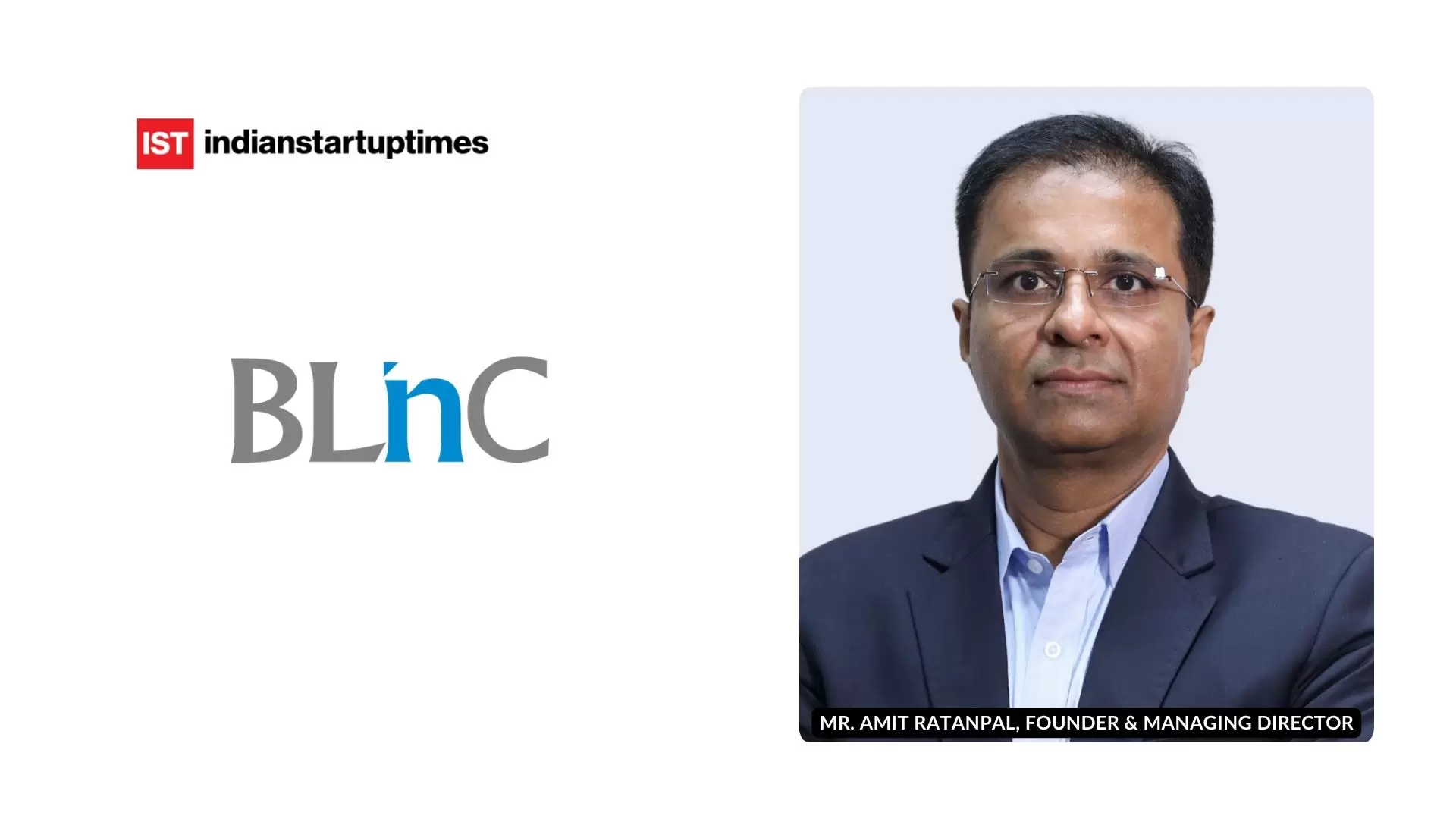
In this context, Amit Ratanpal, Founder & Managing Director of BLinC Invest, stands out for championing an operations-first investment approach. With over two decades of experience across financial services, venture capital, and private equity, he has built a model that goes beyond funding to actively shaping businesses from the inside.
In this conversation with Indian Startup Times, Amit shares insights from his journey, the evolution of founder mindset in India, and how BLinC Invest is redefining venture investing through deep operational involvement.
From Building Businesses to Backing Them
Amit’s journey into investing was not linear. Starting his career in financial services, he spent over a decade building new businesses within large institutions like ICICI Bank.
Reflecting on this phase, he explains that his core instinct was always entrepreneurial. Even within structured organizations, he gravitated towards creating and scaling new verticals. This experience became the foundation for his transition into venture capital.
Over the last 15 years, he has focused on investing in two sectors—financial services and education—while consistently delivering outcomes for investors. But more importantly, he has shaped a philosophy that investing should not be detached from execution.
“I have always seen myself as a business builder first, and an investor second,” he says. “That mindset defines how we work with founders.”
Why a Hands-On Investment Model Works
BLinC Invest positions itself as an operations-focused investor, a deliberate departure from traditional VC models.
Instead of spreading capital across a large number of startups, the firm invests in a smaller portfolio and works closely with each company. This includes building finance teams, defining processes, hiring leadership, and aligning short-term execution with long-term strategy.
Amit explains that every company requires different types of support depending on its stage. A startup doing a few crores in revenue needs basic accounting structures, while a company scaling beyond ₹100 crore needs a full-fledged finance organization.
To ensure structured growth, BLinC follows a disciplined approach:
- Clear 30-60-90 day execution plans
- Long-term strategic alignment with founders
- Regular on-ground engagement, especially in the first 12–18 months
He acknowledges that this approach sometimes blurs boundaries between investor and operator. However, the intent is always to support, not override.
“The founder drives the company. We are there to strengthen the journey, not control it,” he notes.
The Shift in Founder Mindset
One of the most significant changes Amit highlights is the evolution of founder maturity in India.
During the funding boom between 2020 and 2022, capital was easily available and growth often took precedence over fundamentals. However, the correction phase brought a sharp shift in thinking.
Today, founders are more grounded. The focus has moved to:
- Revenue and profitability
- Sustainable business models
- Cash flow discipline
- Real customer value
“It’s no longer about the next valuation. It’s about building something that lasts,” Amit says.
At the same time, investors have also evolved. There is now greater willingness to back young founders, even those early in their careers, as long as they demonstrate clarity, passion, and adaptability.
What BLinC Looks for in Founders
While domain expertise matters, Amit emphasizes that founder mindset ultimately determines success.
Over the years, BLinC has refined its evaluation criteria, placing strong emphasis on softer traits such as:
- Openness to feedback
- Ability to adapt and evolve
- Customer-centric thinking
- Willingness to build teams and organizations
He believes that founders who are overly rigid or driven by personal validation rather than business outcomes often struggle to scale.
“A great founder is not just someone who understands the sector deeply, but someone who can build people, processes, and culture around that vision,” he explains.
Sectoral Outlook: Where the Opportunities Lie
BLinC Invest continues to focus on financial services and education, but within these sectors, Amit sees several emerging opportunities.
Financial Services
The sector remains the largest recipient of startup capital in India. However, the nature of opportunities is evolving.
Key areas of interest include:
- Wealth and asset management: With rising financial awareness, especially in Tier 2 and Tier 3 cities
- Insurance: Still underpenetrated, with strong long-term growth potential
- Collections and credit infrastructure: Becoming critical as lending scales
- Regional lending models: Focused on underserved geographies
“As wealth creation increases, the need for structured financial planning and asset management will grow significantly,” he notes.
Education
In education, Amit points out a clear funding gap across several large but underexplored segments.
While test preparation has seen heavy investment, areas like:
- Early childhood education
- K-12 infrastructure
- Higher education ecosystems
- Study abroad services
remain relatively underfunded despite their large market sizes.
BLinC has actively built investment theses in these segments, identifying opportunities where capital and structured execution can unlock significant value.
Portfolio in Action: Translating Thesis into Execution
BLinC’s approach is reflected in its portfolio choices.
For instance:
- Investments in MSME finance are backed by detailed research into the entire value chain, including supply chain financing and secured lending models
- In early childhood education, BLinC has backed platforms focused on parent-led learning and cognitive development
- In study abroad, the firm has supported companies addressing growing global education demand
Each investment is guided by a clearly defined thesis rather than opportunistic decision-making.
The Screen Time Debate in Education
On the growing concern around screen time for children, Amit offers a balanced perspective.
He differentiates between passive screen usage—like gaming or content consumption—and purposeful, structured use of technology for learning.
For younger children, especially in the 0–6 age group, he stresses the importance of hands-on, experiential learning to support brain development. However, as children grow older, technology becomes an integral part of education and cannot be avoided.
“The question is not screen or no screen. It’s about how and why the screen is being used,” he explains.
Advice for First-Time Founders
Closing the conversation, Amit shares a simple but grounded message for early-stage founders.
He encourages them to focus on:
- Building real value for customers
- Staying adaptable and open to learning
- Prioritizing long-term sustainability over short-term hype
- Developing strong teams and organizational culture
Above all, he stresses the importance of intent.
“Build a business because you believe in solving a problem—not because you want to chase valuation,” he says.
Conclusion
As India’s startup ecosystem matures, the role of investors is undergoing a fundamental shift. The future belongs to those who can combine capital with capability, and strategy with execution.
Amit Ratanpal’s journey and BLinC Invest’s operating model reflect this shift clearly. By working closely with founders and embedding themselves in the growth journey, they are not just funding startups—they are helping build enduring businesses.
In a landscape where discipline is replacing exuberance, this hands-on, value-driven approach may well define the next phase of venture investing in India.
Interview conducted by Sandhya Bharti
[ad_2]