[ad_1]
Brandan Mehaffie had been doing triathlons for about five years when he suddenly found himself struggling to finish a race. “I felt like I was dragging the whole left side of my body, which, as it turns out, I was,” Mehaffie said.
Over time, the Elizabethtown resident noticed more problems: shaky hands, muscle cramps and joint pain. At 40, he learned he had Parkinson’s disease.
April is National Parkinson’s Awareness Month, a time to raise awareness about a disease that affects about 1.1 million Americans. Today, advanced treatments are helping people like Mehaffie stay active longer.
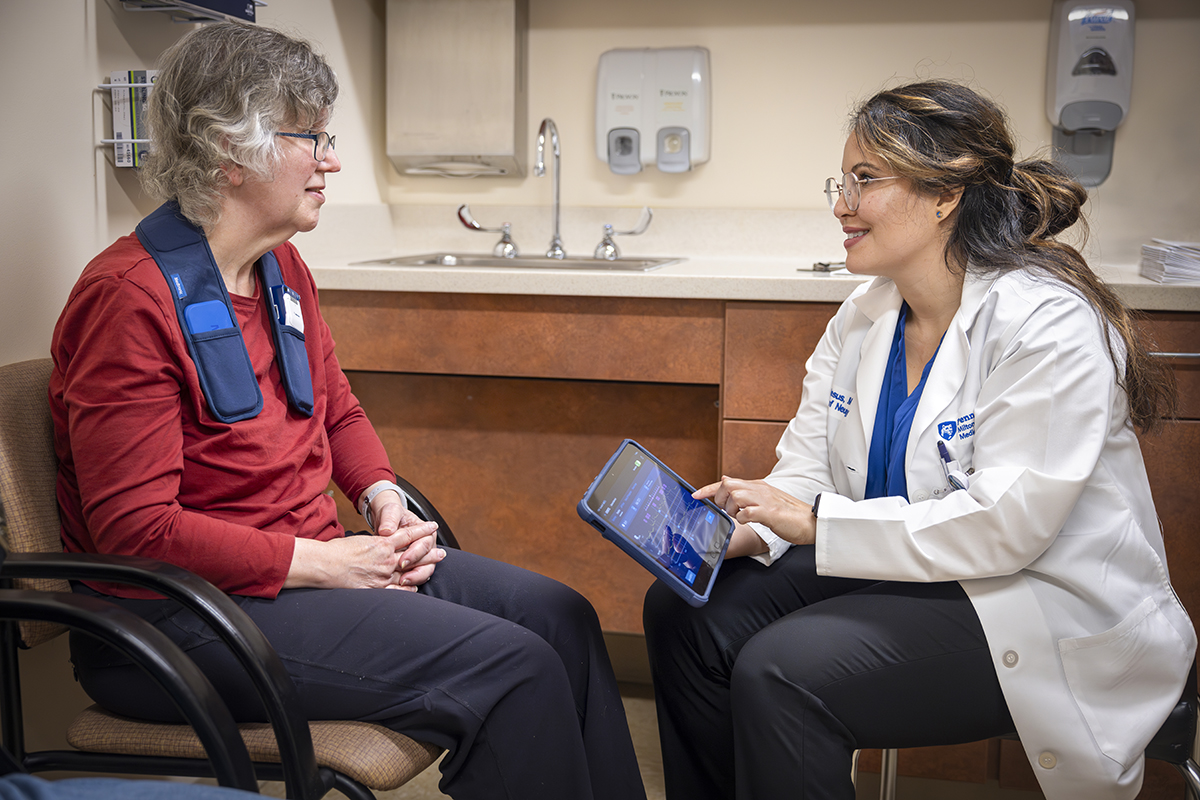
“With the right team and the right plan, people with Parkinson’s can have independent, high-functioning lives,” said Dr. Sol De Jesus, a neurologist at Penn State Neuroscience Institute.
What is Parkinson’s disease?
Parkinson’s disease is a progressive movement disorder. Inside the brain, cells that produce dopamine, a brain chemical that helps control movement, start dying early.
“We don’t know exactly what causes Parkinson’s disease, but several factors may contribute, such as aging, environmental exposures and genetics,” De Jesus said.
Most patients are diagnosed in their 60s, but about 10% learn they have Parkinson’s before age 50.
What are the symptoms?
Parkinson’s disease symptoms can vary. Many people associate Parkinson’s with tremors, although up to 20% to 30% of patients might not experience them. The symptoms that tend to bother patients most are slowness and stiffness, or trouble starting movements, said Dr. James McInerney, a neurosurgeon at Penn State Health Neurosurgery.
“Patients often tell me they’re having a hard time doing things, such as getting up out of a chair or walking down the hall,” he said. “They’ll shuffle or be unsteady.” Early signs of Parkinson’s often begin on one side of the body. Some people also notice changes in smell or taste, sleep disruption, mood changes or constipation.
What are the latest treatments for Parkinson’s disease?
There is no cure for Parkinson’s disease. The goal of Parkinson’s disease treatment is to ease symptoms and improve daily life.
Doctors often start with lifestyle changes, such as exercising 30 minutes a day and improving sleep. When symptoms interfere with work or family responsibilities, treatments include:
- Medications: Carbidopa-levodopa pills help replace lost dopamine to reduce symptoms. Some people opt for pumps that deliver medication under the skin for steadier relief. However, these devices can also restrict movement. Parkinson’s medications can cause involuntary, dance-like movements called dyskinesias. Over time, the side effects can be disruptive or symptom relief might wane. That’s when doctors might suggest more advanced options.
- Focused ultrasound: This procedure uses ultrasound waves to create tiny lesions in brain regions involved in tremors. In 2017, the U.S. Food and Drug Administration (FDA) approved focused ultrasound for treating symptoms of Parkinson’s disease on one side of the brain. In 2025, it was approved for use on both sides.
- Deep brain stimulation: A surgeon implants thin electrodes into the brain and a small pacemaker-like device under the skin in the upper chest. The device, called a neurostimulator, delivers targeted electrical impulses to areas of the brain that manage motor control, overriding the faulty signals that cause symptoms
“Brain cells fire at frequencies, just like radio stations have frequencies, and you can think about Parkinson’s disease as a new radio station that showed up,” McInerney said. “Just like any other radio signal, you can jam that signal with a neurostimulator.”
Deep brain stimulation has been used in Parkinson’s disease for decades. In 2025, the FDA approved a more customizable form of this treatment. Adaptive deep brain stimulation responds to changes in the patient’s brain signals throughout the day. The device can be set to automatically adjust stimulation up and down as needed to improve symptom control and potentially extend battery life.
“The system can identify when you need a little boost and then provide it,” McInerney said.
In March 2025, Penn State Health Milton S. Hershey Medical Center became the first hospital in Pennsylvania – and one of the first 23 hospitals nationwide – to offer BrainSense adaptive deep brain stimulation before it was widely available. Mehaffie chose this treatment two months later.
Researchers around the world are also developing and testing new treatment approaches. For example, stem cell and gene therapies show promise for regenerating dopamine-producing cells in the brain.
“Research keeps getting us closer to finding a cure or treatment that resets the brain in Parkinson’s, but unfortunately, we’re not there yet,” McInerney said.
Mehaffie’s deep brain stimulation device helps control his tremors, allowing him to stay active. Last summer, he got back on his bike. He began teaching spin classes and taking boxing classes designed for people with Parkinson’s. He walks his dog and enjoys vacations. This summer, he’s planning to do a 100-mile bike ride in the Finger Lakes.
He says he is glad he opted for deep brain stimulation. “Looking back, with the success I’ve had, I kind of wish I’d done it sooner.”
Related content:
The Medical Minute is a health news feature produced by Penn State Health. Articles feature the expertise of faculty, physicians and staff, and are designed to offer timely, relevant health information of interest to a broad audience.
[ad_2]