[ad_1]
On International Women’s Day 2026, let’s discuss the role that preventive health screenings can play to help women detect diseases at an early stage or manage any major change in their life due to hormonal changes. From reproductive health checks during early adulthood to bone and heart health checks during later adulthood, experts say that health checks are vital to health.
Experts say that health needs change as women progress through their lives, and it is necessary to understand which health checks are most important during each stage of their lives. Gynaecologists say that proactive health checks, vaccinations, and cancer checks can go a long way in improving health outcomes.
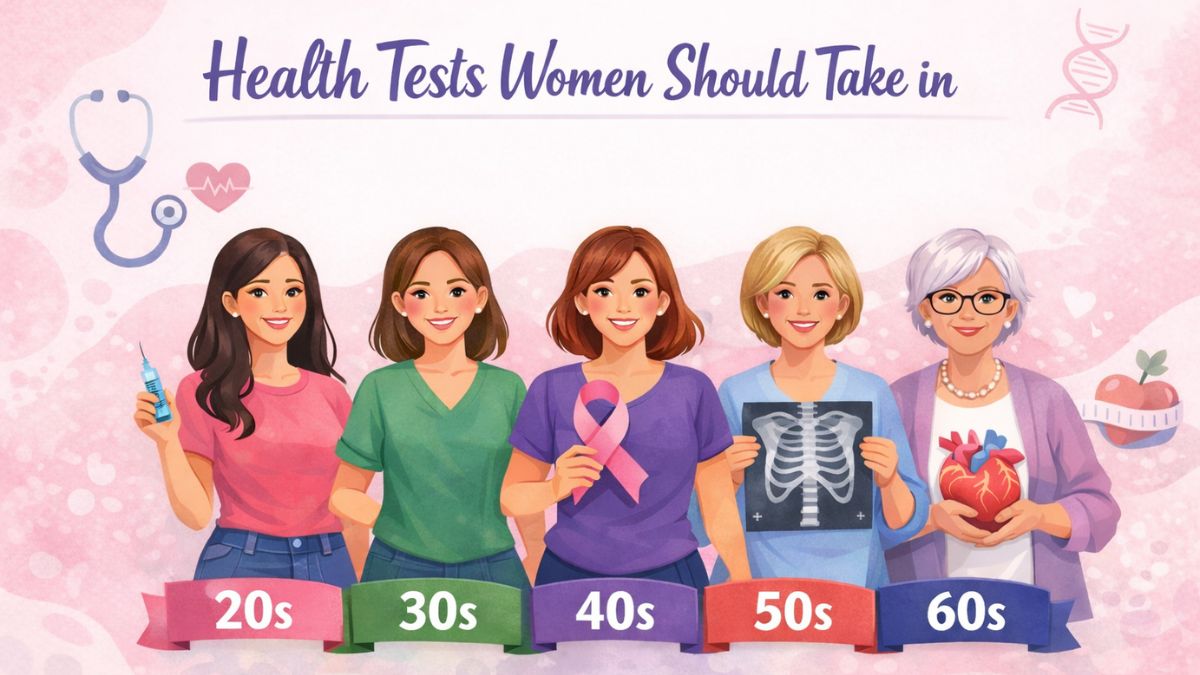
Health tests women should take in their 20s
According to Dr Mangalakeerthi, Consultant – Obstetrics and Gynaecology, Prakriya Hospitals, the 20s are about establishing a strong health baseline. “As a gynaecologist, I always tell my patients that preventive health screening is not optional; it is essential at every stage of a woman’s life,” she said.
In this decade, women should prioritise:
- Pap smear screening to detect cervical cancer early
- HPV vaccination, ideally during adolescence or early adulthood
- Screening for sexually transmitted infections (STIs)
- Basic blood tests including haemoglobin and blood sugar
- Thyroid function tests
- Breast self-awareness and monthly breast self-examination
Experts also stress that menstrual cycles usually stabilise a few years after menarche, and irregular patterns should be evaluated by a doctor. Dr Shruthi Shivdas, Consultant Gynaecologic Oncology at Cytecare Hospitals, explains that the menstrual cycle usually occurs every 21 to 35 days after the first few years of menstruation. Any irregularities need to be evaluated by a gynaecologist.
Health tests women should take in their 30s
In the 30s, screening increased with the rise in concern for reproductive health and metabolic issues. Dr Mangalakeerthi advises women to continue regular cervical cancer screening with a Pap smear and HPV test every 3 to 5 years after they become sexually active.
Other recommended screenings include:
- Clinical breast examinations
- Early mammography in selected cases, especially with a family history
- Blood sugar and diabetes screening
- Cholesterol and lipid profile tests
- Vitamin deficiency tests
- Reproductive health assessments, particularly for women planning pregnancy
Maintaining regular gynaecological check-ups during this decade can help detect early signs of hormonal or reproductive issues.
Health tests women should take in their 40s
The 40s mark an important shift toward cancer screening and monitoring early perimenopausal changes. Dr Shivdas recommends starting mammogram screening for breast cancer from age 40, ideally at least once every two years. Dr Mangalakeerthi also highlights the importance of broader health monitoring, including:
- Annual mammograms
- Blood pressure checks
- Diabetes screening
- Lipid profile tests
- Thyroid testing
- Hormonal evaluations related to perimenopause
Some women may also be advised to undergo baseline bone density testing, particularly if they have risk factors for osteoporosis.
Health tests women should take in their 50s
As many women enter menopause during this decade, screening priorities shift toward bone, heart and cancer health. Experts recommend the following:
- Bone mineral density testing to screen for osteoporosis
- Routine mammography for breast cancer
- Colon cancer screening
- Cardiac risk assessment
- Evaluation of menopausal symptoms
Dr Shivdas notes that perimenopause and post-menopause can bring symptoms such as hot flashes, anxiety, sleep disturbances and bone weakening, which should not be ignored. Women experiencing severe symptoms may consult their doctor about treatment options, including hormone replacement therapy (HRT) where appropriate.
Health tests women should take in their 60s and beyond
In the 60s, preventive care focuses on maintaining long-term health and quality of life. Dr Mangalakeerthi says women should continue routine screenings such as:
- Breast cancer screening
- Bone health monitoring
- Cardiovascular assessments
- Pelvic examinations
- Kidney function tests (RFT)
- Liver function tests (LFT)
- Cognitive health evaluations
Doctors also advise women not to ignore warning signs such as post-menopausal bleeding, persistent abdominal bloating or unusual symptoms, which may require immediate medical attention.
Why preventive screening matters
Health experts emphasise that regular screening allows diseases such as cervical cancer, breast cancer, osteoporosis and heart disease to be detected at earlier, more treatable stages. “Preventive care at every decade empowers women to detect disease early, manage hormonal transitions smoothly, and age with strength and confidence,” Dr Mangalakeerthi said.
Disclaimer: Tips and suggestions mentioned in the article are for general information purposes only and should not be construed as professional medical advice. Always consult your doctor or a dietician before starting any fitness programme or making any changes to your diet
[ad_2]