[ad_1]
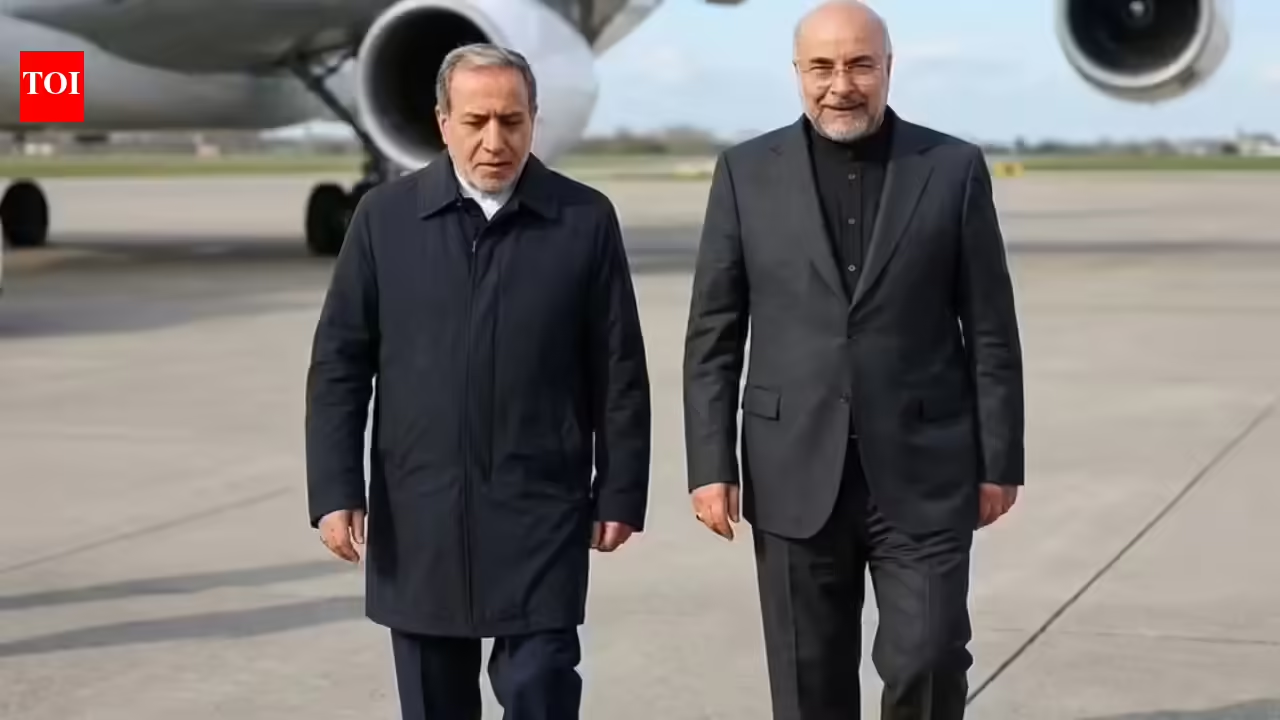
Iranian President Masoud Pezeshkian and Parliament Speaker Mohammad Bagher Ghalibaf are seeking the removal of Foreign Minister Abbas Araghchi, accusing him of acting under the direction of the Revolutionary Guards leadership without informing the presidency, according to a report citing sources familiar with the matter.Two sources told Iran International that Pezeshkian and Ghalibaf believe Araghchi has in recent weeks acted less as a cabinet minister implementing government policy and more as an aide to Ahmad Vahidi, the commander of the Islamic Revolutionary Guard Corps. The sources alleged that Araghchi coordinated closely with Vahidi and followed his directives during sensitive nuclear negotiations without keeping the president informed.The development has reportedly triggered dissatisfaction within Iran’s executive leadership, with Pezeshkian telling close associates that he may dismiss Araghchi if the situation continues.The reported move comes amid widening divisions within Iran’s political and military establishment over the handling of the ongoing conflict and its economic fallout. Earlier reports had pointed to serious disagreements between Pezeshkian and Vahidi over the management of the war and its impact on livelihoods and the national economy.Sources cited in previous reports said the president had expressed frustration at being placed in a “complete political deadlock” and had been unable to exercise authority over key government appointments. Vahidi was said to have asserted that, given wartime conditions, sensitive managerial positions should be directly controlled by the Revolutionary Guards.The internal friction appears to have extended into Iran’s diplomatic engagement with the United States. According to informed sources, disagreements within the negotiating team contributed to its withdrawal from talks in mid-April.Araghchi was said to have shown flexibility during negotiations on issues such as reducing financial and military support to regional allies, including Hezbollah, prompting a strong reaction from senior security officials, including Mohammad Bagher Zolghadr, secretary of Iran’s Supreme National Security Council.US Vice President JD Vance later said the American delegation believed the Iranian team lacked the authority to finalise an agreement without approval from higher leadership in Tehran.The report also highlighted tensions over the leadership of Iran’s negotiating team. Ghalibaf had led the delegation in earlier rounds, including talks in Islamabad, though some hardline lawmakers declined to endorse the team publicly despite broad parliamentary support.Sources indicated that Ghalibaf may have stepped back from the role after facing criticism over attempts to include nuclear energy issues in the talks. Araghchi was reportedly seeking to assume a more prominent role in negotiations following this shift.
Poll
What do you think is most important during major political and diplomatic tensions?
He later travelled to Islamabad on April 24 to deliver Tehran’s proposal, which was subsequently rejected by the US president, according to media reports.While there has been no official confirmation of moves to remove Araghchi, the reported tensions signal deepening internal challenges for the Iranian leadership at a time of heightened geopolitical pressure and stalled diplomacy with Washington.
[ad_2]