[ad_1]
Norman, Okla. – A new University of Oklahoma study — the first of its kind conducted in a real-world field setting over more than a decade — finds that sustained warming significantly increases the abundance, diversity and mobility of antibiotic resistance genes in soil. The research, published in Nature, draws on the unique long-term experiment and offers evidence that warming temperatures could accelerate antibiotic resistance.
Most attention paid to antibiotic resistance has focused on hospitals and agriculture. But soil is among the largest reservoirs of resistance genes on Earth.
“We’ve known for years that soils harbor an enormous diversity of resistance genes,” said Jizhong Zhou, director of the Institute for Environmental Genomics and George Lynn Cross Research professor in the School of Biological Sciences. “What we didn’t know was how warming would change that picture over time and the underlying ecological and evolutionary mechanisms.” Zhou is the senior author on the paper.
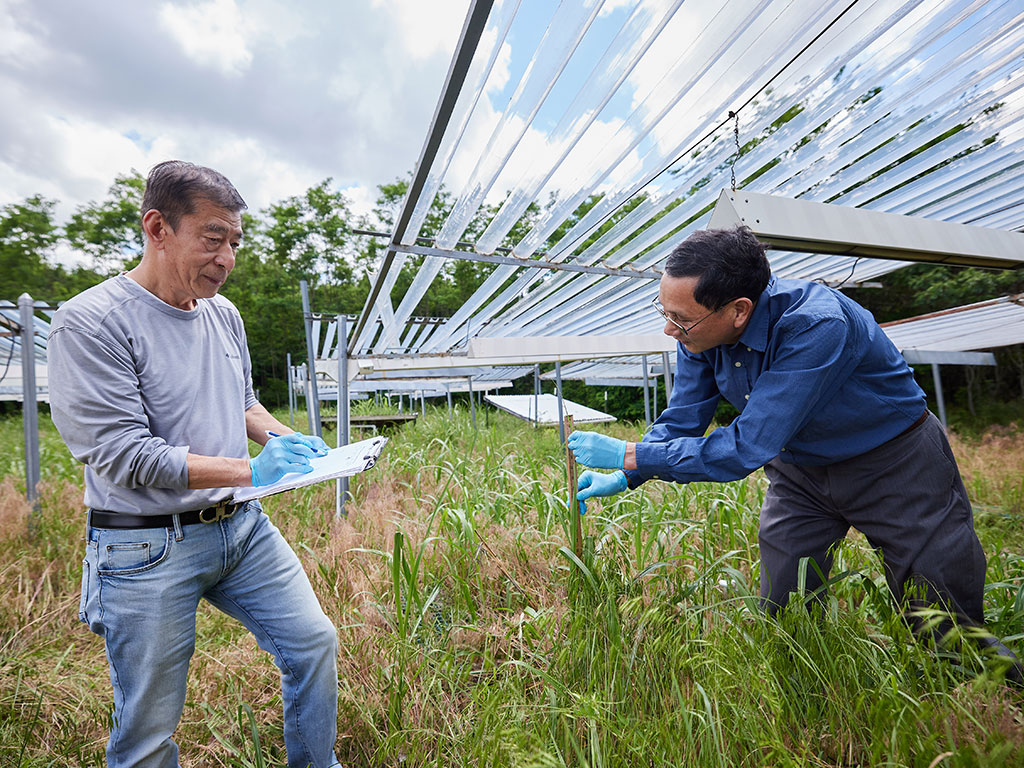
The research team conducted their study at Kessler Atmospheric and Ecological Field Station (KAEFS), a temperate grassland site in Oklahoma that serves as a microbe-centric, long-term warming experiment. Using more than a decade of soil samples, collected before warming treatments began and sustained throughout, the researchers tracked how resistance genes evolved under chronic warming conditions.
The results showed that warming increased not just the number of resistance genes but also their diversity and their ability to spread among bacteria. The researchers found elevated levels of these genes associated with pathogens, along with increased exchange between disease-causing and non-disease-causing bacteria.
The team then traced the mechanism to soil nitrogen. They found that warming increases soil nitrogen levels, which in turn favors the expansion of a bacterial group called Actinomycetota, the primary carriers of antibiotic resistance genes. To confirm the genetic findings, they isolated more than 2,000 bacterial strains and subjected 213 targeted isolates to large-scale antimicrobial susceptibility testing. This effort generated more than 25,000 measurements, confirming that bacteria from warmed plots exhibited significantly higher resistance across diverse antibiotic classes. Most importantly, this is the first demonstration that genetic hitchhiking, where resistance genes are physically linked to adaptive traits like thermal tolerance, is a key evolutionary mechanism driving soil resistome dynamics
The findings suggest that warming could intensify the role of soils as reservoirs of resistant bacteria, with consequences for plant, animal and human health. Human-driven nitrogen deposition may compound the effect, potentially amplifying the effect. The researchers say management strategies worth exploring include optimizing soil nutrient levels, adjusting fertilization practices and targeted microbiome interventions aimed at reducing the spread of resistance genes.
[ad_2]