[ad_1]
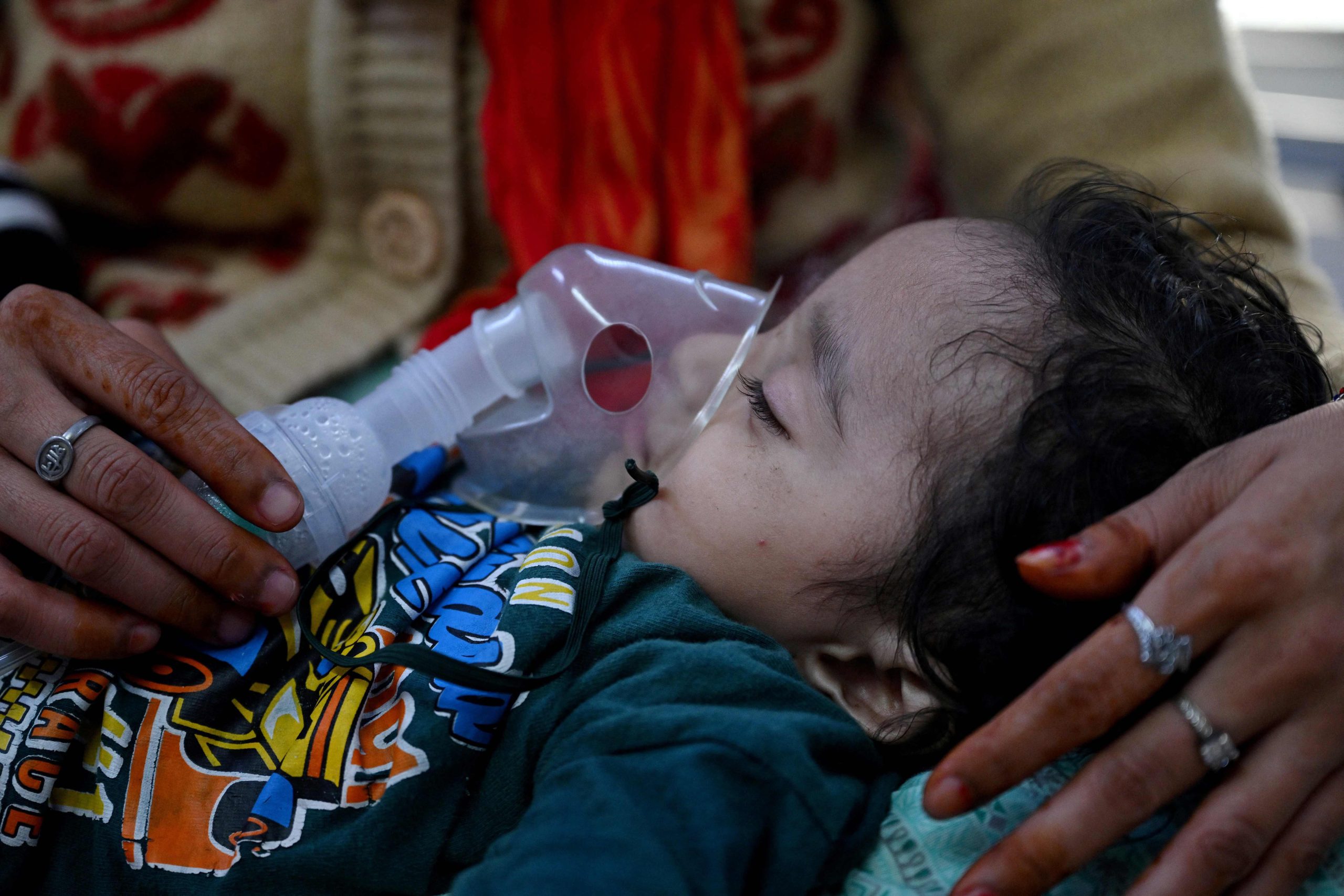
Bangladesh is currently witnessing one of its worst measles outbreaks in recent history, with over 250 deaths, a majority of them children. Due to the severity in Bangladesh, the World Health Organisation (WHO) has raised concerns about the highly contagious viral disease spreading across borders and triggering outbreaks in countries like India and Myanmar. India, as an expert pointed out, remains highly vaccinated against measles, but can’t let its guard down.
The WHO said the measles outbreak had gripped 58 of 64 districts of Bangladesh across all eight divisions. Bangladesh had a high rate of immunisation, but a drop in the last two years, especially in 2025, made the measles outbreak deadly.
“Since March 15 this year, 43 people have died of measles. During the same period, the number of suspected measles deaths is 216,” reported Bangladesh Sangbad Sangstha on April 26. At least 91% of the measles cases are among children between one and 14, reported The Daily Star.
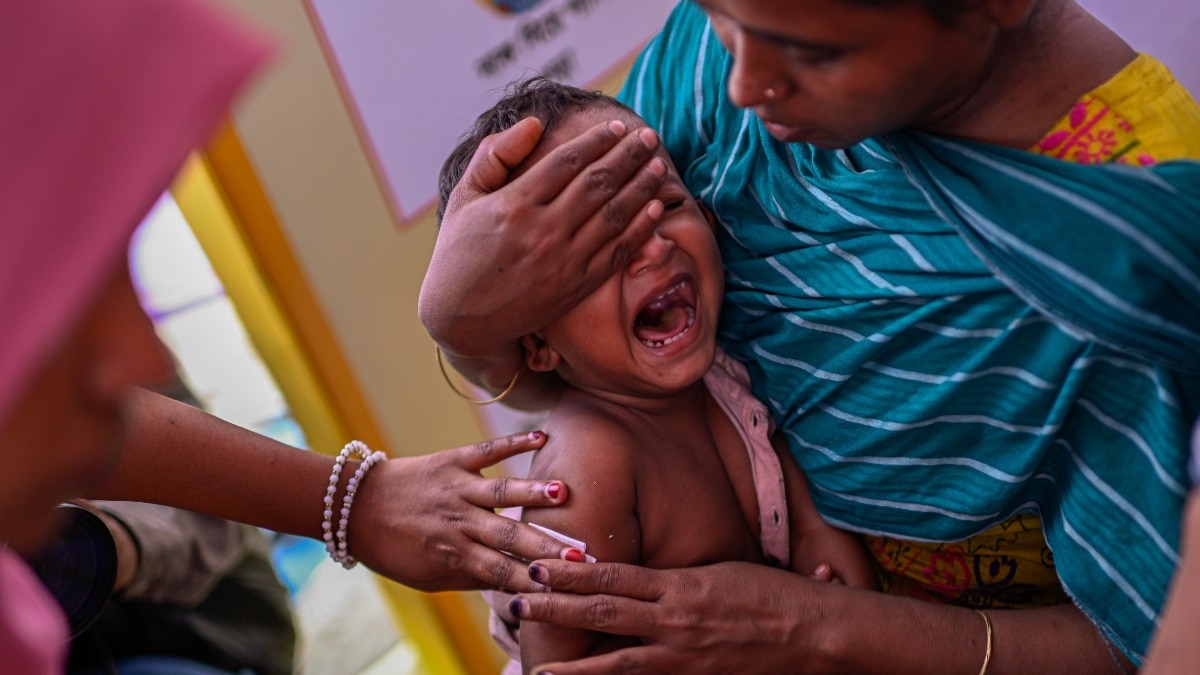
Although the Tarique Rahman-led BNP government is scrambling to control the situation by launching an emergency vaccination drive targeting children as young as six months old, the scale of the outbreak has increased fears that the disease might eventually spread across borders, including India.
A WHO report published on April 23 flagged the cross-border contagion risk. The report assessed the risk of new regional outbreaks as “high” due to measles being endemic across the South-East Asia region.
Senior virologist Dr Jacob John, told India Today Digital that despite the massive measles outbreak in Bangladesh, the chances of a national epidemic of the disease in India is very low, mainly because of the high vaccination coverage against it.
Dr John is the co-chair of the India Expert Group on Measles-Rubella (IEG-MR).
As per government statistics, India’s measles-rubella vaccination coverage stands at 93.7% for the first dose and 92.2% for the second dose in 2024-2025.
IS INDIA AT RISK OF MEASLES TRANSMISSION FROM BANGLADESH?
The WHO warning of risks of cross-border transmission of measles came because of the severity of the outbreak in Bangladesh. No region is free from contamination and the number of deaths is the highest in at least two decades.
The WHO stated that there are considerable risks of cross-border spread due to major urban centres such as Dhaka, Chattogram, Sylhet, and Cox’s Bazar being important international travel and transit hubs for cross-border population movement. The world health body said this increased the likelihood of national and international spread, particularly among unvaccinated or inadequately vaccinated travellers.
The WHO also flagged India as particularly vulnerable to new outbreaks due to Bangladeshi cities with a high incidence of measles, such as Jashore and Chapainawabganj sharing busy land crossings with India. The report noted that although India had achieved a remarkably high level of measles immunisation, a significant uptick in the number of recorded cases between 2022 and 2023 warrants increased concern.
We will get back to the risk factors for India after discussing what measles is. If you are well aware of the highly contagious disease that puts children at risk, you might skip the next subsection.
WHAT IS MEASLES, AND WHAT ARE ITS SYMPTOMS?
Measles is a highly contagious acute viral disease that can affect people of all ages, but young children are most susceptible to it. Measles remains one of the leading causes of death among young children worldwide. The virus spreads through airborne droplets from the nose, mouth, or throat of an infected person.
Symptoms typically appear 10–14 days after infection and include high fever, runny nose, red watery eyes, cough, and small white spots inside the mouth (Koplik’s spots). A red rash develops a few days later, starting on the face and spreading to the body. A person is contagious from four days before to four days after the rash appears.
While most people recover in 2–3 weeks, measles can cause serious complications including pneumonia, severe diarrhoea, ear infections, encephalitis, blindness, and even death. There is no specific antiviral treatment.
In the absence of specific treatment and its highly contagious nature, mass immunisation is the best defence against measles outbreaks. The WHO recommends maintaining at least 95% vaccination coverage with two doses of the measles-containing vaccine (MCV) in every community, along with strong epidemiological surveillance for early detection and isolation of cases.
It is a laxity in vaccination that has proven costly for Bangladesh.
According to a report in The Daily Star, the current outbreak in Bangladesh has been attributed by health minister Sardar Sakhawat Hossain to a breakdown of the country’s measles vaccination programme, “due to the complete mismanagement and failures of past governments [Awami and Yunus] – specifically the fascist government and the most recent interim government,” with the last mass immunisation drive against measles occurring in 2020.
Since then, Dhaka has failed to launch further such drives, with one scheduled for 2024 being indefinitely delayed due to heightened political unrest in Bangladesh at that time. As a result, Prothom Alo reported that the vaccination rate, including for measles, for children aged 12 months dropped to a prodigious low of 59.6% in 2025. This was when the Yunus-led interim government was in power.
In the event of an outbreak, the WHO emphasises that the best containment measure is a rapid and comprehensive response focused on high-coverage vaccination campaigns targeting susceptible populations.
This should be supported by strengthened surveillance, prompt case isolation, contact tracing, and promptly administering preventive treatment to susceptible individuals after they have been exposed to the measles virus, especially high-risk groups such as infants, pregnant women, and the immunocompromised.
HOW VULNERABLE IS INDIA TO NEW MEASLES OUTBREAKS?
Dr John, who has formerly been associated with Christian Medical College in Vellore, believes the chances of a national epidemic of measles in India is very low. That’s because of India’s immunisation drive.
Under the Centre’s Universal Immunisation Programme (UIP), a vaccine against measles is offered as a combination vaccine, including the rubella vaccine (MR), which comes in two shots – the first at nine to 12 months and the second at 16–24 months. The vaccine against measles is also available as the Mumps-Measles-Rubella (MMR) vaccine in the private sector.
WHO and UNICEF have estimated India’s total vaccination coverage in 2024-2025 to be 97% and 92% for the first and second doses, respectively.
The Centre currently has a target to eliminate measles and rubella by the end of 2026, after missing the 2023 target. The target to eliminate the diseases was first set for 2015, which was later pushed to 2020 and revised again for 2023 during the Covid-19 pandemic.
John said that what makes measles particularly contagious is its high reproductive factor, with one infected child capable of passing on the virus to more than 30 others.
The reproductive factor, or R0, refers to how many other people will catch the disease from a single infected person, in a population that hasn’t been exposed to the disease before. For context, according to a study by the US’s National Institutes of Health (NIH), the Delta variant of Covid-19, which gradually replaced all other variants, had an R0 of 5.08. Measles, meanwhile, has a significantly higher R0, ranging between 12 and 18.
“Measles infection in an infant under 1 year who has not been vaccinated against it, can be particularly fatal, as compared to older children in whom mortality due to the pathogen is low,” explained Dr John.
Also, mortality due to the disease in outbreaks tends to be higher during outbreaks (5-10%) compared to the usual 1–3%.
India had last seen an outbreak of measles in 2022, mainly affecting Mumbai and surrounding areas in Maharashtra and parts of Madhya Pradesh, and it was attributed to huge disruptions in immunisation coverage in 2020-2021, during peak Covid-19 years. According to the WHO, the number of recorded cases in India rose from 5,700 in 2021 to 40,967 in 2022. The number of recorded cases rose again in 2023, reaching 65,150, before decreasing in 2024 to 18,530.
But Dr John maintained that this outbreak had also led to intensified catch-up vaccinations across districts and focus on the elimination efforts, which meant that the huge majority of babies born every year are now actively immunised against measles.
“For this reason, we are unlikely to see a significant spillover of the viral infection from Bangladesh as most Indian kids have herd immunity against the pathogen. Sporadic cases from some parts, however, can be reported,” he told India Today Digital.
While India seems relatively safe from any mass outbreaks of measles due to the high rate of immunisation, it will be in its best interests to be alert to the high cases of deaths in neighbouring Bangladesh. Especially after a red flag has been raised by the WHO.
– Ends
[ad_2]