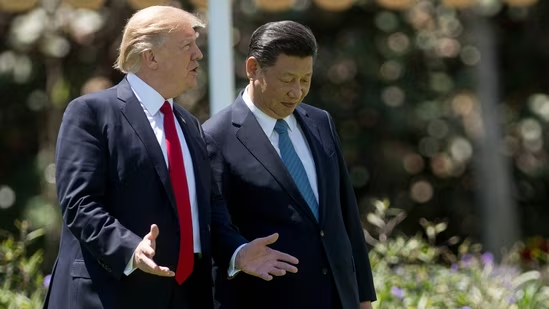
Mohammed bin Salman, Saudi Arabia’s Crown Prince, once compared Iran’s Supreme Leader Ayatollah Ali Khamenei to Hitler, and warned that if Tehran acquired a nuclear bomb, his kingdom would do the same.
For years, rivalry between Saudi Arabia, a Sunni monarchy, and Iran, a Shia theocracy, had been a defining feature of West Asian geopolitics. From Lebanon and Syria to Iraq and Yemen, the two backed opposing sides, with Iran supporting Shia militias and Saudi Arabia Sunni factions.
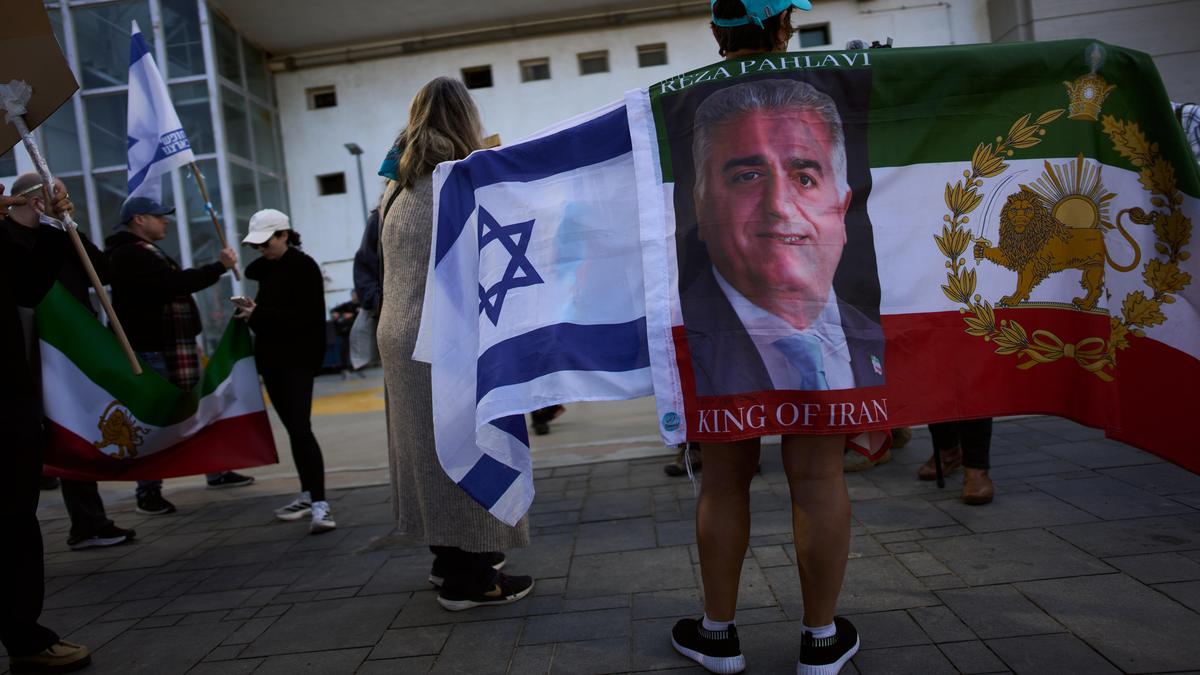
Yet, when Iran was rocked by mass protests over the past two weeks, Riyadh was conspicuously silent. And when U.S. President Donald Trump threatened to bomb Iran over its crackdown on demonstrators, Riyadh told Tehran it would not allow its air space or territory to be used for such an attack, AFP reported.
According to Gulf and American officials, Saudi Arabia, along with Qatar, Oman and Turkiye, lobbied the Trump administration against military action.
Why did Riyadh oppose an American strike on a country it had, until recently, regarded as its principal rival in West Asia?
Editorial The great reckoning: On the crises in Iran
Fear of instability
Three broad reasons stand out.
First, the Saudis appear wary of the narrative that external military punishment is justified as a response to internal repression. Despite their sectarian divide and geopolitical rivalry, both Saudi Arabia and Iran are governed by authoritarian systems.
In the case of Iran, at least there are national and parliamentary elections in which millions of people participate. Saudi Arabia holds managed elections only at the municipal level. If Iran can be “liberated” through an external attack, critics could invoke the same logic against the kingdom should it ever drift away from the U.S. orbit in West Asia.
What makes Iran a target and Saudi Arabia is not is not a qualitative difference in governance models, but two other factors. One, Saudi Arabia can trade, invest, accept investments freely and broadly meet the economic needs of its population, while Iran faces a severe economic crisis largely due to sanctions. Two, Saudi Arabia is an American ally that hosts U.S. troops; Iran, by contrast, is viewed as an adversary in Washington and Tel Aviv.
Second, having seen the chaos external interventions brought to countries like Iraq and Libya, Saudi Arabia and other Gulf countries are wary of an invasion in Iran, which they fear could plunge the country of over 90 million into anarchy and instability. It could send tens of thousands of refugees to neighbouring countries.
Instability could spread across the Persian Gulf waters and reignite the Houthis’ war with Gulf monarchies, endangering Crown Prince Mohammed’s plan to turn the kingdom into an economic power house that is less dependent on oil.
The Israel factor
Lastly, and more important, geopolitics.
Saudi Arabia and other Gulf monarchies have grown increasingly alarmed by Israel’s behaviour over the past two years. Since October 7, 2023, Israel has bombed at least six countries. Hezbollah, the Iran-backed Lebanese Shia militia, has been degraded. In Syria, the pro-Iran regime of President Bashar al-Assad collapsed.
Emboldened by these developments, Israel, with the backing of the U.S., bombed Iran in June. In September, Israel struck Qatar, another American ally, in a failed bid to assassinate Hamas’s political leadership –which was seen as a breach of the red line by Arab kingdoms.
If the Islamic Republic of Iran were to fall, the regional balance of power would decisively shift in favour of Israel, enabling it to pursue dominance across West Asia.
Saudi Arabia, concerned about the U.S.’s shrinking security umbrella and Israel’s aggression, has already started diversifying its strategic options. Last year, it forged a security partnership with nuclear-armed Pakistan. It is also seeking to build closer strategic ties with Turkiye, a former adversary, Qatar, on which Riyadh imposed a blockade in 2017, and Egypt.
So the kingdom doesn’t want a violent collapse of Iran’s republic—an outcome that could plunge the country into chaos, deepen regional instability which could have domestic consequences and leave Israel more powerful which could pose long-term security threats.
Published – January 16, 2026 05:50 pm IST