[ad_1]
Mexico’s e-commerce sector has surged, making logistics a core competitive factor as consumers demand ever-faster, more reliable deliveries. Surveys show that over 70% of shoppers abandon carts if shipping is slow or costly, placing immediate pressure on retailers to optimize performance across the value chain end-to-end.
In practice, the “last mile”—from fulfillment center to consumer—remains complex and expensive, often representing more than half of total delivery costs. Major urban centers such as Mexico City, Guadalajara, and Monterrey are further constrained by congestion, inconsistent addressing systems, and security risks, which significantly increase operational complexity.
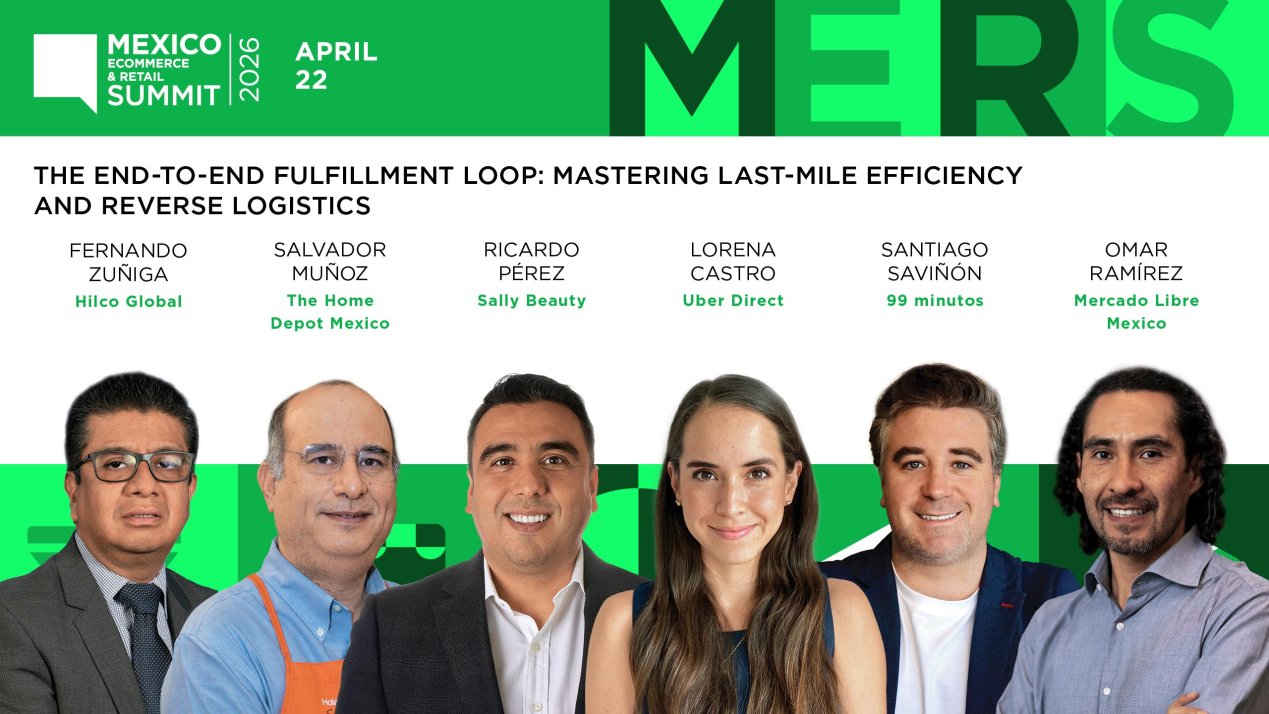
These structural challenges are magnified during peak events. As Santiago Saviñón, Chief Growth Officer, 99minutos, explains, “El Buen Fin is significantly more complex than Hot Sale. While Hot Sale is largely concentrated in e-commerce retail, Buen Fin brings in every sector, creating extreme demand volatility, limited predictability, and widespread forecasting gaps. It becomes a perfect storm.”
Rural and underserved regions add another layer of difficulty, where limited infrastructure and low population density drive up costs and extend delivery times. At the same time, rising return rates driven by omnichannel consumption patterns are creating a growing reverse logistics burden. Without efficient reintegration processes, returns tie up inventory and erode margins, putting additional pressure on profitability.
Against this backdrop, logistics leaders agree that the challenge is no longer isolated to transportation but extends across forecasting, fulfillment, and network design. “Everything starts with fulfillment, where demand originates,” notes Salvador Muñoz, Vice President of Supply Chain, The Home Depot México. “Delivery performance is ultimately a function of inventory availability, network design, and technology.”
Rethinking the Last-Mile Model
To address these pressures, companies are shifting toward more flexible, multi-model logistics networks. This includes blending owned fleets with third-party logistics providers and on-demand delivery platforms.
For Lorena Castro, Head of Sales, Uber Direct, the issue is fundamentally structural. “This is not an infrastructure problem—it is a business model challenge. Underutilized capacity is what ultimately limits scalability,” she says. By leveraging existing networks rather than building new ones, companies can unlock efficiency gains without significant capital expenditure. “We do not build fleets; we leverage existing infrastructure from Uber Eats to democratize last-mile delivery.”
This hybrid approach is increasingly critical in a market defined by unpredictability. “E-commerce in Latin America remains inherently unpredictable, which makes agility a competitive advantage,” adds Ricardo Pérez, Supply Chain and Digital Senior Director LatAm, Sally Beauty, highlighting the importance of both forecasting and strategic partnerships.
At the same time, out-of-home delivery models such as pickup and drop-off points (PUDOs) and smart lockers are gaining traction. These solutions consolidate deliveries, reduce failed attempts, and improve cost efficiency, particularly in dense urban areas. However, adoption still depends on shifting consumer behavior, as many customers continue to favor door-to-door delivery.
Technology as the Core Enabler
Across the board, technology is emerging as the central pillar of modern logistics strategies. From AI-driven forecasting to real-time route optimization, digital platforms are enabling companies to improve both efficiency and service levels.
“Technology is the backbone of modern logistics,” says Omar Ramírez, Senior Director of Logistics, Mercado Libre México. “Our systems architecture is designed to predict demand and optimize inventory allocation dynamically.” He emphasizes that the real competitive advantage lies upstream: “The real differentiator is how effectively you position inventory closer to the end customer.”
This shift toward predictive and integrated systems is helping companies manage the inherent tension between cost and service. As Saviñón notes, “Companies are expected to reduce costs while simultaneously improving service levels—an inherently conflicting mandate.”
AI is playing an increasingly important role in resolving this tension, enabling better decision-making and automation across operations. Muñoz points out that organizations are already scaling AI across forecasting, inventory distribution, and customer service, while Saviñón adds that companies are “leveraging AI to modernize repetitive processes and improve operational performance.”
Balancing Cost, Capacity and Customer Expectations
Despite technological progress, execution remains a delicate balancing act. Logistics leaders must continuously optimize between fixed infrastructure and flexible capacity, particularly during high-demand periods.
“Execution ultimately comes down to balance,” says Saviñón. “In logistics, there is a constant tension between fixed cost structures and variable capacity.” Mismanaging this balance can quickly lead to either margin erosion or service degradation.
Peak events further expose these vulnerabilities. “A critical capability is knowing when to say no,” he adds, emphasizing the importance of setting operational limits to protect service quality.
At the same time, customer expectations continue to evolve. Speed remains important, but it is no longer the only priority. “Time-slot flexibility has become increasingly important, as some customers prioritize convenience over immediacy,” explains Ramírez.
Transparency is also emerging as a key differentiator. Muñoz highlights that customers are increasingly focused on reliability and communication: “Customers are asking three simple questions: Will it arrive? When? At what time?”
Reverse Logistics and Sustainability: From Cost Centers to Value Drivers
Reverse logistics is another area undergoing transformation. Traditionally seen as a cost burden, it is now being reframed as a strategic capability.
“Reverse logistics must evolve from a cost center into a trust-building capability,” says Castro. Improving returns management not only enhances customer experience but also helps recover value through resale, refurbishment, or recycling.
Sustainability is closely linked to this shift. While often perceived as a cost driver, industry leaders increasingly view it as a source of long-term efficiency. “Sustainability is cumulative: incremental improvements across the value chain ultimately drive meaningful impact,” notes Pérez.
However, implementation remains complex. As Saviñón points out, many initiatives require upfront investment and may conflict with short-term cost objectives. The key lies in identifying solutions that deliver both environmental and economic benefits, such as route optimization or packaging efficiency.
Optimizing Assets and Network Design
Beyond operations, companies are also rethinking how they deploy physical assets. Overinvestment in infrastructure without sufficient utilization remains a common challenge.
“Our focus is on the strategic management of assets,” says Fernando Zúñiga, Managing Director, Hilco Global. “A common issue we see is overinvestment in CAPEX without sufficient utilization.”
To address this, companies are exploring asset relocation and network redesign strategies that bring inventory closer to demand centers. “The goal is to reposition infrastructure closer to the last mile and improve overall network efficiency,” he explains, pointing to regions such as Tijuana and Reynosa as opportunities for optimization.
Toward an Intelligent Logistics Ecosystem
Looking ahead, Mexico’s logistics landscape is expected to become increasingly data-driven, flexible, and integrated. Nearshoring trends and continued investment in infrastructure are positioning the country as a regional logistics hub, while advances in AI and electrification are set to further transform operations.
Yet, as industry leaders emphasize, there is no universal solution. “There is no perfect model,” concludes Ramírez, “but continuous iteration drives progress.”
Ultimately, success will depend on the ability to align technology, infrastructure, and business models around a single objective: delivering a seamless, reliable, and cost-efficient customer experience. In an increasingly competitive e-commerce environment, that reliability is quickly becoming the defining currency of trust.
[ad_2]