[ad_1]
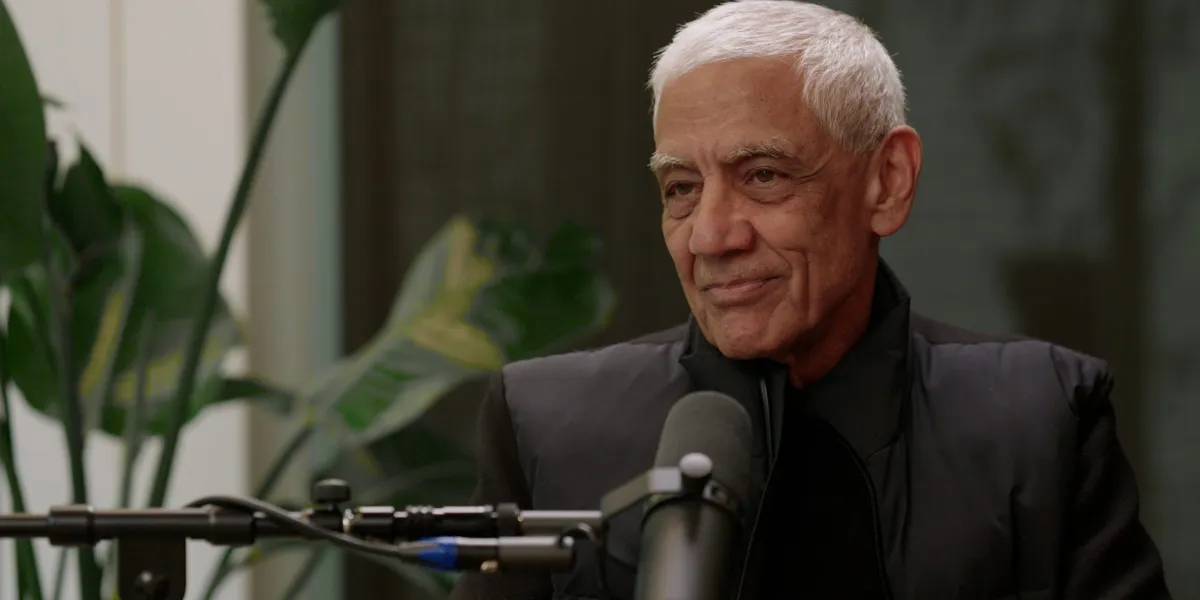
When Vinod Khosla sat down with Fortune‘s Editor-in-Chief Alyson Shontell in early March, he offered some key context for one of the most consequential tech trials in American history: Musk vs. Altman.
“He wanted to be CEO,” Khosla said of Elon Musk on the Titans and Disruptors of Industry podcast. He explained the context around how Musk and Altman fell out around the governance of a then-obscure AI lab called OpenAI. Khosla added that he “wasn’t privy” to previous internal battles at OpenAI, telling Shontell to “take that with a grain of salt,” but he had no doubt that Musk wanted to run the AI company. “It seems like he wanted it like a private fiefdom, with him in charge, instead of what he claims—the public benefit company it is now. He essentially was holding the team, Sam and Greg and others hostage, and Sam had to look for other sources of money.”
With Altman raising funds, that led naturally to a conversation, and Khosla said his resulting investment was “the largest bet I’d placed in 40 years by a factor of two for an initial bet”: $50 million at a $1 billion valuation, a bet that is now worth several hundred billion more. It was such a large investment, he revealed, that over 20 years in Khosla Ventures, “it’s the only time I made an investment and sent an apology letter to my LPs, saying I’m doing it anyway, but I realized how foolhardy this looks.”
It turned out to be the largest initial bet Khosla Ventures had ever placed — by a factor of two. OpenAI now counts roughly 800 million weekly active users and is valued at hundreds of billions of dollars, with its for-profit subsidiary now valued at nearly $1 trillion, with a potential IPO that could arrive as early as late 2026 — an outcome Musk’s lawsuit, if successful, could jeopardize.
Musk vs. Altman
Roughly two months later, Musk is in a federal courtroom in Oakland, California. Trial in Musk v. Altman began with jury selection on April 27, with Musk seeking more than $130 billion in damages and demanding that CEO Sam Altman and President Greg Brockman be removed, alleging they had betrayed the nonprofit mission on which OpenAI was founded when they transformed it into a for-profit entity. Notably, Musk — who donated roughly $38 million of OpenAI’s earliest funding — is not seeking damages for himself; he wants any award directed to OpenAI’s nonprofit arm, alongside an unwinding of the for-profit conversion and the ouster of Altman and Brockman, whom he has taken to calling “Scam Altman.”
On the eve of trial, Musk’s legal team dropped 24 of 26 original claims, including fraud, narrowing the case to unjust enrichment and breach of charitable trust.
OpenAI has called the lawsuit a “harassment campaign” and argues that Musk, not Altman, sought to bend the company to his will. That defense thesis was, in effect, previewed by Khosla in his March interview. “He essentially was holding the team — Sam and Greg and others — hostage, and Sam had to look for other sources of money,” Khosla told Fortune. “There was no other source.”
Musk’s arguments and an expected uphill battle
Legal experts say Musk faces an uphill climb. Sam Brunson, a nonprofit law professor at Loyola University Chicago, told Fortune that as a general rule, a donor who dislikes how a charity later spends its money has no recourse beyond ceasing to donate. The exception is fraud — proving the donor was lied to at the moment of the gift — which is why Musk has spent two years building that argument. His most damaging exhibit comes from Brockman’s personal notes, which Musk’s team has dubbed a “diary.” In a September 2017 entry quoted by Judge Yvonne Gonzalez Rogers in her January order sending the case to trial, Brockman wrote: “This is the only chance we have to get out from Elon … Financially, what will take me to $1B?” After a November 2017 meeting in which he and Altman assured Musk that OpenAI would remain a nonprofit, Brockman acknowledged in writing that Musk’s “story will correctly be that we weren’t honest with him in the end about still wanting to do the for-profit just without him.” Still, Brunson cautions that the framing may not map onto nonprofit law: OpenAI’s nonprofit still exists and retains the upside from the for-profit subsidiary, and absent an explicit promise never to create such a subsidiary, the fraud theory is hard to sustain.
Khosla’s reasoning in making the bet was less financial than geopolitical. Google had formidable AI capabilities, but Baidu had established a facility near Google’s Mountain View campus and was actively recruiting engineers to build Chinese AI. “I thought there needed to be another AI effort in the West,” he told Shontell. “I don’t wish China ill. I just don’t want them to dominate us with their AI.”
As for Musk — whose own AI venture, xAI, now competes directly with OpenAI — Khosla was careful in March to separate the entrepreneur from the exit. “It’s hard to bet against Elon, because he’s such a good entrepreneur,” he said, crediting Musk with pioneering electric vehicles and private space. “Having said that, he had committed a billion dollars to OpenAI, and then he reneged because he wanted to be in control, as far as I can tell.”
What the trial will decide
The trial is expected to run for four weeks, with Musk, Altman, Brockman, and Microsoft CEO Satya Nadella all on the witness list. Whatever the jury decides — its verdict will be advisory, with Judge Yvonne Gonzalez Rogers issuing the final ruling — Khosla’s March account offers a striking preview of the central factual dispute the court must now resolve: not just what Musk did, but why he left. And, as Brunson noted, the suit may never reach a verdict at all: “If Elon Musk is concerned about his reputation, maybe that encourages him to settle instead of going all the way through trial.”
The bet that almost didn’t happen, born out of a billionaire’s failed bid for control, may prove to be a defining investment of the AI era.
[ad_2]