[ad_1]
Collectibles have been exploding in India for years, from Pokémon and Marvel to anime fandoms and the country’s growing appetite for pop culture merchandise shows no signs of slowing. Now, Ferrero India’s Kinder Joy has partnered with Warner Bros. Discovery to bring the DC universe and Funko POP! collectibles to Indian consumers, marking the brand’s largest collaboration to date. With limited-edition Batman figurines, a Golden Batman treasure hunt, and a presence at Comic Con, the confectionery giant is betting big on the intersection of nostalgia, fandom, and premiumisation.
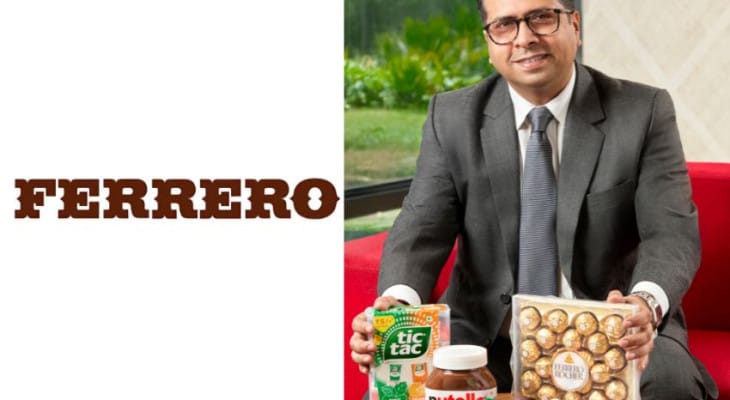
In this conversation, Zoher Kapuswala, Marketing Head at Ferrero India, breaks down the strategy behind Kinder Joy’s DC collaboration, the three-year planning cycles and how the brand is balancing toy valourisation with food credentials. He also discusses the company’s omnichannel approach in a quick-commerce-dominated landscape, the role of AI in optimising media and content, and why Kinder Joy doesn’t need a celebrity ambassador when it already has Batman and Spider-Man doing the heavy lifting. As Ferrero doubles down on its India growth ambitions, Kapuswala offers a candid look at how the company is premiumizing categories, expanding beyond metros, and preparing for a consumer base that’s increasingly conscious, experimental, and hungry for quality experiences.
Excerpts:
Pokémon, Marvel, anime – collectibles are booming in India. This is your first collaboration of this scale with Warner Bros. Discovery, and Kinder Joy is bringing the DC universe and Funko POP! Can you tell us a little more about it?
It’s all part of the bigger strategy we have. In Kinder, we have a strategy focused on younger kids with regular toys. But as kids grow up, they evolve and their toy needs change. They start watching a lot of movies like Harry Potter, DC, Batman. Because of that, collaborations with licensors and partnerships with Funko POP! becomes a leeway to leverage this particular target audience with the right perspective and the right thought process.
What’s the long-term brand ambition beyond this launch? Trend-leveraging or category-shaping? Was there any data or was it an instinct-based decision?
We have a big research team where we do reviews of licences and characters which appeal to the target audience and basis that we decide. We are already working at least two to three years in advance because making a licence means creating, getting the sign-off on the licence, creating the right modes, having the entire infrastructure and supply chain in place; it takes a pretty long time. Hence, we need to work well in advance.
Right now, we are already working on the next three to four years’ timeline to have this particular thing done. It’s all consumer-first. What works here in India is something we explore, and the resonance with the consumers is something we dial up.
It’s a very long process. it means engineering, making moulds. We sell millions of eggs of Kinder Joy, and you need those millions of toys. So you need that planning to be done well in advance. And it’s a huge amount of investment. Also, making toys is not an easy thing to do. It requires investment, capacity blocking, so a lot of things have to be done accordingly.
Ferrero as a company is invested in India. We want to grow the Indian market. We want to gain share; we want to grow faster than the category. Objectives are very clear, and if you want to grow in this market, you need to be invested. So to grow, we try and get a lot of efficiencies. How do we try and get efficiency? We try and get the best product — which we are fortunate to have — with the best quality, best toys, best licences. We try to do very good work on the creative. If you see, the creative we do is clutter-breaking, appealing to the target audience, and has that stickiness. I won’t say virality — nobody can predict virality — but it always has that stickiness quotient in it, so we are able to amplify on that particular part.
We try being efficient. But as the market grows, in India we are investing more and more as we can, to ensure that our end objective of growing faster than the category is achieved. Premiumising the category continues to be an endeavour which we live for.
Kinder Joy has always been a children’s brand in India. Now you’re chasing Comic Con crowds and adult collectors. Are you repositioning the brand, or are you trying to have it both ways? How do you talk to a 7-year-old and a 27-year-old collector without confusing either?
TG (Target Group) is not changing. We are absolutely bang on with our TG, where we are talking to parents and parents who buy for their kids. That’s the TG. With the new licences, what we are trying is to segment the market slightly better, where we are trying to have the younger kids and the older kids. The older kids, because of the fandom, because of what they see with Harry Potter, what they see with Batman, with licences and collaborations and co-creation with Funko Pop — this is something we try and build on. So this is something we are trying to work on.
Now, there is always some spillover to adults which happens. People who are kids at heart — a lot of people are there who continue to be young at heart. And if there’s a spillover in which they continue to be fans, this is something which we would be okay with. It is a small part of the business which is coming in. But the major crux of the business or the focus of the business is still on the main TG which has been existing for us.
There’s some amount of leverage we get in the ecosystem, and because of adults also talking and content creators riding the wave, we get some amount of stickiness and virality by which we can still again focus on our core proposition and our core TG. The core TG still remains parents of kids, and that’s where we would continue to focus. The rest, according to me, is only a very minor part of the business. Core remains what was the core TG.
The Golden Batman is the hero mechanic of this campaign, but what happens after that? How are you sustaining engagement beyond the treasure hunt?
We are doing this particular licence campaign. In January, we’ll move forward to a thematic campaign for Kinder Joy, where food credentials will take the lead, and that is what we will drive right now. Toy valorisation is taking the lead currently, and this is how we work on it. So both pillars are there; we play on both pillars. Sometimes the toy pillar goes higher, sometimes the food pillar goes higher. This is how we play and drive the brand and create a brand for the long term. We try and build on both the pillars of the brand, which are the toy and the food credentials.
You did mention that you are planning three – four years ahead. Any more partnerships onto the horizon?
Ferrero has a collaboration with a lot of licensing. For example, we have Disney, Warner Brothers, and Funko Pop. It also enables us to channelise this licence to a very unique output. For example, there have been multiple figurines available but the Harry Potter or the Batman figurines that we have are very unique. They have some utility value. All these things get the stickiness, the virality. People start talking about it, people start showing them, people start putting it on their backs. You are getting free media accordingly. So the utility value of the toys is also a proposition what we leverage on.
Quick commerce has changed purchase behaviour fundamentally. A consumer can get Kinder Joy delivered in 10 minutes. How has this channel shift changed your marketing playbook?
As channels evolve, companies will also evolve because the shopper and the consumer are moving. The ecommerce buyer is 50–60 per cent and it varies across geographies. Some regions are as high as 90 per cent, some are 50 per cent ecommerce. But consumers straddle across channels, and hence the concept of an omnichannel consumer comes in.
Ecom media is the last moment of truth for me. Earlier, in stores, I used to put all the units on display. That was my point-of-sale material. Similarly, ecommerce media also becomes my point-of-sale material. It’s the last and final reminder to the consumer to buy. At the same time, do I stop my equity media? Do I stop my ATL? Do I stop my digital communication? No. I continue with that and add this additional leg. They help us to convert. When you go to a store, you see a beautiful display of Kinder Joy and you’ll pick up one egg. That’s not possible in an online medium, and hence you see a banner of Kinder Joy and remember the limited edition and then you buy it.
The analogy between traditional trade, modern trade and ecommerce is very similar. When you think of the path to purchase, this is how consumer and shopper behaviour works. If you apply it, it’s very linear. But yes, business is moving there, and hence investments are happening in that channel.
How does the media mix now look like for Kinder at the moment?
We look at the cohorts of consumers that are available and ensure that whatever we do, we do at a threshold level. First thing is, at Kinder, we are committed to building mental availability, which is the overall brand equity.
If the consumer is a cord-cutter or a cord-shaver, their day is digital, so we reach them through digital, connected TV or influencers. If the consumer is a TV consumer, then we go to them via TV. We are trying to cover all relevant audiences. Without awareness, you will never be able to understand what the consumer is trying to say or influence their purchase.
The second part is where we add the cherry on the cake. Comic Con or influencer content provides the push the consumer needs, either to make the purchase or to create an intention to purchase. And finally, at the moment of truth – retail media, whether POSM or ecommerce media, gives the final flash of awareness. The same happens in a traditional trade store. This is how we dial up the entire ecosystem.
We do not compromise on equity media for retail media because we understand that even in ecommerce, consumers come with a pre-decided brand, and very few make a shift. So we continue to focus on our equity-building measures. The growth we get, the incremental return we generate, we try and plough it back into ecommerce media, so there is sustenance at both levels.
With AI transforming marketing, are there any specific AI-driven consumer insights or content strategies that you are experimenting with? Or intends to experiment in 2026?
There are three key aspects of AI which we are using right now. First is media optimisation. AI is being used by our media agency and our agency partners to ensure we optimise the right cohort, right influencers and the right geographical mediums to get very good reach. So this is the first thing what we do.
Second, AI has a lot of experience in evaluating content performance even before we go live. If there are any issues in the content per se, we get flashes saying the logo is not fine, the call to action is not visible, the audio is not optimised. All those things we use AI for.
The third thing we use is AI with partners who have it in a much more developed stage. For example, we partnered with Spotify where we curated playlists for Tic Tac about a year and a half back because we know through trends that a particular consumer listens to a certain kind of track, and this could be the possible flavour they like. So we created playlists branded as Tic Tac Mint, Tic Tac Strawberry, Tic Tac Pyramid playlists. That was all driven by AI with Spotify.
But yes, AI applications are still evolving. We are exploring these particular elements but I would still say it’s in a fairly nascent stage.
On a broader note, how are you leveraging celebrity and influencer partnerships for your portfolio? Kinder Joy is yet without a brand ambassador. Any particular reason behind it?
We have Mira Rajput and Sameera Reddy for Kinder Schoko-Bons Crispy and Kinder Creamy because these particular brands have to stand on their own. Hence, we use the help of celebrity power to create the right association in the consumer’s mind. A celebrity becomes an easy code for driving the right saliency.
For Kinder, you don’t have that specific issue because you already have toys and licenses. And when your human bandwidth is limited within a 30-second or a 20-second communication, how much can you communicate? You either communicate a beautiful Spider-Man or a Batman – you communicate the toy, you communicate the chocolate. Beyond that, the consumer might get confused — am I talking about a celebrity? Am I talking about a toy? Am I talking about chocolate? Everything becomes cluttered. Hence, keeping the message simpler is the best approach, and this is what we would like to continue doing.
What trends are you foreseeing for 2026? And what plans do we look forward to for Ferrero India in 2026?According to me, consumers are becoming more and more conscious of the quality and the experience of the products they are buying. They want good products with good quality, good features, aesthetics and experiences around them. More and more consumers are eager to try new products. This is a trend that is coming in, and Ferrero is trying to leverage that.
Beyond that, I believe Indian consumers are slightly flirtatious, they like to try different products. This, I believe, is the core base for us. And this is the base on which we will build Kinder Joy, we will build Kinder Schoko-Bons Crispy, and we will build Kinder Creamy to grow the market across the Indian subcontinent.
[ad_2]