[ad_1]
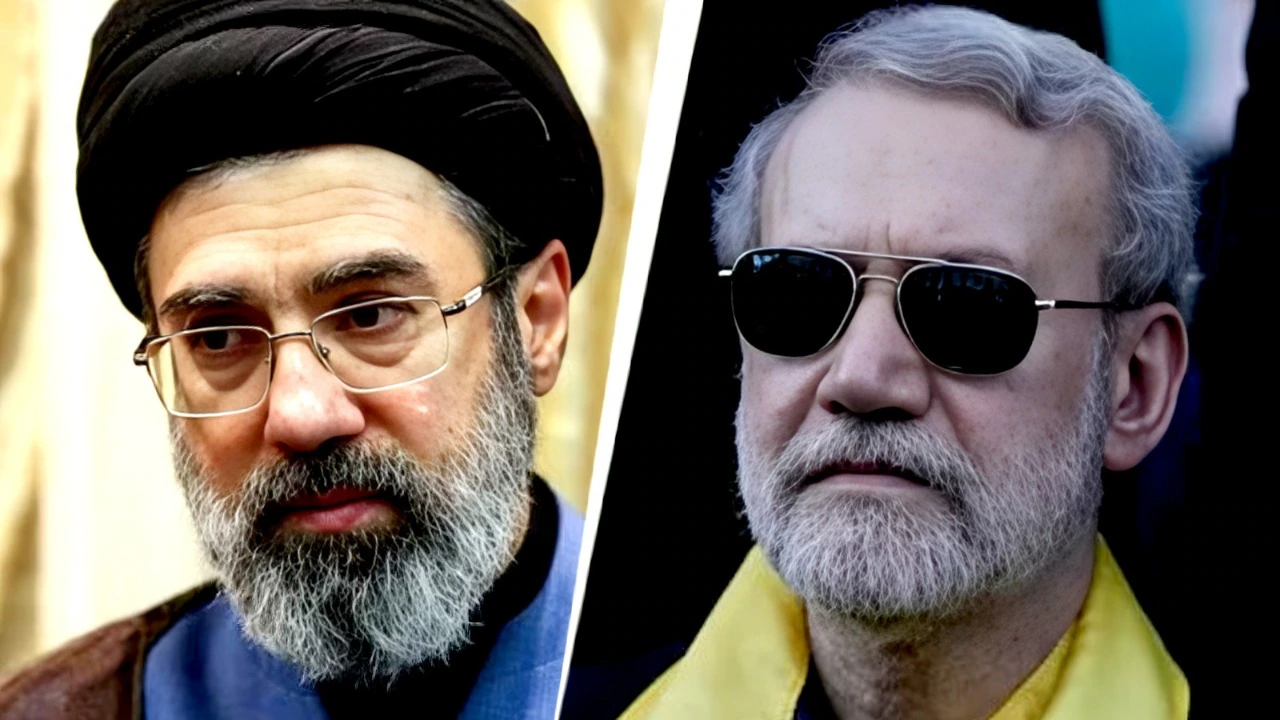
Iran’s newly elected Supreme Leader Mojtaba Khamenei on Wednesday warned of retaliation following the killing of senior security official Ali Larijani in a strike blamed on the United States and Israel.
In a strongly worded statement, Khamenei said “criminals will soon pay for his blood,” signalling a direct warning to those he held responsible. Larijani’s killing marks a sharp escalation in the ongoing conflict and comes amid a widening campaign of targeted strikes on senior Iranian figures.
Earlier in the day, Iran signalled it would continue its war effort despite the loss. Foreign Minister Syed Abbas Araghchi said the country’s political system remained intact, asserting that “the presence or absence of a single individual does not affect Iran’s political and economic structure,” in remarks to Al Jazeera.
Drawing parallels with earlier losses, including the killing of former Supreme Leader Ali Khamenei at the start of the conflict, Araghchi said the system had continued to function under pressure. He also blamed Washington for the war, saying the United States must bear responsibility for its human and economic consequences.
STRIKES TARGET TOP IRANIAN LEADERSHIP
The war involving Iran, the United States and Israel has seen a sustained campaign of strikes targeting the country’s top leadership, beginning with the killing of senior military commanders and expanding to high-ranking political and security officials.
Larijani’s killing stands out as one of the most consequential so far, given his central role in both Iran’s security architecture and its political establishment. Widely regarded as one of the Islamic Republic’s most influential power-brokers, he was known for bridging competing centres of power within the system.
He combined clerical legitimacy, rooted in his prominent religious family, with the experience of a seasoned political operator who maintained close ties with the Islamic Revolutionary Guard Corps, making him a critical link between Iran’s religious leadership and its security apparatus.
Officials said this positioned him as a key intermediary capable of translating battlefield developments into political strategy — a function few others within the system can easily replicate.
DECISION-MAKING UNDER STRAIN
Senior Iranian officials indicated that Larijani’s death could complicate decision-making in Tehran at a critical juncture in the war. As targeted killings shrink the pool of experienced leadership, coordination between political and military wings is expected to come under increasing strain.
Analysts warn that this erosion of institutional depth could slow responses and limit policy flexibility. Alex Vatanka of the Middle East Institute said the loss of multiple senior figures, including Larijani, could disrupt Iran’s political process and affect continuity in policymaking.
DEATH TOLL RISES AMID CONFLICT
The conflict has left thousands dead across the region since hostilities began on February 28, though the exact toll remains contested and difficult to independently verify, according to Reuters.
A US-based rights group, HRANA, said more than 3,100 people have been killed in Iran, including over 1,300 civilians and at least 200 children, based on field reports, medical sources and open-source data. Official figures from Iranian state media, however, have placed the toll lower at around 1,270, while Iran’s envoy to the United Nations earlier cited a figure exceeding 1,300, underscoring discrepancies in reporting.
In Israel, authorities say 14 civilians have been killed so far, including nine in a missile strike near Jerusalem, while the military has reported the deaths of two soldiers in southern Lebanon.
The United States has reported 13 military fatalities, including personnel killed in an aircraft crash over Iraq and others during operations linked to the conflict.
– Ends
With agency inputs
[ad_2]