[ad_1]
SALIVA molecular testing showed high accuracy for pulmonary tuberculosis, clearly outperforming oral swabs in a prospective study.
Saliva Testing for Pulmonary Tuberculosis
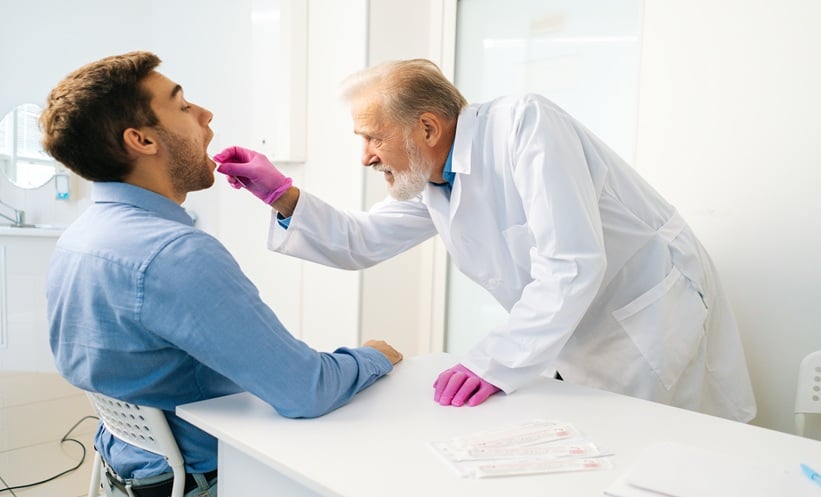
Rapid, accurate nonsputum diagnostics remain a major need in pulmonary tuberculosis, particularly for patients who struggle to produce sputum. In this study, researchers evaluated molecular testing on saliva and oral swabs among adults and children undergoing assessment for pulmonary tuberculosis at primary care centers in Colombia.
The analysis was conducted as a nested case control study with 1:1 incidence density sampling within a prospective cohort enrolled between July 2023 and August 2024. Participants provided sputum for liquid mycobacterial culture, alongside paired saliva and nylon flocked oral swabs. A blinded microbiologist performed molecular testing on thawed saliva and swab eluate, with each sample mixed 1:1 with sample reagent. Diagnostic performance was assessed against sputum culture.
Diagnostic Accuracy of Molecular Testing
Among 648 enrolled participants, the investigators tested saliva and oral swabs from all 95 individuals with culture confirmed pulmonary tuberculosis and 95 matched culture negative controls. Saliva achieved a sensitivity of 90.5% and a specificity of 95.8%. Oral swabs showed a sensitivity of 71.6% and a specificity of 99%.
Saliva therefore outperformed oral swabs on sensitivity by an absolute difference of 18.9%, while specificity did not differ significantly between the two sample types. These findings suggest that both oral cavity specimens offer clinical promise, but saliva may be the stronger option when the priority is identifying more true pulmonary tuberculosis cases.
Why the Findings Matter
The study addresses an important diagnostic gap. Sputum remains the standard specimen for pulmonary tuberculosis diagnosis, but it can be difficult to obtain from children, people with HIV, asymptomatic individuals, and patients with a nonproductive cough. Sputum collection also requires strict airborne infection control measures.
In contrast, saliva and oral swabs are minimally invasive and were highly acceptable, with more than 95% of participants reporting that both collection procedures were acceptable. Notably, saliva sensitivity exceeded the minimum target of 80% set for a low complexity nonsputum tuberculosis diagnostic test. The findings support saliva as a practical and accurate alternative specimen that could help expand microbiological confirmation and improve case finding in clinic and community settings.
Reference
Vargas DA et al. Diagnostic accuracy of molecular testing on saliva and oral swabs for pulmonary tuberculosis. Clin Infect Dis. 2026;doi:10.1093/cid/ciag055.
[ad_2]