[ad_1]
South Korea’s startup policy is entering another operational phase. After committing capital and setting strategic direction for 2026, the government is now inviting market actors into the policy room itself. A new public – private council launched by the Ministry of SMEs and Startups aims to review existing programs and propose new reforms to rebuild the country’s “growth ladder” for SMEs, ventures, and small merchants.
Korea Launches Public – Private Policy Council for SME and Venture Growth
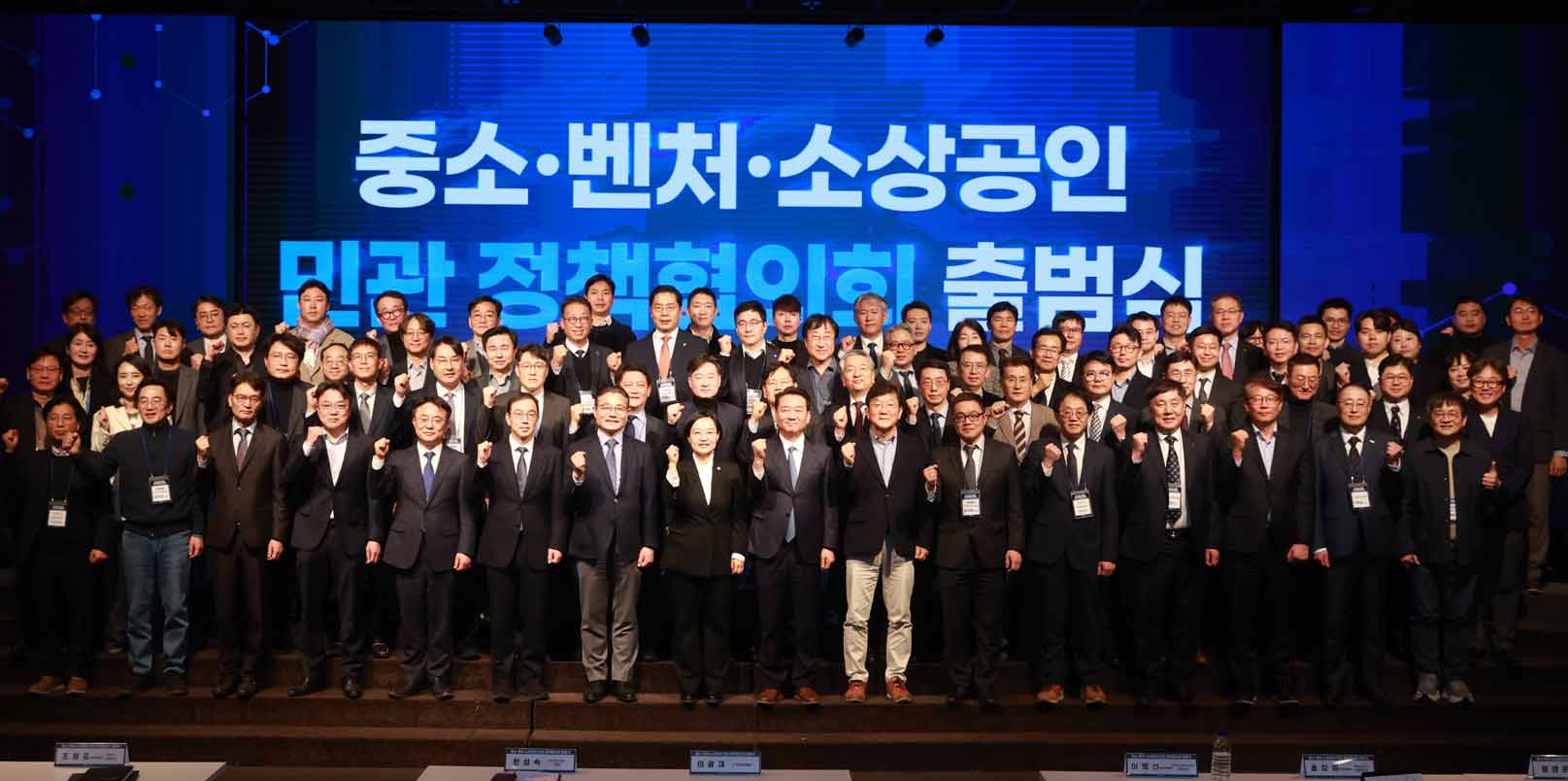
The Ministry of SMEs and Startups (MSS) formally launched the Public–Private Policy Council for SMEs, Ventures, and Small Business Owners on March 5 at KBIZ Hall of the Korea Federation of SMEs in Yeouido, Seoul.
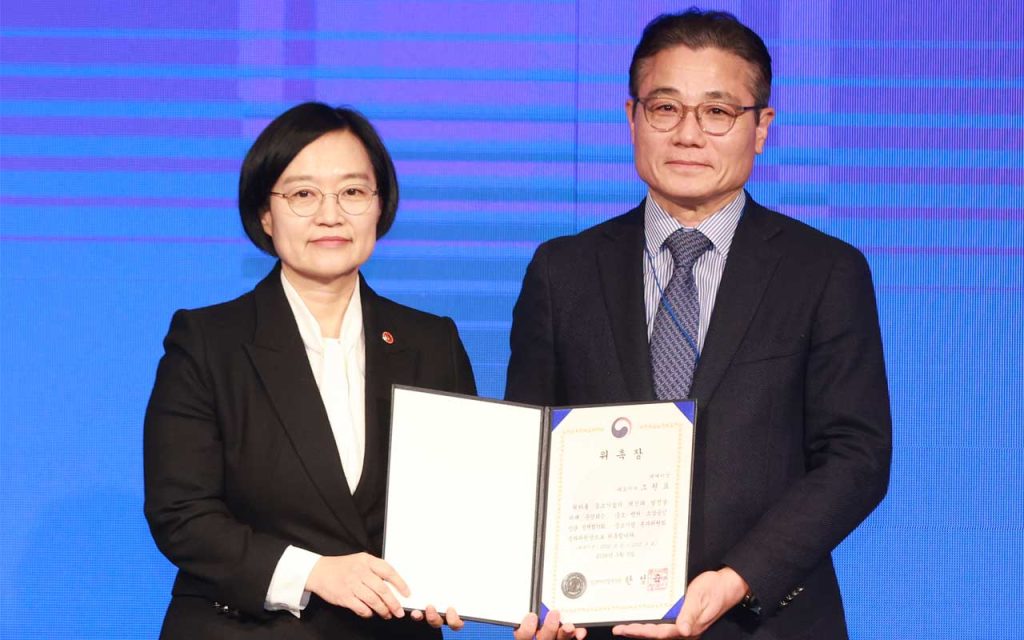
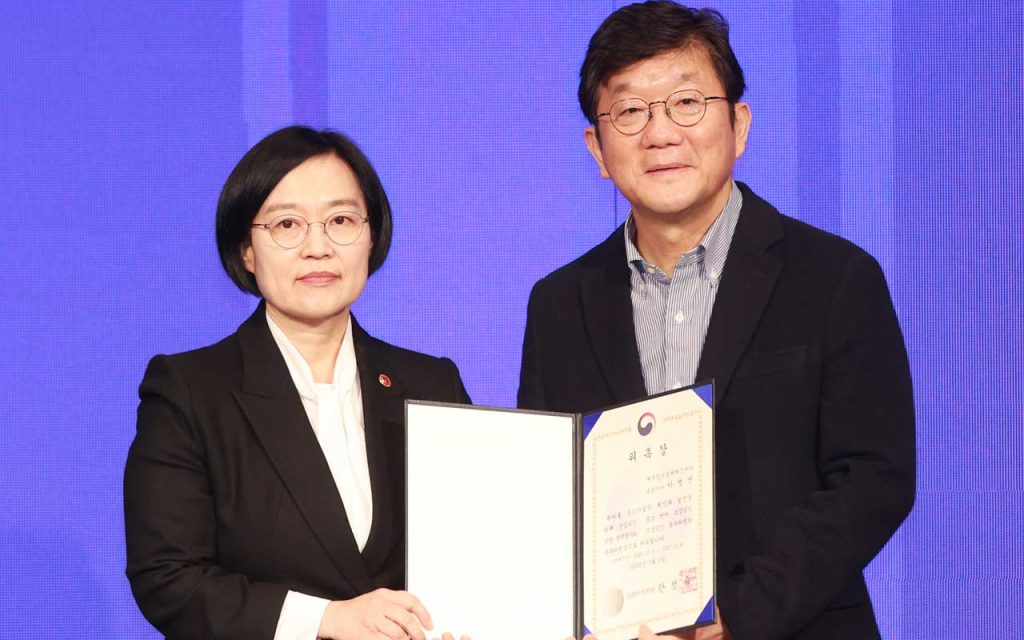
The initiative brings together 72 members from business, academia, venture capital, and industry associations to review existing government policies and identify new policy tasks affecting Korea’s small and venture business ecosystem.
The council will operate for one year and is co-chaired by MSS Minister Han Seong-sook and Lee Kwang-jae, former Secretary-General of the National Assembly.
Members are organized into four divisions covering key parts of the SME and startup landscape:
- SMEs
- startups and venture companies
- small business owners
- shared growth and fair competition
According to MSS, the council’s role is to evaluate existing policy programs and propose new initiatives that could shape future government strategy.
Ahead of the launch meeting, council members submitted more than 50 policy proposals. Discussions include topics such as:
- accelerating AI and AX transformation among SMEs
- revitalizing venture investment and the KOSDAQ market
- expanding AI education for small business owners
Following the ceremony, the four divisions held kickoff meetings to begin discussing the proposed policy agenda.
Policy Context: Korea’s Effort to Restore the “Growth Ladder”
The council emerges as the government continues pushing its broader policy goal of restoring the “growth ladder” for SMEs, ventures, and small merchants.
The concept refers to a structured pathway where companies can progress from early entrepreneurship to venture financing and eventually scale-up growth. Minister Han then encouraged private experts to share direct feedback on issues currently under review inside the ministry, saying,
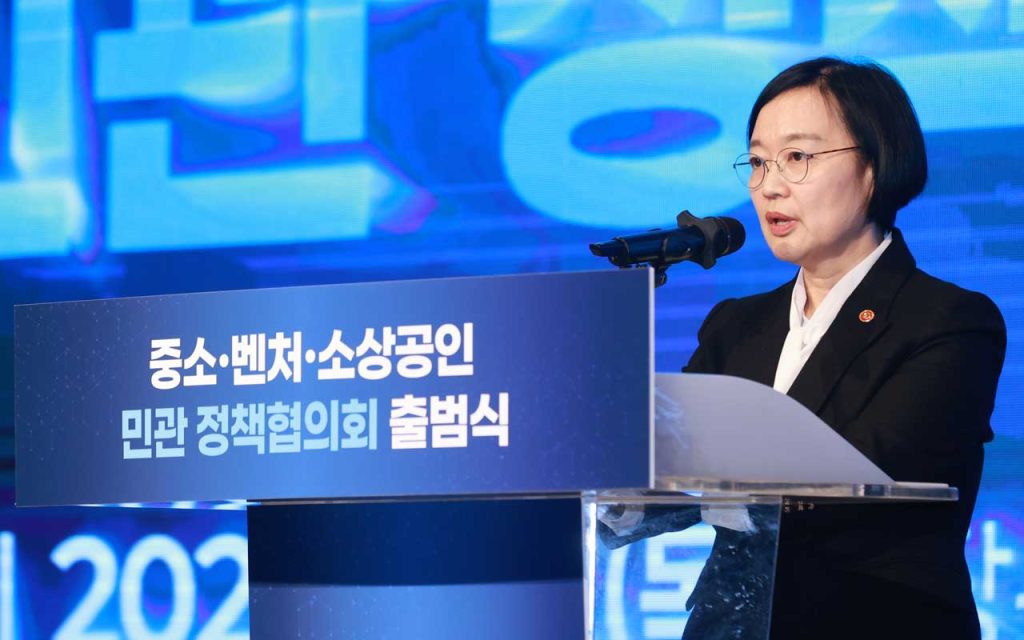
“We ask for open and candid opinions regarding the ministry’s current considerations, including a paradigm shift in SME policy during the AI transformation era, promoting growth, and reforming support systems to become more performance-oriented.
Ideas proposed in the council will be carefully reviewed, and when necessary we will closely consult with related ministries.”
The ministry said insights gathered through the council will help shape future policy direction beginning next year.
Officials Highlight Structural Issues in Korea’s SME and Venture Economy
During the launch event, co-chair Lee Kwang-jae outlined five policy topics the council plans to examine.
These include:
- overcoming the so-called “Peter Pan syndrome” in SMEs
- introducing an immediate payment system for supplier invoices
- increasing venture investment inflows including pension capital
- preventing technology misappropriation
- transitioning the economy from subsidy-dependent support toward investment-driven growth
Lee also referenced a report from the Sustainable Growth Initiative (SGI) under the Korea Chamber of Commerce and Industry, which estimates that company-size-based regulations may cause GDP losses of about 111 trillion KRW.
He argued that Korea may need to review how companies are categorized by size and explore financial tools such as factoring systems that can help firms manage the timing gap between revenue and cash flow.
Lee further emphasized the importance of expanding venture investment capital, stating that areas related to national security and technology development require strategic investment.
Government Invites Market Voices Into Policy Discussion
Minister Han said the council intended to incorporate field-level perspectives into policy design.
She encouraged private experts to share direct feedback on issues currently under review inside the ministry, including:
- shifting SME policy toward growth-oriented frameworks
- restructuring support systems toward performance-based evaluation
- adapting policy to the AI transformation era
The minister said ideas emerging from the council would be carefully reviewed by the ministry, with coordination across other government departments when needed.
MSS also indicated that meeting records will be reviewed regularly and that policy outcomes will be shared publicly.
Why the Council Matters for Korea’s Startup Ecosystem
The launch of the council reflects a new phase in Korea’s startup policy development.
Over the past year, the government has focused heavily on capital expansion and structural policy announcements, including programs aimed at strengthening venture investment and startup growth pathways.
Previously, we have highlighted several aspects of that policy shift, including
The new council introduces another layer to that strategy.
Instead of creating additional funding programs, the government is attempting to institutionalize dialogue between policymakers and private-sector actors.
The council structure brings together entrepreneurs, venture investors, academics, and industry representatives who can review policy proposals and suggest new initiatives.
For global investors observing Korea’s venture ecosystem, this mechanism may signal an attempt to align government policy more closely with market-level realities such as venture capital flows, technology commercialization, and SME financing constraints.
At the same time, the practical influence of the council will depend on how its recommendations translate into actual policy adjustments.
Policy Coordination Becomes the Next Test
South Korea has already committed significant resources to strengthening its startup ecosystem. Capital expansion, venture investment programs, and regional innovation initiatives are already underway.
The challenge now lies in aligning policy design with market experience.
By establishing a public–private policy council, the government appears to be experimenting with a more collaborative model of ecosystem governance.
If the council produces actionable proposals and those proposals influence future policy, the initiative could help bridge the gap between state-driven programs and the realities faced by startups and investors.
If not, the council may remain primarily consultative.
For now, the initiative reflects a recognition that rebuilding Korea’s startup growth ladder requires not only funding and programs but also continuous dialogue between policymakers and the ecosystem they aim to support.
Key Takeaways
- South Korea’s Ministry of SMEs and Startups launched a Public–Private Policy Council to review and propose policies for SMEs, ventures, and small business owners.
- The council includes 72 members from business, academia, venture capital, and industry groups and will operate for one year.
- Policy discussions cover issues such as venture investment expansion, KOSDAQ market revitalization, SME AI transformation, and small business AI education.
- Officials highlighted structural challenges including supplier payment delays, SME growth barriers, venture funding expansion, and technology protection.
- The initiative introduces a new layer of policy consultation between government and private ecosystem actors as Korea continues efforts to rebuild its startup “growth ladder.”
🤝 Looking to connect with verified Korean companies building globally?
Explore curated company profiles and request direct introductions through beSUCCESS Connect.
– Stay Ahead in Korea’s Startup Scene –
Get real-time insights, funding updates, and policy shifts shaping Korea’s innovation ecosystem.
➡️ Follow KoreaTechDesk on LinkedIn, X (Twitter), Threads, Bluesky, Telegram, Facebook, and WhatsApp Channel.
[ad_2]