The United States has increased its military presence in the Middle East, deploying more than 50 fighter jets in the past 24 hours even as it pursues fresh diplomatic talks with Iran over Tehran’s nuclear programme.
US officials describe the move as a significant reinforcement of air and naval assets in the region. Axios first reported the buildup, citing a US official who confirmed the aircraft movements.
Independent flight-tracking data and military aviation monitors recorded multiple F-22, F-35 and F-16 fighter jets heading toward the region, along with several aerial refuelling tankers — a sign the aircraft are preparing for sustained operations.
A US official told Axios that “more than 50 fighter jets have been moved to the region in the past 24 hours,” underscoring the scale and speed of the deployment.
The surge comes as American and Iranian officials hold a second round of indirect nuclear negotiations in Geneva.
SECOND CARRIER STRIKE GROUP ON THE WAY
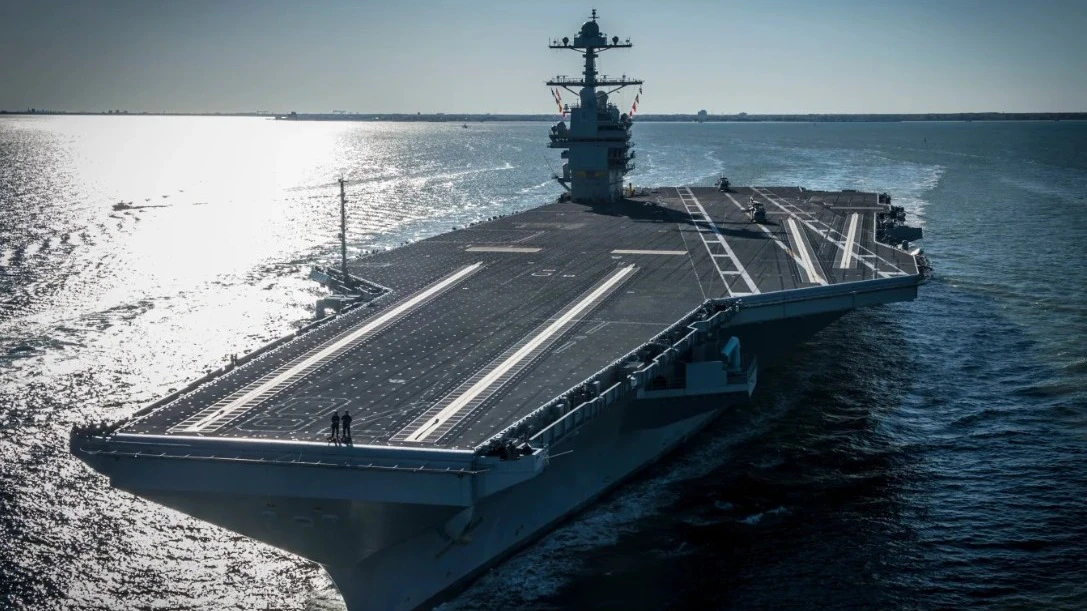
Meanwhile, the USS Gerald R. Ford aircraft carrier strike group has departed the Caribbean and is now in the mid-Atlantic, heading toward the Middle East, a Navy official said Tuesday. According to the Associated Press, the official, speaking on condition of anonymity due to the sensitivity of ship movements, said the Ford is sailing with three guided-missile destroyers — the USS Mahan, USS Bainbridge and USS Winston Churchill.
Given its current position, the carrier group is likely more than a week away from waters near Iran.
The USS Abraham Lincoln and other significant US air and naval assets were already deployed to the region earlier this year, deepening Washington’s military footprint.
TALKS SHOW CAUTIOUS PROGRESS
Despite the visible show of force, both sides have struck a cautiously optimistic tone about diplomacy.
US officials said the Geneva talks “made progress,” though “there are still a lot of details to discuss.” After meetings involving Trump’s envoys Jared Kushner and Steve Witkoff, Iranian representatives indicated they would return within two weeks with more detailed proposals “to address some of the open gaps in our positions,” according to a US official.
Iran’s Foreign Minister Abbas Araghchi described the discussions as “serious, constructive and positive.” He told Iranian state television that “good progress was made compared to the previous meeting, and we now have a clearer path ahead.”
“Ultimately, we were able to reach a general understanding on a set of guiding principles,” Araghchi said. He cautioned that “this does not mean that we can reach an agreement quickly, but at least the path has begun.”
Omani Foreign Minister Badr Albusaidi, who mediated the talks, said the negotiations ended “with good progress towards identifying common goals and relevant technical issues.”
– Ends
With inputs from Associated Press
Tune In