As the Iranian regime suppresses civilian protests in the country, in the process reportedly killing thousands of protesters, Trump weighs his options.
Ten days ago, he said the US was prepared to go to the “rescue” of Iranian protesters if their government used violence against them.
The US was, the president said, “locked and loaded and ready to go.”
On January 13, Reuters reported, quoting an Iranian official, that over 2,000 people have died in two weeks of deadly protests.
Meanwhile, Trump issued his clearest warning to the Iranian regime.
“Head Exploding From Inside”: How U.S. Hybrid Warfare Left Maduro’s Soldiers Vomiting Blood In Blacked-Out Caracas
“Iranian Patriots, KEEP PROTESTING – TAKE OVER YOUR INSTITUTIONS!!! Save the names of the killers and abusers. They will pay a big price. I have cancelled all meetings with Iranian Officials until the senseless killing of protesters STOPS. HELP IS ON ITS WAY. MIGA!!! PRESIDENT DONALD J. TRUMP,” Trump said in a post.
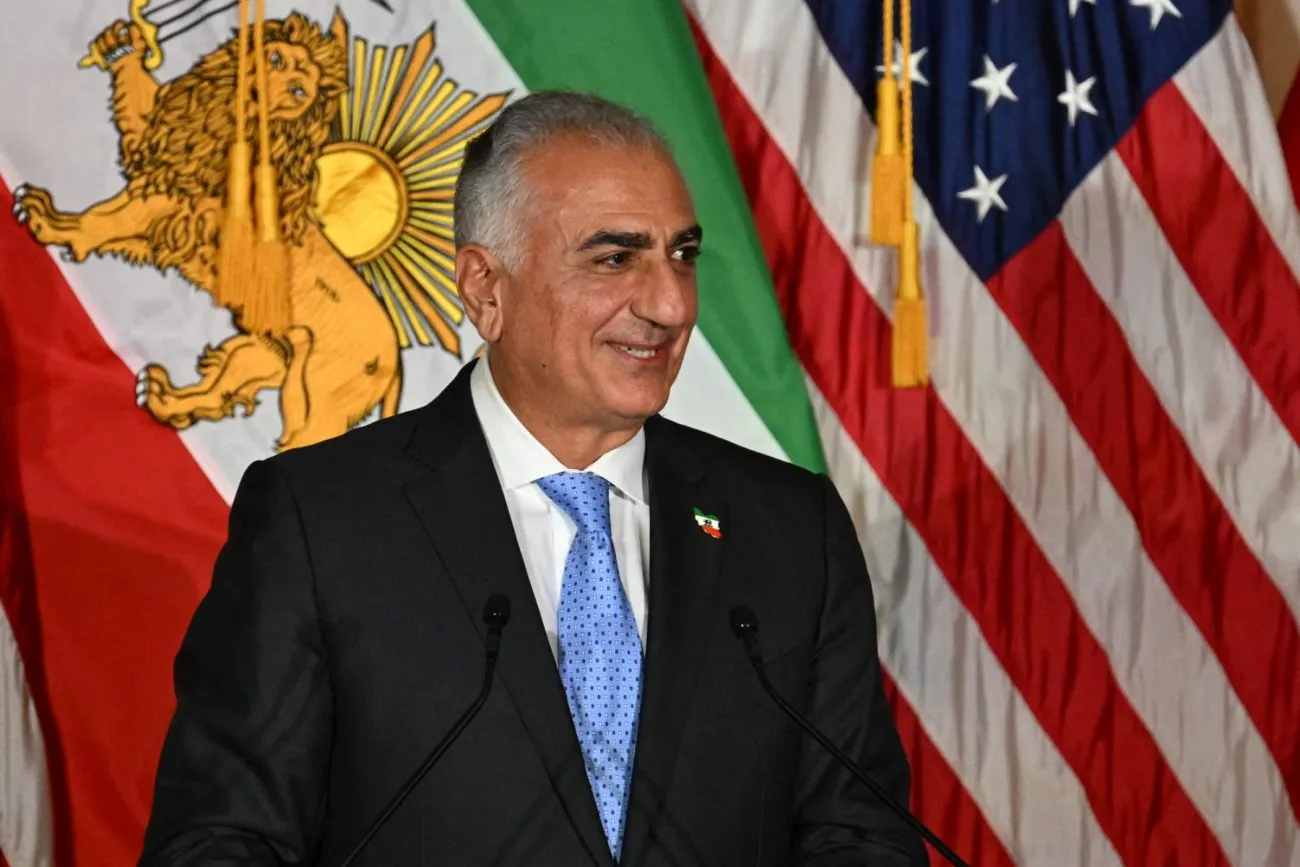
Meanwhile, Iran’s exiled crown prince, Reza Pahlavi, is preparing to return to his country triumphantly. Reza Pahlavi has been living in the US since 1978.
“Pahlavi will return” has been a popular slogan on the streets of Iran during recent protests.
Incidentally, if Reza Pahlavi returns to Iran after US intervention, this would be the second time a Pahlavi dynasty scion has returned to power in Iran following a US-sponsored regime change, and it would accommodate US/Western oil interests.
Russia’s Greenland Twist: Putin Called Trump’s Plans ‘Serious & Historical’ — Backing The U.S. Ambitions In 2025
Over seven decades ago, it was Reza Pahlavi’s father, Mohammad Reza, who returned to power in Tehran after a coup deposed a popularly elected leader, Prime Minister Mohammad Mosaddegh.
Mosaddegh had nationalized Iran’s oil industry, kicking out the British oil company BP from the country’s lucrative oil fields. After returning to power, Mohammad Reza once again opened Iran’s oil resources to Western oil companies.
The US intervention in Iran in 1953 served the interests of Western oil companies; however, Mohammad Reza’s rule did not last long.
Geran-5: After Shahed-136, Russia Clones & Upgrades Iran’s Karrar Drone – Poised For Su-25 Air-Launches
The US intervention became one of the trigger points for the 1979 Islamic revolution in Iran and decades of anti-Americanism in the country.
As Trump weighs his options for another military intervention in the country, it is worth revisiting the 1953 US-sponsored coup in Iran, which, though it temporarily established a pro-Western ruler in Tehran, also became the basis for decades of anti-Americanism in a strategically important country with vast energy reserves.
Operation Ajax
During the height of the Cold War in the 1950s, Washington considered the Middle East, in general, and Iran, in particular, among the great strategic prizes in the geopolitical and ideological struggle against the Soviet Union.
In April 1951, Mohammad Mosaddegh became the Prime Minister of Iran. At the time, the country was going through a severe economic crisis.
Mossadeq’s immediate concern was a struggle for control of the Anglo-Iranian Oil Company (AIOC). By 1950, the British oil concession in Iran, which the Shah had renewed in 1949, was a sore point in relations between the two countries.
In 1951, just three days after becoming Prime Minister, Mossadeq nationalized Iran’s oil industry.
AIOC’s nationalization brought Iran into immediate conflict with Britain. The British government owned half of AIOC’s stock and did not intend to allow Mossadeq to nationalize its assets without adequate compensation, as required under international law.
When it seemed clear that Tehran had no intention of compensating London for AIOC’s assets, the British mounted a multi-pronged effort to reassert control over the company.
In September 1951, Britain imposed an embargo on shipments of steel, sugar, iron, and oil—processing equipment to Iran—that is, on almost anything the Iranians could exchange for dollars.
This embargo led to a gradual chokehold on the Iranian oil trade. Simultaneously, Britain organized military drills in the Persian Gulf to put military pressure on Mossadeq.
Britain also considered a covert operation to overthrow Mossadeq. However, London realized that it could not do so without Washington’s support.
In 1952, Mossadeq opened a new front against the king, Mohammad Reza, curtailing his powers.
By 1953, the US agreed to support Britain in the overthrow of Mossadeq. Though the US initially opposed military intervention, it later changed its mind for various reasons.
The US needed British support in the fight against the Soviet Union, to stop the spread of Communism, in the Korean War, and to strengthen NATO, which was just taking shape.
To enforce a regime change in Iran, the US and the UK launched Operation Ajax.
Reuters Deletes Pakistan’s 6-9 Fighter Jet Losses From JF-17 Story; But The Truth Lives On In Syndications!
CIA and MI-6 funded agents fomented unrest among the masses, the Iranian Army, religious leaders, and Mossadeq’s opponents.
As unrest spread, the Shah fled Iran with his family.
On August 19, 1953, a faction of the Iranian Army loyal to the Shah, the royalists and religious conservatives, fought pitched battles with the supporters of Mossadeq on the streets of Tehran.
Hundreds of people died in these clashes; however, the Army’s support for the Shah proved crucial. By the evening, Mossadeq had surrendered to the army. The coup was successful.
Initially, there was debate on the role of the CIA in the protests. However, in 2017, the CIA released documents revealing that the networks established by British intelligence services had been used to run a campaign of propaganda and paid-for protests, resulting in the rapid destabilization of the nation.
The Shah, who was staying in Italy, returned to Tehran and assumed power once again.
Mosaddegh was arrested, tried, and originally sentenced to death. But on the Shah’s personal orders, his sentence was commuted to three years’ solitary confinement in a military prison, followed by house arrest until his death.
Following the coup, the Shah ordered the end of the AIOC’s monopoly on Iranian oil. Iranian oil fields were opened for five American oil companies. According to documents released by the CIA years later, Operation Ajax was sanctioned by President Eisenhower himself.
Even after the coup, the British and American spy agencies strengthened the monarchy in Iran by backing the pro-Western Shah for the next 26 years.
However, this blatant external intervention also made the Shah unpopular and laid the ground for the 1979 Islamic revolution.
U.S. B-52 Bomber Crash In Greenland: Nuclear Warhead Missing Since 1968; Cold War Ghost Haunts The Arctic
Furthermore, after the Islamic revolution, not only were US oil companies banished from Iran, but the country also became the centre of anti-Americanism in the Middle East for decades to come.
Additionally, Tehran became one of the closest allies of US adversaries, such as Russia and China.
As Washington prepares to intervene in Iran once again, and the exiled crown prince prepares to return to his country, Trump should remember that external interference in a country often produces opposite results.