In a swift recalibration of global economic alliances, UK Prime Minister Keir Starmer is scheduled to fly to China on Tuesday evening to mend fractured diplomatic and trade ties. In another West-East alliance, Canadian Prime Minister Mark Carney is finalising plans for a high-level visit to India in March, aimed at a rapid expansion of bilateral trade.
These movements follow the landmark signing of the India-European Union (EU) Free Trade Agreement, a massive deal that integrates a market of two billion people. And Brazilian President Luiz Inacio Lula da Silva is set to lead a major high-level delegation to India from February 19 to 21, even renting a 500-seat auditorium for two days to host meetings between President Lula and Indian business leaders.
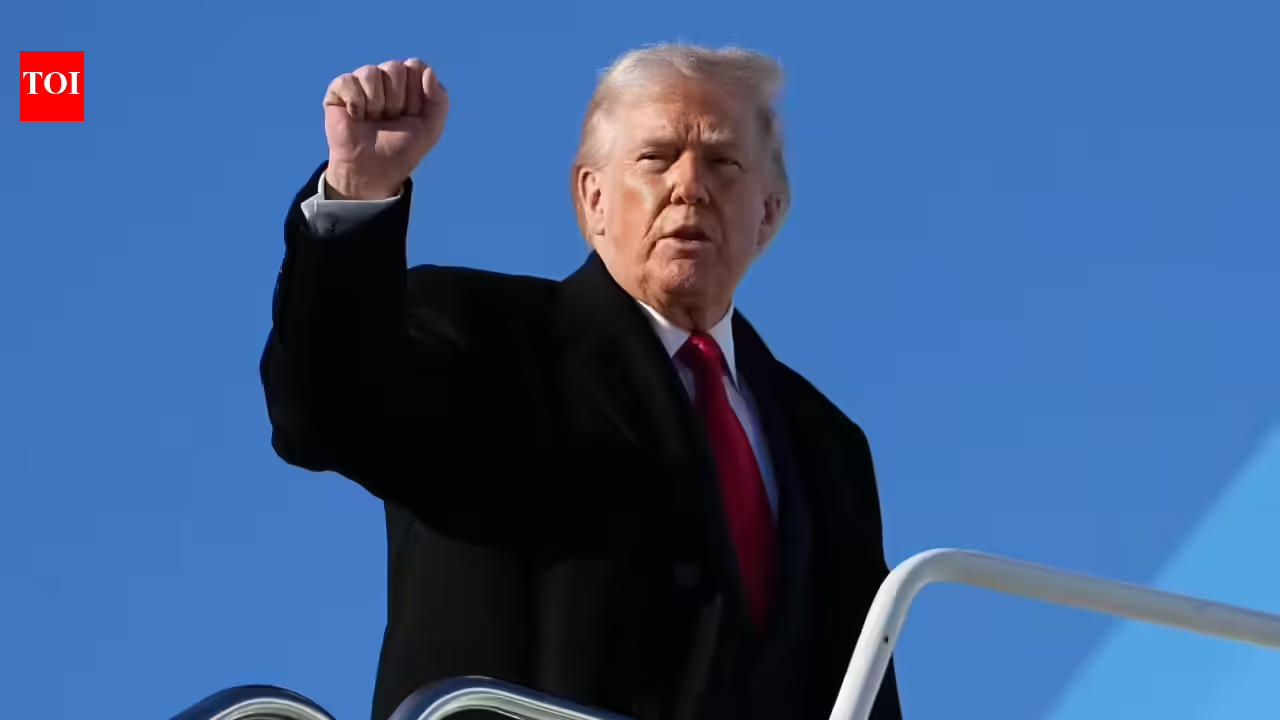
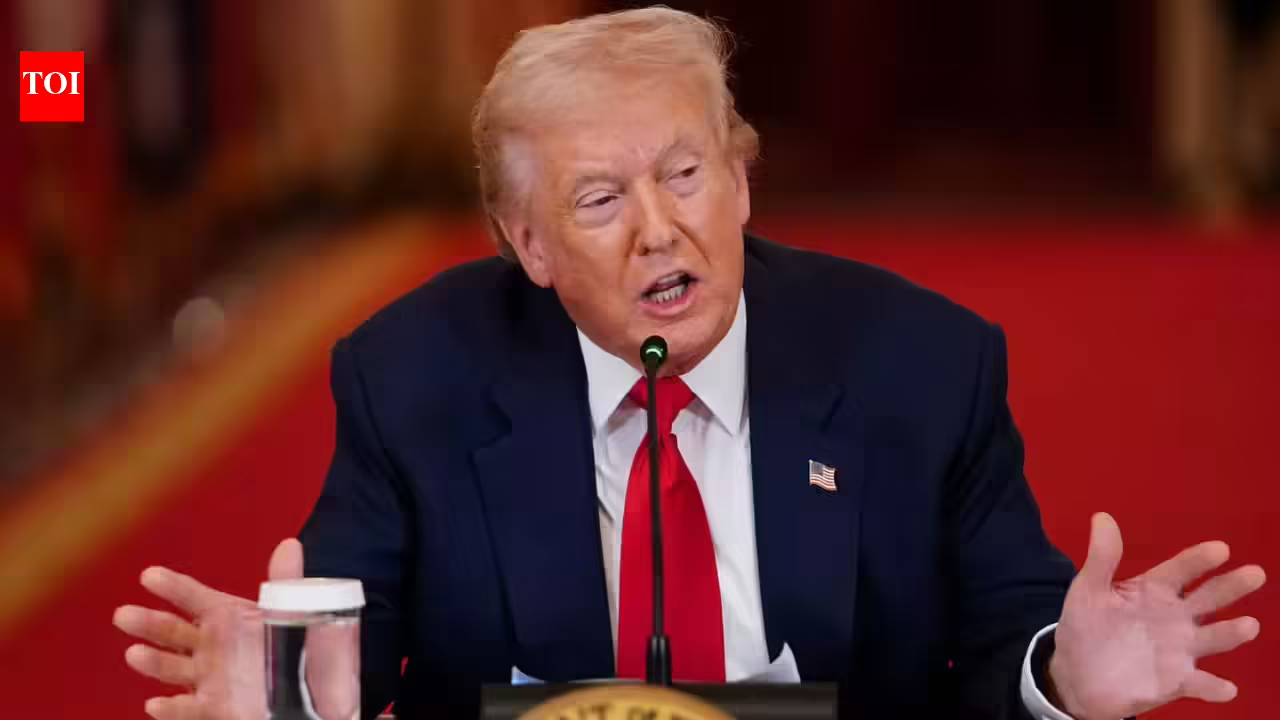
The common thread weaving these disparate diplomatic moves together is a growing international urgency to de-risk and diversify trade. And that’s necessitated by the protectionist policies and tariff threats from the US led by a “mercurial” Donald Trump.
Starmer’s pivot to Beijing
UK PM Starmer’s three-day visit marks the first time a British leader has visited China in eight years. Accompanied by dozens of business executives and two ministers, Starmer is slated to meet Chinese President Xi Jinping and Premier Li Qiang in Beijing before traveling to commercial hub Shanghai.
The primary objective of the trip is to reduce Britain’s economic dependence on an “increasingly unpredictable” United States, Reuters reported citing officials.
Since his election in 2024, Starmer has prioritised resetting ties with the world’s second-largest economy. The UK has already signed a trade deal with India, the other South Asian giant.
This strategy appears to be a direct response to volatile trade environments.
Kerry Brown, a professor of Chinese Studies at King’s College, London, told Reuters that “London is probably closer to Beijing than Washington” on critical global issues such as artificial intelligence, public health, and the environment. Despite concerns regarding national security and human rights with China, the British government views closer business ties as a matter of national interest.
In the 12 months leading to mid-2025, trade between Britain and China totaled approximately 100 billion pounds ($137 billion), making China the UK’s fourth-largest trading partner.
Canada’s thaw with India
Across the Atlantic, Canada is executing its own “trade diversification” strategy to shield its sovereignty from the Trump administration.
Prime Minister Mark Carney is expected to visit India in the first week of March, weeks after the tabling of India’s Union Budget. This pivot follows years of strained relations during the Justin Trudeau era, which are now beginning to thaw.
The urgency in Ottawa is driven by President Trump’s recent reference to Canada as a potential “51st state” and threats of a 100% tariffs.
Canadian foreign minister Anita Anand has been vocal about this shift, asserting at the World Economic Forum in Davos that “Canada will never be the 51st state”.
Anand emphasised that Canada has no choice but to forge ahead with a strategy to double its non-US exports within a decade.
“That is why we went to China, that’s why we will be going to India and that is why we won’t put all our eggs in one basket,” she said clearly.
The upcoming delegation to India is expected to sign significant deals regarding uranium, energy, critical minerals, and AI.
Both nations share a similar predicament, as India currently faces a 50% tariff from the US (including penalties over Russian oil), while Canada faces a 35% tariff.
‘Mother of all deals’
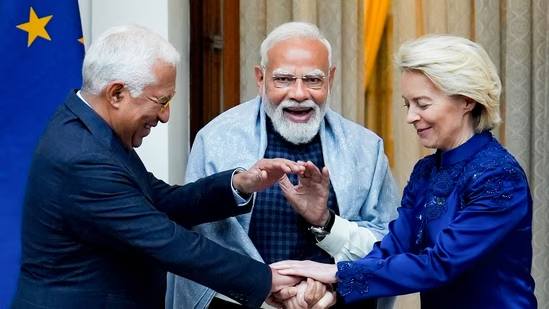
The most significant development in this global shift is the finalised India-EU free trade agreement (FTA), signed on January 27, 2026. Described by European Commission President Ursula von der Leyen as the “mother of all deals”, the agreement accounts for nearly a fourth of global GDP.
“We have concluded the mother of all deals. We have created a free trade zone of two billion people, with both sides set to benefit,” von der Leyen stated, adding that “history has been made today”.
The FTA is designed as a strategic counterweight to Donald Trump’s tariff-heavy approach. Key features of the deal include:
- EU will eliminate or reduce tariffs on 96.6 per cent of its goods exports to India, saving European products up to €4 billion per year in duties.
- India will see tariffs scrapped on 90 per cent of its goods at launch, rising to 93 per cent within seven years.
- In India, the prices of EU cars, wines, and processed foods like pasta and chocolate are expected to drop significantly as high tariffs are phased out.
Prime Minister Narendra Modi hailed the agreement as a “perfect example of a partnership between two major economies of the world”.
He further noted that the deal empowers a shared commitment to democracy and the rule of law while complementing existing agreements with Britain and the European Free Trade Association (EFTA).
Shadow of Washington
The rapid formation of these new trade ties has not gone unnoticed in Washington.
US treasury secretary Scott Bessent recently doubled down on allegations that India’s trade with Russia “finances the war” in Ukraine. His comments came just as the new India-EU partnership formed.
Regarding Canada, Scott Bessent warned that the US cannot allow the country to become an opening for “cheap goods” from China to pour into the US market.
However, the prevailing sentiment among these nations appears to be one of calculated independence, or as India’s foreign minister S Jaishankar calls it: “strategic autonomy”.
“Everybody knows that India has relations with all the major countries of the world. And for any country to expect to have a veto on how we develop our relationships with others, is not fair,” Jaishankar said recenly, speaking at the Hindustan Times Leadership Summit in New Delhi.
(inputs from Reuters, ANI)