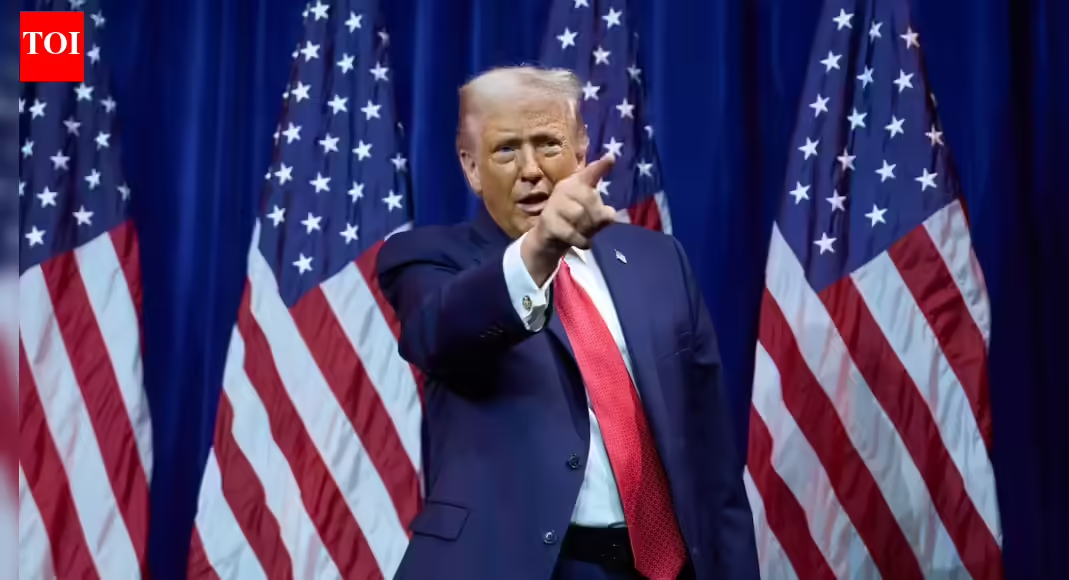
In a sweeping overhaul of America’s global footprint, President Donald Trump has authorised the withdrawal of US from 66 international organisations, marking one of the most significant retreats from multilateralism in modern history. The pullout is from all major climate-linked global bodies, including India-headquartered International Solar Alliance and UN Framework Convention on Climate Change. Though the withdrawal from ISA, a collaborative initiative of India and France to increase solar footprints globally, will not affect the alliance’s key goal, the move came as a surprise as the Trump administration had never hinted at it after withdrawing from the Paris agreement on climate change.US move coincides with call for defence budget riseThe withdrawal, announced on Jan 7 via a presidential memorandum, affects 31 United Nations entities and 35 non-UN groups, including key bodies focused on health and education. This action coincides with Trump’s call for a $1.5 trillion defence budget in fiscal year 2027, a staggering 50% increase over current levels, fuelling debates about a shift towards a “Fortress America” doctrine that prioritises domestic strength, protectionism over global engagement. The withdrawals build on an executive order issued shortly after Trump’s inauguration in Jan 2025, which directed a review of US participation in international bodies deemed contrary to national interests. Prominent targets include Unesco, which the US had briefly rejoined under the previous administration; and potentially WHO, echoing Trump’s first-term defunding over alleged biases toward China. Other entities span trade, human rights, and environmental forums, with the state department citing a total of 66 as “wasteful, ineffective, or harmful”. In some cases, Washington has formally withdrawn; in others, it has suspended funding, reduced diplomatic engagement or signalled an intention to exit when legal timelines allow. Administration officials say these organisations “no longer serve American interests” and often promote policies seen as hostile or inefficient. For instance, climate-related bodies are criticised for imposing undue burdens on US business and industry without reciprocal commitments from “major emitters” like China and India, even though their per capita emission is a fraction of American emissions. Unesco and similar groups face accusations of waste and mismanagement, with secretary of state Marco Rubio highlighting redundancy and a lack of tangible benefits for US taxpayers. Trump himself has framed the decisions as part of his “America First” agenda, arguing that funds previously allocated to these entities – estimated at billions annually – should be redirected domestically to address border security, infrastructure, and economic recovery. Supporters, including Republican lawmakers, applaud the move as a correction to decades of overcommitment, freeing resources amid a national debt heading towards $40 trillion. Foreign policy experts point to the Dec 2025 National Security Strategy, which critiques US allies in Europe and Asia for insufficient burden-sharing while prioritising unilateral actions. The document, released under Trump’s direction, describes an “America First” framework that sceptics label as neo-isolationist, though administration officials insist it avoids outright withdrawal from core alliances like Nato, which is also under siege from Washington over the Greenland issue. This approach is straining US ties across the globe: European leaders have decried the US exits as a blow to collective security, while adversaries like Russia and China are relishing the perceived vacuum. Partners like India, Japan, and Australia have been hung out to dry. Analysts argue the policy fosters adversity by undermining multilateralism, with some of them warning that Trump’s strategy risks damaging US power, economy, and security through hostility toward global cooperation. The proposed $1.5 trillion defence budget, unveiled on Jan 7, underscores this pivot. Trump justified the hike – up from the current $1 trillion – as essential for building a “dream military”, with allocations for nuclear modernisation, missile defence, and cyber capabilities.
Trump pulls US out of India-led solar alliance, key climate pact