Israel is facing the largest continuous Iranian assault since hostilities escalated three weeks ago, Channel 14 reported, marking a sharp escalation in the US-Israel-Iran conflict.
Iran launched its largest missile salvo since the start of the war, firing around 10 ballistic missiles towards central Israel, according to Israeli media.
Sirens sounded across central Israel as the missiles were detected, with explosions heard in Tel Aviv and surrounding areas, including the Shephelah and Jerusalem region.
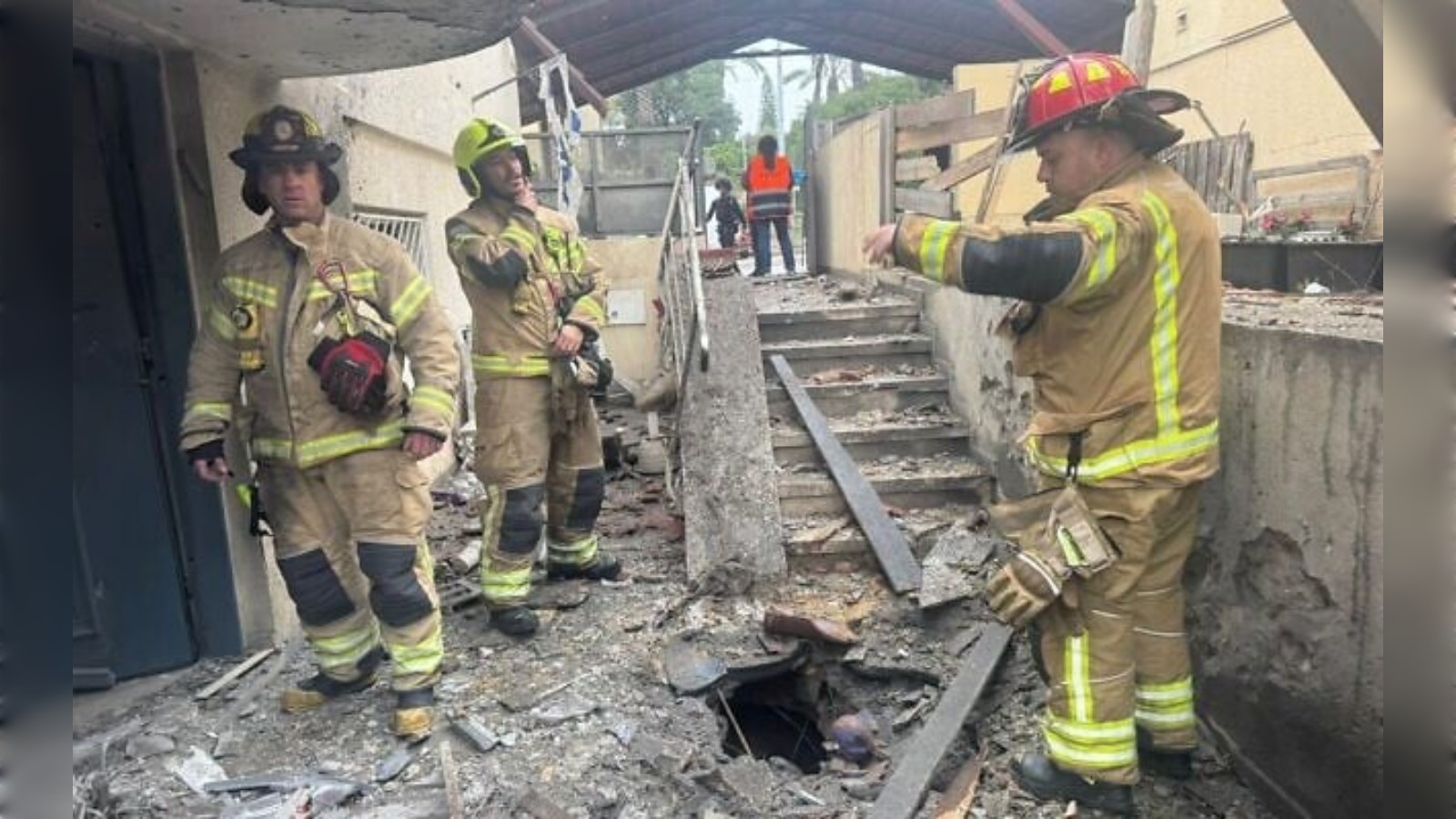
One missile reportedly carried a cluster warhead, dispersing bomblets over a wide area. Damage was reported to homes and vehicles in Rosh Haayin and Petah Tikva, while a bomblet also struck a playground in Petah Tikva.
Rescue teams responded to multiple impact sites, likely caused by falling debris. No injuries were reported.
Earlier, the military said it detected a missile launched from Yemen along with four additional rounds of Iranian fire, triggering sirens across central and northern Israel.
The Israeli Air Force said it had begun an “extensive wave” of strikes targeting Iranian infrastructure in Tehran while continuing interception operations.
Conflict intensifies after weeks of sustained strikes
The US and Israel have maintained airstrikes on Iran since February 28, reportedly killing more than 1,340 people, including former Supreme Leader Ali Khamenei.
Iran has retaliated with drone and missile attacks targeting Israel as well as Jordan, Iraq and Gulf states hosting US military assets, causing casualties, infrastructure damage and disruption to global markets and aviation.
US signals drawdown while maintaining pressure
US President Donald Trump said Washington would be “out of Iran pretty quickly” while retaining the option of targeted strikes.
He said US action had neutralised Iran’s nuclear capability and warned further “spot hits” could follow if needed.
Trump briefs Saudi crown prince on ceasefire talks
Trump spoke by phone with Mohammed bin Salman on Wednesday to discuss the Iran conflict, according to Reuters citing an Axios report.
He briefed the Saudi leader on ongoing discussions over a possible ceasefire.
Backchannel diplomacy continues alongside air campaign
US Vice-President JD Vance has been in contact with intermediaries, warning pressure on Iranian infrastructure will intensify without an agreement.
US operations under “Operation Epic Fury” continue, with more than 12,000 combat sorties flown so far.
Domestic criticism grows in Washington
Democratic Senator Chris Coons described the conflict as a “war of choice”, warning it is driving up fuel, food and housing costs.
Hormuz Strait emerges as key flashpoint
Washington has tied any ceasefire to reopening the Strait of Hormuz.
Iran’s Islamic Revolutionary Guard Corps (IRGC) said the strait remains under its control and “will not be opened to the enemies of this nation”.
US, Iran explore ceasefire deal linked to Hormuz
The United States and Iran are discussing a potential agreement involving a ceasefire in exchange for reopening the Strait of Hormuz, Axios reported.
There is no confirmation that a deal will be reached.
UK-France initiative seeks to reopen key route
The United Kingdom will host talks with 35 countries on reopening the strait, Prime Minister Keir Starmer said.
Foreign Secretary Yvette Cooper will join international leaders, though the US will not participate.
Iran mocks Trump, rejects ceasefire claims
Iran dismissed assertions that it had sought a ceasefire, reaffirming that President Masoud Pezeshkian remains in office.
The Consulate General of Iran in Mumbai said it was “almost poetic” the claim came on April Fools’ Day, adding that “presidents aren’t replaced by tweets”.
Foreign Minister Abbas Araghchi said reports of a ceasefire proposal were “media speculation” and insisted the war would continue until the “aggressor is punished”.
Foreign Ministry spokesperson Ismail Baghaei called US claims “false and baseless”.
Tehran signals readiness for prolonged war
Araghchi said Iran is prepared for “at least six months” of war and is not seeking a quick resolution.
Baghaei said Iran’s leader Mojtaba Khamenei remains in “perfect health” but has stayed out of public view due to the conflict.
Israel expands strikes beyond Iran
Israel said it killed Hezbollah southern front commander Hajj Yusuf Ismail Hashem in a strike on Beirut, indicating a widening confrontation involving Iran-backed groups.
Gulf states reinforce defences
The Ministry of Interior in Bahrain said it would not be drawn into the conflict while reaffirming national security commitments.
Authorities said civil defence teams extinguished a fire at a company facility following what was described as an Iranian attack.
Regional officials condemned the strikes as violations of international law, while Bahrain released footage of its air defence response.
Kuwait said it intercepted three cruise missiles and 15 drones over the past 24 hours and confirmed a fire at Kuwait International Airport had been extinguished with no casualties.
Amazon cloud facility hit amid broader threat
The Amazon cloud computing operation in Bahrain was damaged in the strike, the Financial Times reported.
The development follows a warning from Iran’s Islamic Revolutionary Guard Corps that American companies in the Gulf region could be targeted if further Iranian leaders are killed.
Civilian toll rises across region
Lebanon’s Health Ministry said at least 1,318 people have been killed and 3,935 injured in Israeli strikes since March 2.
Indian Navy flags rising maritime risks
Admiral Dinesh K Tripathi warned that escalating tensions are shifting conflict dynamics to the seas, increasing risks to global trade and critical energy routes, PTI reported.
Conflict threatens global energy stability
The widening conflict is raising concerns over regional stability and potential disruptions to global oil supply.