Iran-US Tensions: The United States and Iran are expected to hold their next round of nuclear talks on 26 February, news agencies reported, as the Islamic Republic faces both the threat of a US military strike and new protests at home.
Oman’s foreign minister, Badr al-Busaidi, was on Sunday quoted by news agency AP as confirming the talks. Oman had hosted the indirect talks on the Islamic Republic’s nuclear program and facilitated the latest round in Geneva last week.
Al-Busaidi was also quoted by news agency AFP saying the talks would resume on Thursday in Geneva “with a positive push to go the extra mile towards finalising the deal”.
There was no immediate comment from the Trump administration on the talks. The US has reportedly built up the largest military presence in the Middle East in decades as it pushes its longtime adversary for concessions on its nuclear program and more.
Good chance of a diplomatic solution: Araghchi
Before Oman’s announcement, Iran’s Foreign Minister Abbas Araghchi told CBS in an interview that he expected to meet the US envoy, Steve Witkoff, and hoped there was a “good chance” of a diplomatic solution to the nuclear issue.
Araghchi also said that the details of a possible deal were being drawn up, after Washington’s envoy Steve Witkoff had publicly wondered why Tehran had not yet “capitulated”.
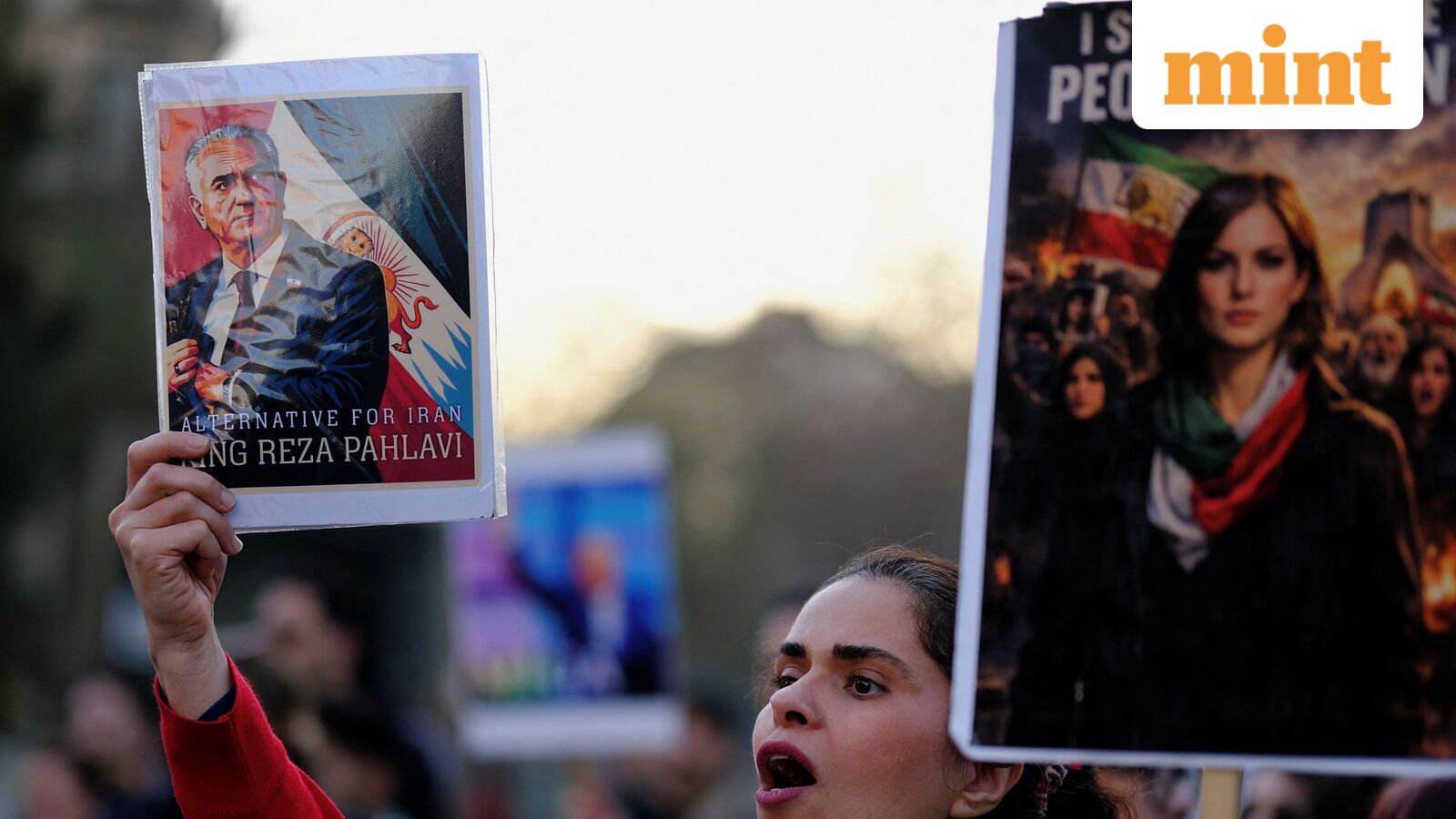
US threats of military action have multiplied since a nationwide protest movement in Iran sparked a crackdown that rights groups say killed thousands. On Sunday, Iranian students held competing pro- and anti-government protests, with critics of the clerical leadership risking arrest or worse if they are caught.
“If the US attacks us, then we have every right to defend ourselves,” Araghchi said, alluding to American interests in the region as potential targets. There is still a good chance to have a diplomatic solution, he was quoted as saying in an AFP report.
President Donald Trump warned on Friday that limited strikes against Iran are possible, and both Iran and the US have signalled they are prepared for war if the talks on Tehran’s nuclear program fail.
Minutes after Oman’s confirmation of the talks, Iranian President Masoud Pezeshkian said in a social media post that negotiations had involved “the exchange of practical proposals and yielded encouraging signals.” But, he said, that Tehran has “made all necessary preparations for any potential scenario.”
Axios had earlier reported, citing an unnamed senior US official, that if Iran submitted its proposal in the next 48 hours, Washington was ready to meet again later in the week “to start detailed negotiations”.
The US has sent two aircraft carriers to the Middle East in recent weeks, along with other jets and ships, and has also shored up its air defences in the region to back up its threats of military intervention.
USS Gerald R Ford
Tensions are also rising around the Strait of Hormuz after recent live-fire drills. Iran has warned that any attack would make US assets in the region “legitimate targets”. USS Gerald R. Ford, an aircraft carrier of the United States Navy, is reportedly moving to join the USS Abraham Lincoln, creating a dual-carrier presence described as a major mobilisation. Israel is also reported to be stepping up joint planning with Washington.
Witkoff said in a Fox News interview broadcast Saturday that the president was questioning why Iran had not yet given in to the pressure.
Tehran wants to focus on the nuclear programme
Nuclear talks between Iran and the US had been deadlocked for years after Trump’s decision in 2018 to unilaterally withdraw the US from Iran’s 2015 nuclear deal with world powers.
Tehran has long insisted that any negotiations should only focus on its nuclear programme, and has refused to discuss wider US and Israeli demands that it scale back its missile programme and sever ties to armed groups.
Although Iran insists its nuclear program is peaceful, the US and others suspect it is aimed at eventually developing weapons. Iran says it hasn’t been enriching uranium since US and Israeli strikes on Iranian nuclear sites in June 2025.
President Trump had then said the strikes had “obliterated” Iran’s nuclear sites, but the exact damage is unknown because Tehran has barred international inspectors.
Fresh protests in Iran
Amid the confirmation of new talks, a wave of new anti-government protests began in Iran, according to witnesses quoted by news agency AP. University students in Tehran and another city demonstrated around memorials for thousands of people killed in a crackdown on previous nationwide demonstrations about six weeks ago.
The AP reported that Iran’s state news agency attributed the protest to students at five universities in Tehran and one in the city of Mashhad on Sunday. The scattered protests erupted Saturday at universities following 40-day memorials for people killed in January during anti-government rallies.
Videos posted on social media appeared to show confrontations at two universities between government supporters and anti-government protesters, with some chanting “Death to dictator.”
Many Iranians have held ceremonies marking the traditional 40-day mourning period in the past week. Most of the protesters are believed to have been killed around Jan. 8 and 9, according to activists tracking the situation.
The US-based Human Rights Activists News Agency says at least 7,015 people were killed in the previous protests and crackdown, including 214 government forces. The group has been accurate in counting deaths during previous rounds of unrest in Iran and relies on a network of activists there to verify deaths.
The death toll continues to rise as the group cross-checks information despite disrupted communication with those inside the Islamic Republic.
If the US attacks us, then we have every right to defend ourselves.
Iran’s government offered its only death toll from the previous protests on 21 January, saying 3,117 people were killed.
Key Takeaways
- The upcoming nuclear talks between the US and Iran may be pivotal in shaping future relations.
- Military buildup in the Middle East reflects escalating tensions and potential for conflict.
- Domestic protests in Iran highlight internal dissent, complicating diplomatic efforts.