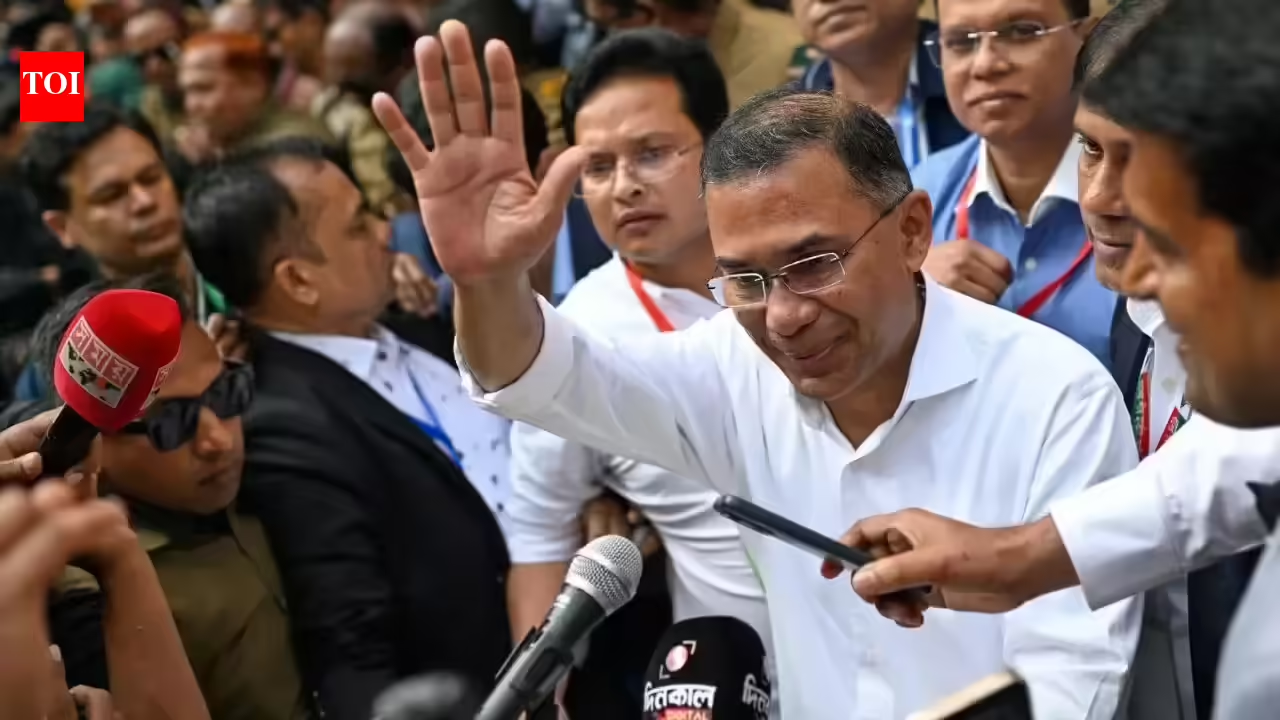
DHAKA: Tarique Rahman-led BNP was cruising to the halfway mark of 150 – winning 120 of the 300 parliamentary seats and leading in 55 more – leaving behind its rival and Bangladesh’s largest Islamist party, Jamaat-e-Islami, on Thursday, as counting was under way after Bangladeshis voted in the first national election since the 2024 ‘July Uprising’ ousted long-time PM Sheikh Hasina. The turnout, however, was just 47%. By midnight, it had taken an unassailable lead over the hardline anti-India Jamaat and its allies – trailing with 38 seats – in the contest to elect a new govt to replace the Muhammad Yunus-led interim govt. Yunus took charge after the collapse of the Hasina-led Awami League dispensation – a party banned from contesting the poll and its symbol, the boat, missing from ballot papers for the first time in 30 years. BNP chairman Rahman, who has won from both constituencies he contested – Bogra and Dhaka-17 – would likely take over as the next PM: an outcome that India can live with. BNP, which was distinguished by its unfriendly position towards India because of its arch-rival Awami League’s friendly disposition towards New Delhi, however, has mellowed down hostility. India opened a channel with BNP with the presence of foreign minister S Jaishankar at the funeral of former PM Khaleda Zia last year in Dhaka.However, the turnout in the poll was only 47% as voting closed at 4.30pm a number, analysts termed “unimpressive for a full-fledged election amid the interim govt’s repeated claims that it would be ‘free, fair and inclusive and pave the way for a new Bangladesh’”.Hasina called the general election “a wellplanned farce” by the Yunus administration and said that “this extremely low turnout clearly shows that an Awami League-free election was widely rejected by the people”.Only twice has the voting percentage been below 50% in recent years, and on both occasions, the opposition did not participate alleging the possibility of rigging by the Hasina govt, analysts said, citing the 2014 poll, when it was 40%, and in 2024, when it was 42%. In the 2008 general election, a turnout of 87% was reported, and in 2018, it was over 80%.Meanwhile, the chief of Jamaat-e-Islami party, Shafiqur Rahman told reporters, on Thursday that his party would not do “politics of opposition” for the sake of it, in an indication that he was conceding the national election as votes were being counted. “We will do positive politics,” Rahman said.Polling was held in 299 seats as the one of the candidates of the Sherpur-3 constituency died. Voting for the 13th parliamentary election was held along with a referendum on a complex 84-point reform package that sought people’s consent to reform proposals called the ‘July National Charter 2025’. Voters were ‘instructed’ to vote ‘yes’ if they agreed more strongly with the proposals and ‘no’ if they disagreed.The twin elections were held largely in a peaceful atmosphere with some isolated incidents of violence and with a relatively “low presence” of voters from minority communities, particularly Hindus, amid a series of attacks on them since the Hasina govt’s fall in 2024.“I would not say voters from the minority communities were absent. But the number would be very few. Their presence was low. We are assessing the situation,” a prominent minority leader said quoting reports collected by minority organisations from across Bangladesh.
Bangladesh elections: Khaleda Zia’s BNP heads for big win, Jamaat lags