The pace of anti-government protests in Iran that stirred international tensions seems to have gone down with no latest reports or videos of unrest leaking out of the country which has been under a communication blackout for days. The Iranian government’s crackdown on protests that started spreading from late December last year have reportedly killed at least 3,000 people.
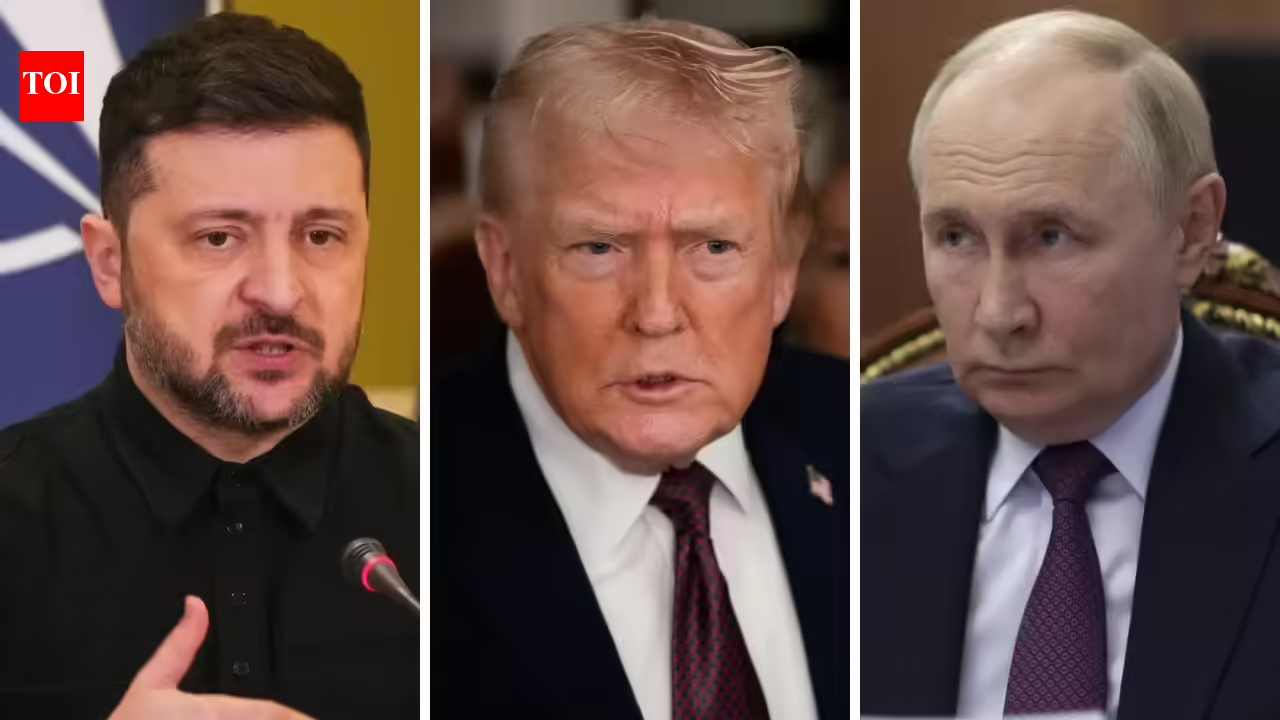
The unrest in Iran that got global attention seems to have subsided following, not necessarily due to, multiple warnings of intervention issued by US President Donald Trump along with calls for peace from other leader across the world .
Amid the protest losing steam, Iran’s exiled prince Reza Pahlavi, whose earlier video messages asking people to hit the streets against the theocratic regime led by Supreme Leader Ayatollah Ali Khamenei were seen as a reason for the stir gaining momentum, announced a fresh coordinated demonstration, calling for Iranians to “raise your voices in anger and protest with our national slogans” on the weekend.
Latest in Iran protest
Iran protests’ grim death toll: Norway-based rights group Iran Human Rights (IHR) says 3,428 protesters have been verified to have been killed by security forces, but warns the actual toll could be several times higher. Other estimates place the death toll at more than 5,000 — and possibly as high as 20,000 — with the internet blackout severely restricting independent verification, IHR said. Associated Press news agency meanwhile reported on Saturday that the toll from crackdown on Iran protests jumps to at least 3,090, citing activists.
Trump says executions halted, hardline cleric directly threatens him: As an uneasy calm kept the Islamic country on edge, a senior hard-liner cleric called Friday for the death penalty for detained demonstrators and directly threatened US President Donald Trump. Trump, on the contrary, thanked Iran’s leaders for not executing hundreds of detained protesters, in a further sign he may be backing away from a military strike. Executions, as well as the killing of peaceful protesters, are two of the red lines laid down by Trump for possible action against Iran.
“Iran canceled the hanging of over 800 people… that had an impact,” Trump told reporters in Washington, adding that “I greatly respect the fact that they canceled.”
Trump did not clarify who he spoke to in Iran to confirm the state of any planned executions. It was also not clear if the “impact” really meant calling off possible US plans of military intervention.
Cleric’s call for executions: While the so-called halted executions may or may not have led to the easing of international tensions surrounding the Iran protests, sermon by Ayatollah Ahmad Khatami carried by Iranian state radio triggered chants from those gathered for prayers, including: “Armed hypocrites should be put to death!”
Khatami, a member of Iran’s Assembly of Experts and Guardian Council long known for his hard-line views, described the protesters as the “butlers” of Israeli Prime Minister Benjamin Netanyahu and “Trump’s soldiers.” He said Netanyahu and Trump should await “hard revenge from the system.” “Americans and Zionists should not expect peace,” AP quoted the cleric as saying.
Still no net but some curbs eased: Monitor Netblocks said that the “total internet blackout” in Iran had now lasted over 180 hours, longer than a similar measure that was imposed during 2019 protests. But some restrictions eased. Iran by Saturday was allowing people to make phone calls abroad via their mobile phones on Tuesday. It did not ease restrictions on the internet or permit texting services to be restored. Although Iranians were able to call abroad, people outside the country could not call them, several people in the capital told AP.
The witnesses, who spoke on condition of anonymity over fears of reprisal, said SMS text messaging still was down and internet users inside Iran could not access anything abroad, although there were local connections to government-approved websites.