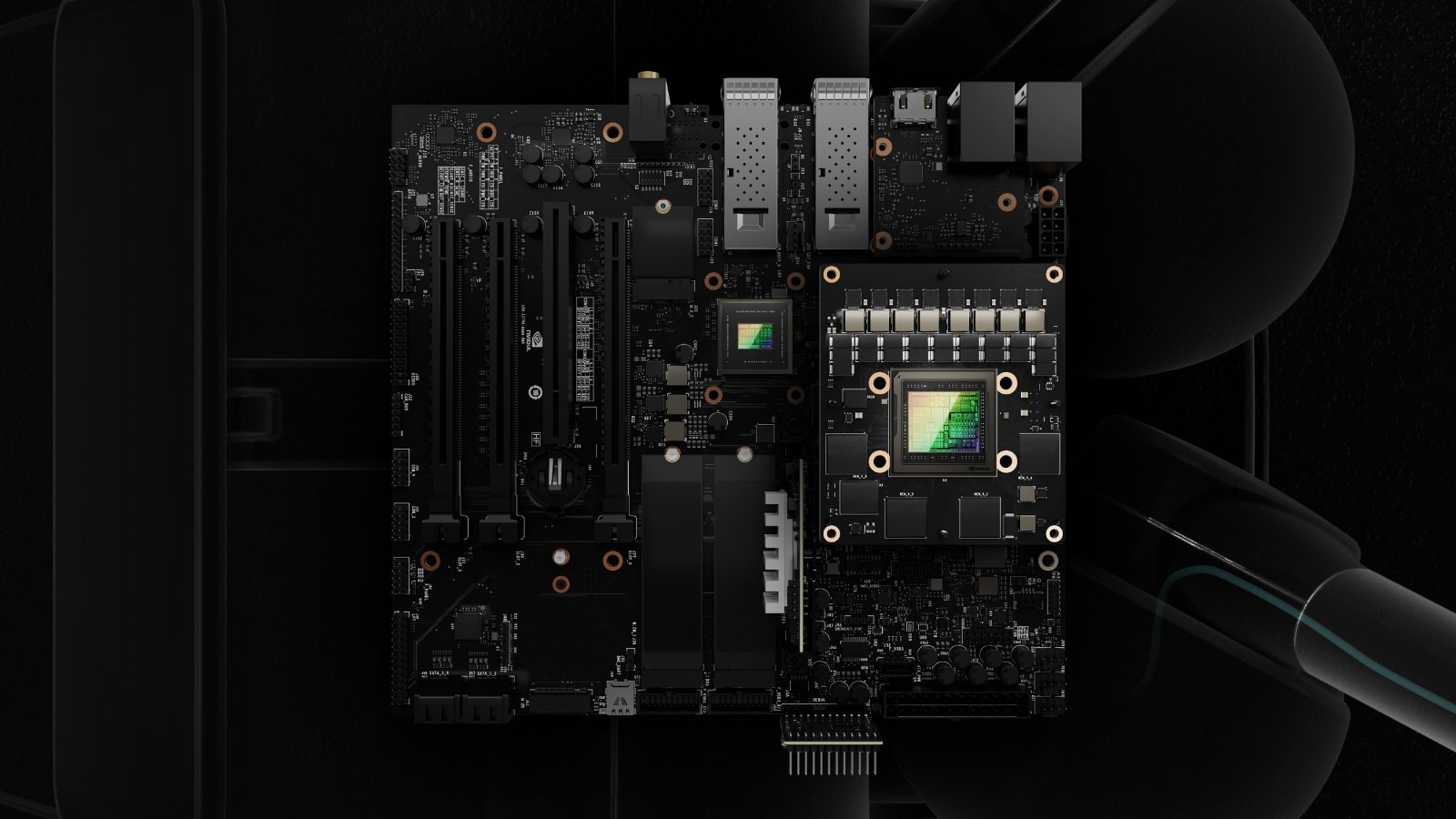
Industrial IoT deployments demand edge AI hardware capable of processing complex data on the factory floor.
High-volume data streams generated by advanced sensors often overwhelm legacy networks, causing latency that undermines the value of continuous monitoring. Processing information closer to the source provides a solution, allowing facilities to maintain uptime and ensure deterministic behaviour.
To achieve this, enterprise leaders require platforms that balance heavy computational workloads with regulatory compliance.
Adapting edge AI hardware for industrial IoT deployments
NVIDIA recently outlined how its IGX Thor platform is designed specifically for these demanding physical environments. The product family spans several configurations – ranging from embedded system-on-modules, to full board kits – that cater to medical, robotics, and manufacturing use cases.
For hardware sustainability, these systems are built with components selected to withstand extreme vibration, temperature fluctuations, and electrical noise while maintaining error correction code implementation.
Industrial operations dictate that equipment must survive in warehouses, factories, or field vehicles where standard electronics would fail. By supporting extended lifecycles of up to ten years, platforms like this offer supply chain assurance necessary for highly-regulated sectors.
When evaluating new architectures, the computational ceiling dictates the scope of possible applications.
The flagship IGX T7000 model combines an integrated Blackwell architecture graphics processing unit with a discrete GPU, pushing total performance metrics higher. Compared to previous generations, this setup achieves up to eight times greater AI computation on the integrated processor.
Such capacity allows operators to run mixed edge AI workloads on the hardware concurrently without degradation. Smart retail environments can process video feeds from numerous checkout terminals while simultaneously executing large language models to accelerate customer transactions.
Efficiency relies heavily on how data traverses the system. Implementing dual 200 gigabit Ethernet networking doubles the bandwidth available compared to older dual 100 gigabit interfaces. By using remote direct memory access, sensor data bypasses the central processing unit and flows straight into GPU memory.
This direct path reduces latency for intensive tasks. Aggregating massive volumes of information from high-bandwidth sources such as lidar, radar, and medical imaging devices demands deterministic, lossless networking. Tighter sensor fusion and faster ingestion directly impact the reliability of safety mechanisms and real-time control loops.
Integration and operational safety
Automation cells and autonomous mobile platforms require verifiable functional safety. Relying solely on software controls introduces unacceptable risk.
Modern architectures incorporate a dedicated Functional Safety Island, an independent processor that monitors workloads and provides true hardware separation between safety and non-safety domains. The Thor edge AI platform complies with ISO 26262 and IEC 61508 standards, incorporating hardware fault detection and safe-state monitoring.
By engineering functional safety from the silicon level, facilities can protect workers and ensure regulatory compliance without sacrificing the agility of modern machine learning models.
Scaling pilot projects into production requires predictable software maintenance and seamless integration with existing infrastructure. Enterprise-grade platforms provide version-locked software development kits and continuous security patches over a ten-year lifespan. This long-term support branch ensures that medical and robotics deployments remain secure and functional throughout their service life.
Delivering 100 percent compatibility in terms of pin and form factor with developer-focused variants like Jetson Thor allows engineering teams to transition smoothly from prototype to full-scale deployment. Success depends on aligning the capabilities of edge AI hardware with established governance frameworks and cross-team training protocols.
See also: Edge AI inference compute to piggyback on US telecom infra
Want to learn more about the IoT from industry leaders? Check out IoT Tech Expo taking place in Amsterdam, California, and London. The comprehensive event is part of TechEx and is co-located with other leading technology events including AI & Big Data Expo and the Cyber Security Expo. Click here for more information.
IoT News is powered by TechForge Media. Explore other upcoming enterprise technology events and webinars here.