Large hyperscale data centre projects are very much subject to delays, thanks in part to their advanced construction methods which mean companies involved are having to learn new techniques and adhere to different, higher standards, on the fly. The shortage of skilled labour and materials, plus delayed access to local power and water add to the delays besetting the DC industry.
The limits on available capacity and these supply chain constraints mean that new DCs dedicated to run AI workloads are taking much longer to come online than many would like. However, the edge sector has its own solutions to the quandaries that affect large-scale, next-gen builds.
Available Infrastructure, an edge systems specialist, has set out an approach to AI infrastructure that uses distributed deployment on existing infrastructure as close as possible to its target audience in the IIoT sector. Its programme, Project Qestrel, has a budget of $5 billion and aims to establish 1,000 sites in 100 cities in the US states. The timescales involved in its project, if they can be realised, will be the envy of DC constructors and organisations wishing to get AI inference capability up and running as quickly as possible.
Each proposed edge site is designed to support AI inference workloads, with deployment cycles of weeks or months, according to the company. There are three design principles behind the initiative, described by the company’s executive vice president of strategy, Dan Medina:
- low latency,
- proximity to operational environments,
- zero trust-based security with post-quantum encryption.
The topology will use co-location with existing telecom infrastructure. Each deployment at a telecom site gets access to power and fibre from its owner – common sources of delay affecting large-scale data centre construction. It’s a strategy that also removes the often-controversial land acquisition process and the queue for power grid connection. Available Infrastructure will work with Crown Castle, a telecom operator with more than 40,000 towers and controlling about 90,000 miles of fibre in the US.
Some sites are already operational, although no metrics were available from company releases at the time of writing. Around 30 cities should come online by early July 2026, however, the company said, with early activity focusing on the dense urban corridors of the North-Eastern US. The infrastructure is being integrated into a broader computing platform developed by Strata Expanse, a company specialising in AI data centres. Strata’s platforms will provide a full stack including hardware, orchestration, and operational support, so users can access hybrid resources (local + remote cloud) according to their specific workloads.
Each proposed local site is intended to support up to 48 GPUs, a scale designed to run inference rather than train AI models. Some locations will have IBM’s watsonx platform baked in, while others will remain fully model-agnostic. The aim is to let enterprises run their own models locally, as close as possible to data sources. Available Infrastructure cites data sovereignty and reduced risk of data exposure as key reasons why end-users may opt for its platform.
In terms of security, the company operates what it terms a ‘zero trust mesh’, with access controls tied to identity rather than to network location. Under zero-trust systems, each user and device is subject to continuous verification, with denial of access the default unless authentication continues to verify identify. The platform is expected to integrate with common credential management systems Entra and Okta, and users will be able to deploy network monitoring and logging technologies. Medina states co-located environments will use strict tenant isolation techniques, so each customer will share physical infra but run in separate network segments.
With existing cloud facilities, inference workloads may be run at distant hyperscaler facilities. Users needing faster connections may specify a region to a hyperscaler, but could easily be subject to fluctuation in latency and bandwidth outside their control.
The winning card may be Available Infrastructure’s ability to bring capacity online in months, rather than planned IoT and industrial AI deployments being subject to the delays in the mainstream data centre supply chain. The company’s phased rollout model is intended to scale as it gains access to more telecom sites.
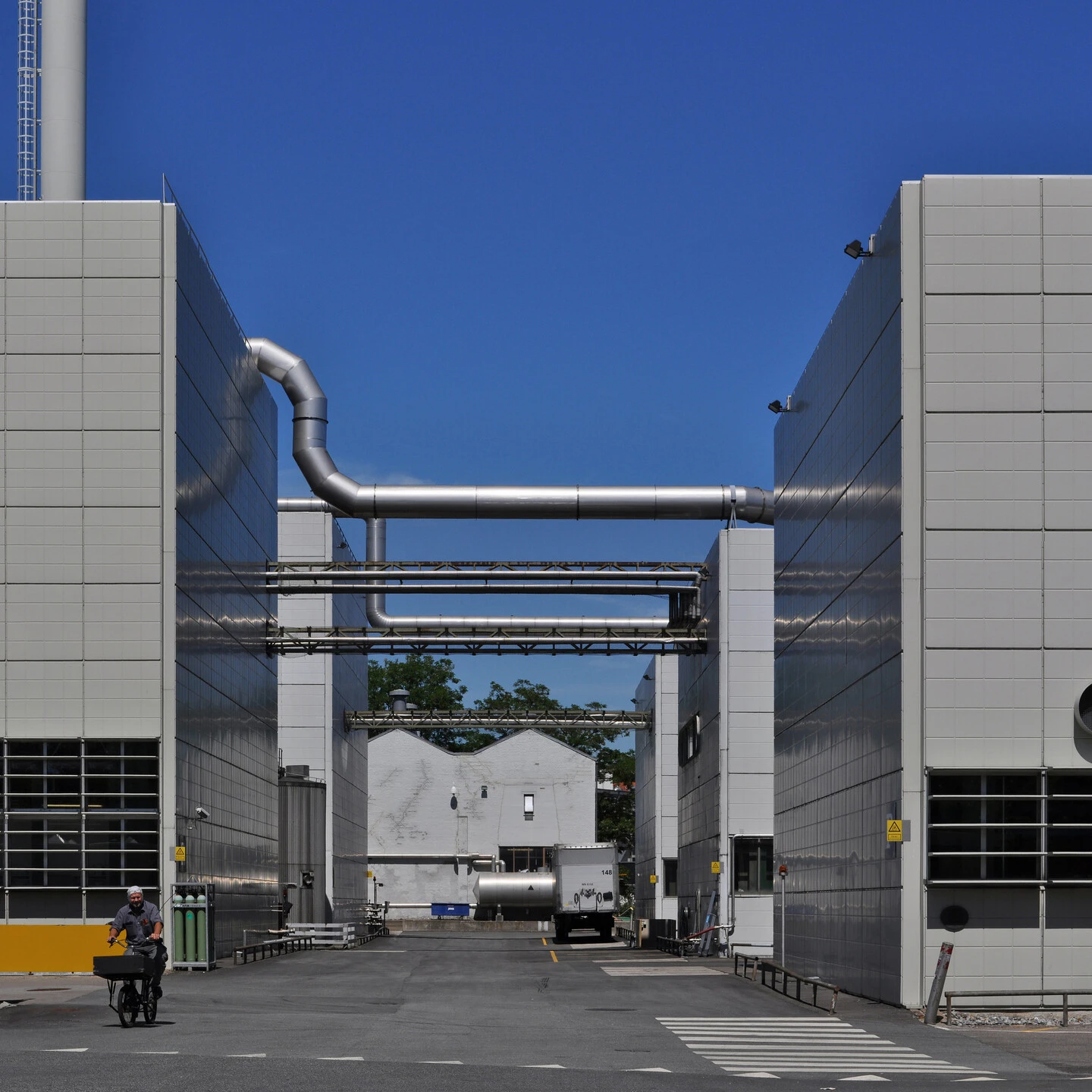
(Image source: “arne jacobsen, NOVO factories, copenhagen 1966-1969” by seier+seier is licensed under CC BY 2.0.)
Want to learn more about IoT from industry leaders? Check out IoT Tech Expo taking place in Amsterdam, California, and London. The comprehensive event is part of TechEx and co-located with other leading technology events. Click here for more information.
IoT News is powered by TechForge Media. Explore other upcoming enterprise technology events and webinars here.