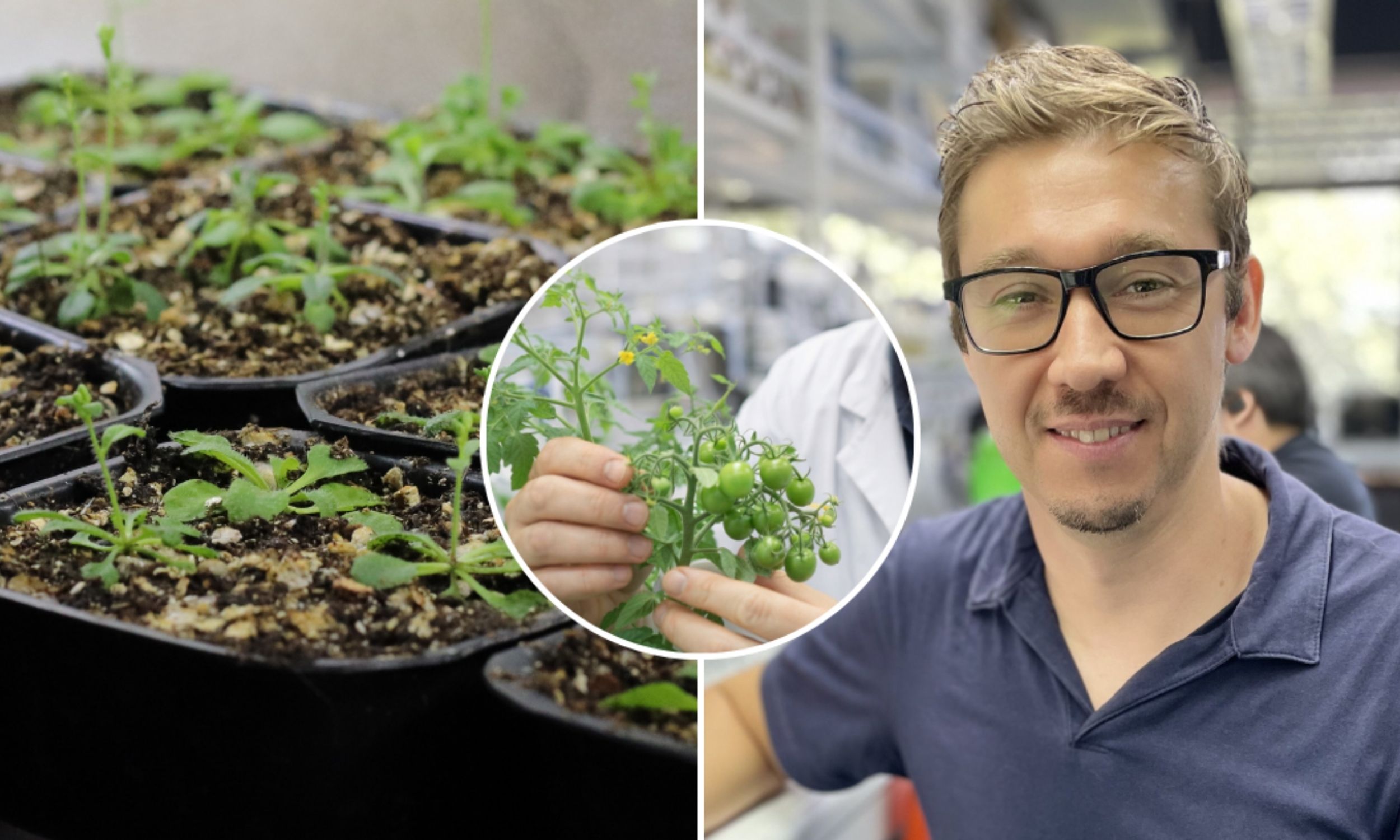
Scientists have shown that turning off a single plant protein makes leaves seal their pores faster during drought, helping plants lose less water.
By linking growth signals to water-saving behavior, the finding explains why well-fed plants can become thirstier exactly when drought hits.
A switch inside leaves

Inside controlled growth chambers in Santiago, Chile, researchers at Andres Bello University (UNAB) exposed plants to elevated nitrogen levels to test how they would respond.
By watching which leaves wilted first, Dr. José Miguel Álvarez at UNAB’s Plant Biotechnology Center tied drought tolerance to one switch-like protein.
One surprising detail kept showing up: well-fed plants stayed in growth mode longer, even as water became scarce.
For farmers, the same signal that boosts yield can quietly raise water demand, setting up losses when rains fail.
Two signals collide
Nitrogen in the soil tells plants to build new tissue fast, and that growth usually demands more water.
During drought, leaves protect themselves by tightening pores and slowing growth, which lowers water loss but also cuts energy.
Running both programs at once would waste resources, so plants need a way to choose which set of genes wins.
A single control point that can hear both signals would let a plant switch gears without waiting for damage.
Naming the switch
Laboratories often use Arabidopsis thaliana, a small flowering plant used as a lab model, to compare drought responses.
Scientists named the control point NLP7, a gene regulator that responds to nitrogen in leaves, and watched its effects spread.
The results revealed that NLP7 acted as a transcription factor, a protein that turns genes on or off, and shaped 85% of the conflict.
“This shows that NLP7 not only promotes growth, but also defines when that growth should be slowed down to ensure survival under adverse conditions,” said Alvarez.
How leaves save water
Water escapes through stomata, tiny leaf pores that trade water for carbon dioxide all day.
During drought, the plant stress hormone abscisic acid (ABA) activates water-saving defenses by triggering ion loss in guard cells, causing the tiny leaf pores to narrow.
In drought-tolerant plants, ABA took over sooner, so stomata tightened before leaves dehydrated.
Once pores close, photosynthesis slows, so any crop tweak has to balance water savings against the need to grow.
Proof in dry tests
In pot trials, plants missing NLP7 held onto water longer, even when soil moisture dropped to severe levels.
After 14 days without watering, the mutant lines stayed greener, while plants engineered to overproduce NLP7 wilted faster.
Survival numbers made the contrast plain, with 60% of wild plants living through stress and nearly 100% of plants without NLP7 recovering.
Even when both lines reached similar size under a different nitrogen source, the drought edge stayed with the mutants.
What nitrogen really costs
Fertilizer can pack fields with nitrogen, and plants respond by expanding leaves that pull more water from the soil.
Scientists also showed that nitrate, a nitrogen form plants take up, binds to NLP7 and turns it into a sensor inside cells.
With drought looming, a protein that reads nitrogen so well can keep pushing growth when the safer move is restraint.
Separating nitrogen sensing from water loss could let growers feed crops less aggressively, without forcing plants into panic mode.
Drought reshapes gene control
During drought, NLP7 did not just fade away; it latched onto new parts of genetic material in leaves.
Thousands of binding sites appeared only under dry conditions, and many sat near genes that drive ABA responses.
By silencing several of those gene switches, the protein kept ABA-linked defenses quiet when nitrogen pushed growth.
Such context-dependent behavior means crop breeders may need to test changes across tissues, not just in seedlings.
Paths to tougher crops
Crop developers could adjust NLP7 activity, aiming for plants that keep growing without wasting water during heat.
Small tweaks might work better than full shutdown, since some nitrogen responses still help plants build proteins and seeds.
“This knowledge allows us to think about strategies that optimize nitrogen use without losing drought resistance, whether through genetic editing, selection of more resilient varieties, or adjustments to fertilization strategies,” said Alvarez.
Real-world breeding will still need patience, because drought arrives in bursts and soil nitrogen can swing widely season to season.
Data meets plant stress
Instead of betting on one experiment, the team first combed through results from 37 prior drought and nitrogen studies.
Patterns across those datasets pointed to NLP7, so follow-up plants in the greenhouse tested what happened when the switch failed.
At UNAB, Alvarez’s group then mixed high nitrogen with drying soil and watched leaves change their water-saving timing.
Blending public data with hands-on biology can speed up plant research, but it still needs field trials to matter.
NLP7 now sits between fertilizer-driven growth and drought defense, giving crop science a clearer target to test.
Any crop version will need careful tuning, since shutting growth too early can cut yield even when water is available.
The study is published in the journal Proceedings of the National Academy of Sciences.
—–
Like what you read? Subscribe to our newsletter for engaging articles, exclusive content, and the latest updates.
Check us out on EarthSnap, a free app brought to you by Eric Ralls and Earth.com.
—–