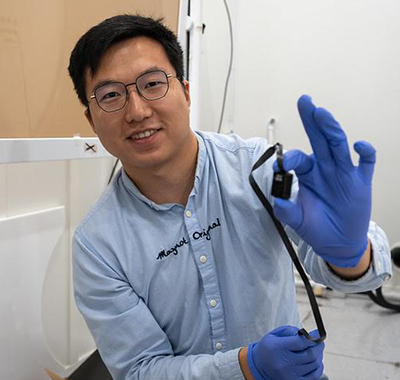
“There are now hundreds of papers talking about different mechanisms — how stimulating or blocking the vagus nerve modulates brain circuits, the immune system and organ systems like the heart, lungs and kidneys,” says Troy (Yifeng) Bu, the new paper’s first author. “Our paper offers a unified synthesis.” (Photo by UC San Diego Qualcomm Institute A/V team)
“There are now hundreds of papers talking about different mechanisms — how stimulating or blocking the vagus nerve modulates brain circuits, the immune system and organ systems like the heart, lungs and kidneys,” said the paper’s first author Troy (Yifeng) Bu, a recent PhD graduate from the UC San Diego Department of Electrical and Computer Engineering, UC San Diego Qualcomm Institute affiliate and director of design engineering for InflammaSense. “However, the field has lacked a comprehensive summary of these mechanisms and their effects. With more than 660 references, our paper offers a unified synthesis.”
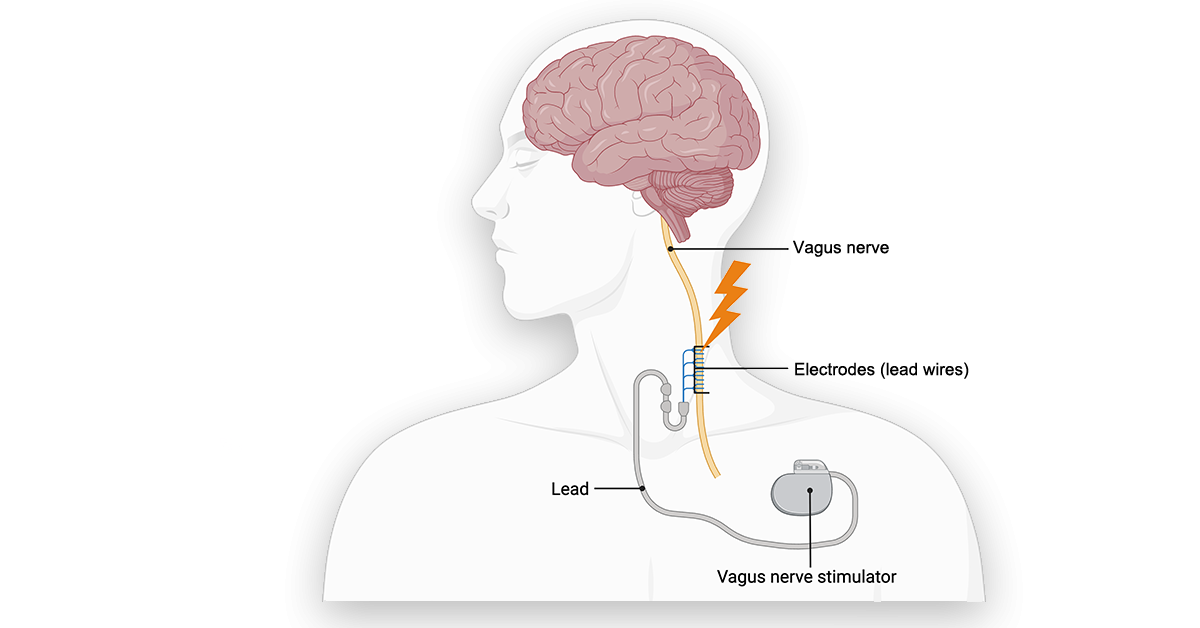
Vagus nerve modulation targets the nerve of the same name, a “superhighway” of the autonomic nervous system that runs down both sides of our necks from the brainstem to the chest and abdomen. For some patients, that can mean a non-drug option or add-on that aims to change the underlying nerve signals driving disease-mediated symptoms.
“The paper identifies the most important discoveries and groups from the literature,” said senior author Imanuel Lerman, MD, professor of anesthesiology at UC San Diego School of Medicine, affiliate of UC San Diego Qualcomm Institute and VA San Diego Healthcare System, and co-founder and CEO of InflammaSense. “It also tells the story of how the government, including DARPA, funded this work early on with the ElectRx program that, with follow-on agency funding via the NIH SPARC initiative, spurred this huge panoply of different treatments and therapeutics.
“However, we don’t want to get ahead of ourselves, because we need to develop treatments specific for the person, organ and disease,” he continued. “We need to make sure the new therapeutics are appropriate for their specific uses.”
Mapping a Complex Landscape
In the paper, the authors reveal the complex network of mechanisms and therapeutic approaches associated with the vagus nerve to date.
Bu, for one, admitted even he was surprised to find so many mechanisms — from synaptic plasticity to endocrine integration — many of which interact with each other. One of the review’s contributions is a table that links conditions to proposed mechanisms and the strength of evidence across organ systems.
“While a lot of researchers understand their own area of specialty,” Lerman said, “we provide a larger platform so that others can start to make broader connections to see patterns and gaps across fields that usually don’t talk to each other.”