Chronic wounds are among the most stubborn challenges in modern medicine. Unlike ordinary cuts or scrapes, they can linger for weeks or months, quietly shifting in ways that are difficult to monitor and even harder to treat.
Infections often develop beneath the surface, where early warning signs are easy to miss. By the time a problem becomes visible, healing may already be delayed.

Now, researchers have developed a new kind of smart wound dressing that could change that timeline. Designed to both monitor and treat injuries in real time, the technology brings sensing and therapy together in a single, responsive bandage.
Why chronic wounds are so difficult
Chronic wounds place a heavy load on healthcare systems. They need constant attention, and care plans often shift as the wound changes. A small infection can quickly turn into a serious issue if it’s not caught early.
Researchers have tried to build smart dressings before. Some could sense infection, while others could deliver treatment.
But putting both abilities into one simple, usable product has been a real challenge. Devices often end up too complex, too expensive, or too difficult to use outside a lab.
How this smart patch works
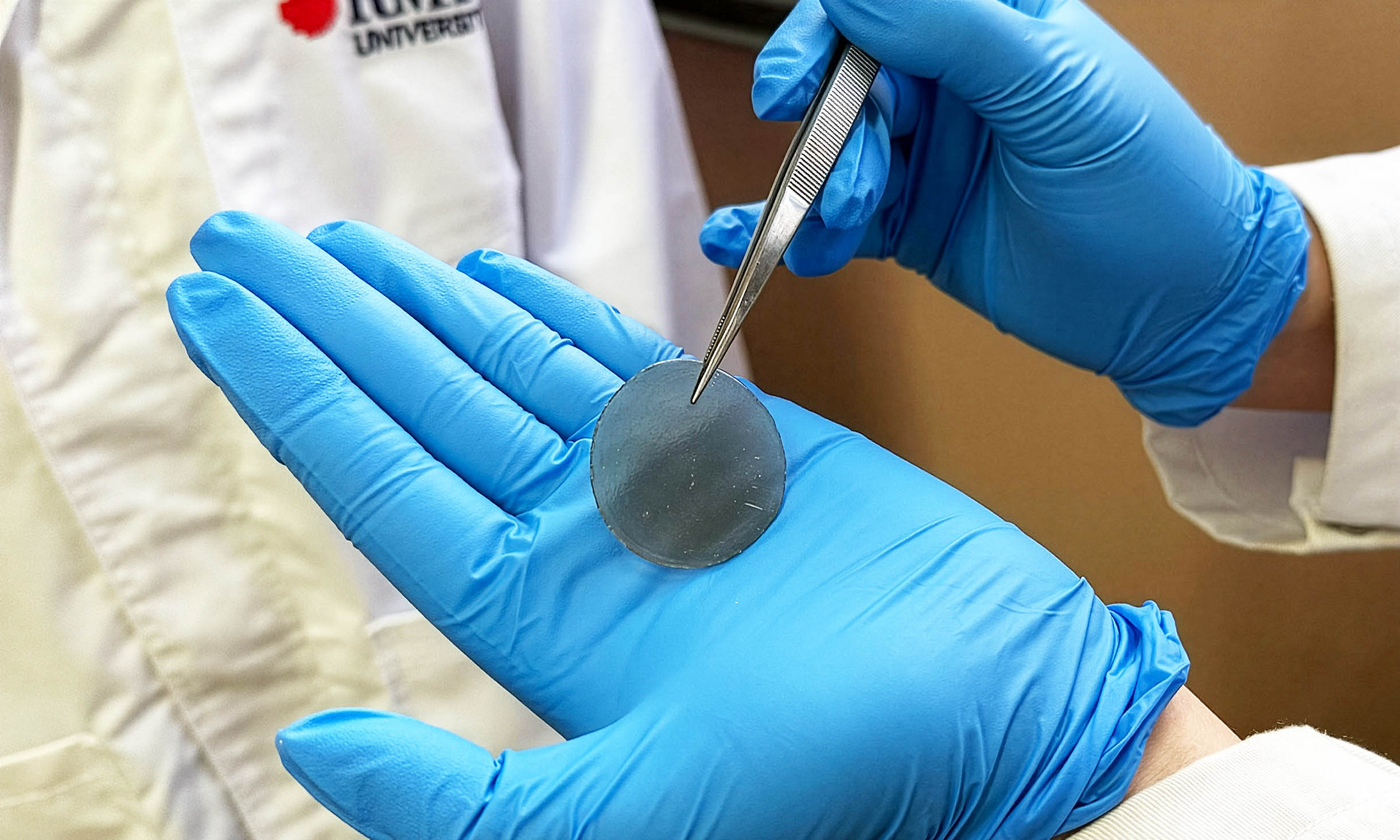
The new approach uses tiny materials called carbon dots. These are small, carbon-based particles that can safely interact with the body. They are placed inside a soft, gel-like material known as a hydrogel, which is already widely used in medical dressings.
When a wound becomes infected, its pH level changes. This patch responds by changing color. That shift can be picked up with a portable smart device, making it easy to read without complicated equipment.
At the same time, the patch can release helpful substances that act like enzymes to reduce inflammation and support healing.
The treatment can also be triggered manually. A gentle press on the bandage releases more of these therapeutic agents, giving both patients and clinicians a way to step in when needed.
The people behind the smart bandage
This work comes from researchers at RMIT University, where a group has been working to combine sensing and treatment into one system.
“Being able to address potential infection at the earliest opportunity is critical to chronic wound management, making this real-time system a potential game-changer for healthcare,” said RMIT Ph.D. candidate and study first author Nan Nan.
“Our fabrication process uses medically ready materials, such as hydrogels, to embed carbon dots into wound dressings, and is easy to scale, with strong potential for commercial translation.”
Next steps for the technology
One of the biggest hurdles in medical technology is moving from the lab to real patients. Many ideas look promising early on but never make it into clinics because they are too complex or costly.
“Many smart wound dressings developed in research laboratories are difficult to translate into real clinical products because they rely on complex designs or expensive sensing systems,” said Dr. Haiyan Li, study collaborator and Senior Lecturer at RMIT’s School of Engineering.
The team’s approach combines sensing and dual-mode therapy into a single, streamlined dressing, helping overcome key challenges that have limited commercial use.
The work also establishes clear design rules to guide the development of future smart dressings.
Next steps for smart bandages
So far, the work has been tested at the lab level. The next step is to see how it performs in more advanced biological settings that better reflect real wounds in the body.
“Our next step is to evaluate how this technology performs in more advanced biological models and to work with industry partners to refine the design for real clinical use,” said the study’s lead author, Dr. Lei Bao, a senior lecturer at RMIT’s School of Engineering.
The ultimate goal is to turn the research into practical smart wound dressings and connect the platform to a digital health ecosystem.
In that system, data from the patch would be collected, analyzed, and used to guide clinical decisions and improve chronic wound care.
Smarter, faster wound care
Healthcare is slowly moving toward systems that can respond in real time. This kind of bandage fits into that shift.
It connects simple care with smart feedback, giving both patients and doctors better information without adding extra steps.
A small patch that changes color and releases treatment might not seem like a big leap at first glance. But in the world of chronic wounds, timing matters.
Catching a problem early can mean faster healing, fewer complications, and less strain on healthcare systems.
The full study was published in the journal Chemical Engineering Science.
—–
Like what you read? Subscribe to our newsletter for engaging articles, exclusive content, and the latest updates.
Check us out on EarthSnap, a free app brought to you by Eric Ralls and Earth.com.
—–