
 Darren Kidd/BHF
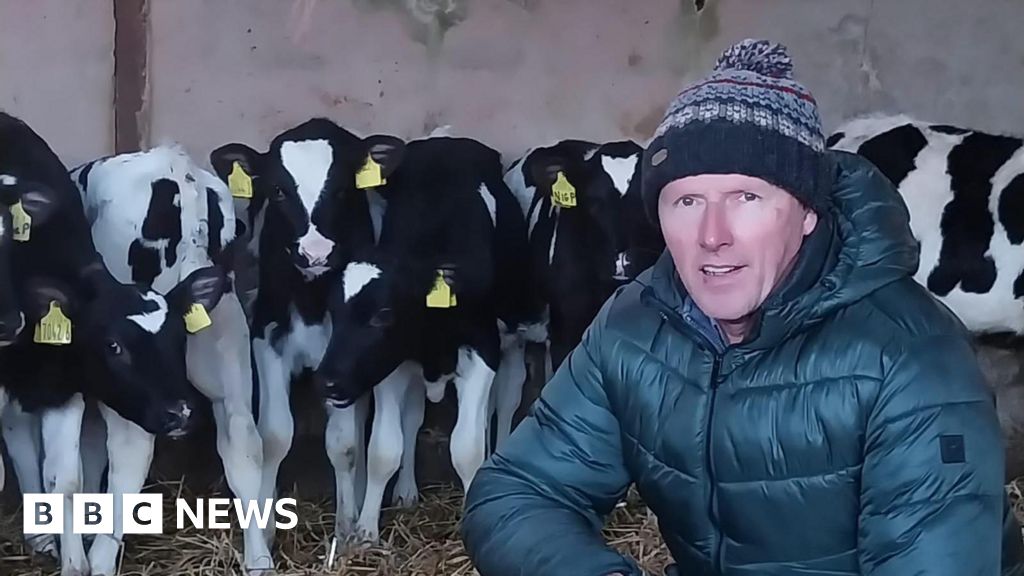
A 60-year-old man who spent a day working on his farm before driving himself to hospital with a heart attack is urging people not to ignore symptoms.
Portrush farmer Robert Nevin woke in the middle of the night in February 2024 with what he believed was indigestion.
He got up early the following morning and worked for five hours on his farm, before driving himself to hospital.
It was only then that he was told he was having a heart attack.
When Nevin woke up that morning, he said he had a “defined pain” in his chest.
“I described it like someone smacking me with a fist”.
At the time, Nevin worked on his farm with his brother, milking and feeding cows each day.
“It has to be done, it doesn’t matter what is happening, that has to be done every day,” he said.
Despite experiencing the chest pain, Nevin ate his breakfast and went to work on the farm for five hours.
He arrived home for lunch at about midday and his wife Lorna, who is a nurse, saw he was still in pain and told him she was taking him to hospital.
Nevin insisted on driving himself to Causeway Hospital in Coleraine.
At this point, Nevin said the pain in his chest was “ramping up”.
Tests were carried out at the hospital and Nevin was informed he was having a heart attack. He was then blue-lighted by ambulance to Altnagelvin Hospital in Londonderry.
“It was quite a shock,” Nevin said. He said the news of the heart attack hit him “like a ton of bricks”.
“I had just come off a working day. Every day previous to that I had no symptoms that were leading up to this that I was ignoring. You’re just coming from total normality and routine to ‘bang’.”
A heart attack happens when the supply of blood to the heart is suddenly blocked, usually by a blood clot. This is a medical emergency. A lack of blood to the heart may seriously damage the heart muscle and this can be life threatening.
‘A massive weight off my mind’
 Darren Kidd/BHF
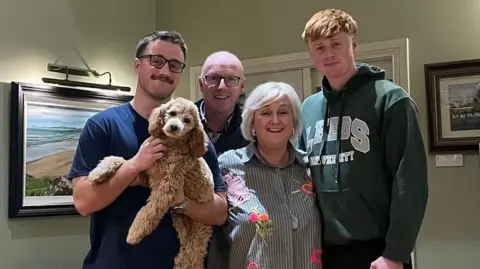
Nevin went on to have a stent fitted and was put on medication. A number of weeks after leaving hospital, he began a 12-week cardiac rehab programme.
Since his heart attack, Nevin has adjusted his daily farming routine.
“Dairy cows just demand every night and every morning,” Nevin said.
“Long story short, we sold our milking cows,” he said.
Now, Nevin has more flexibility with his mornings and evenings.
“We just don’t have to be there every day,” he said, adding: “That’s a massive weight off my mind.”
Nevin is hoping his story will help others, especially those in farming.
“The easiest thing for all of us is just to ignore signs or feelings within your body,” Nevin said.
“Be aware of your blood pressure, your cholesterol, go along to a health centre and get that taken and at that point at least you can be proactive,” he said.
“We service our cars, we service our tractors, but wouldn’t it be good if we could have a little check up on ourselves now and again. Look into your health and don’t ignore signs.”
How many people die of cardiovascular disease in Northern Ireland?
In September, the British Heart Foundation (BHF) said that in 2023 in NI there were 4,227 deaths across all ages due to cardiovascular disease, the highest figure since 2012.
That means that each month 350 families in Northern Ireland will lose a loved one to cardiovascular conditions like a heart attack and stroke.
 Darren Kidd/BHF
To mark 65 years since the BHF began, the charity is unveiling 65 red benches across the UK in tribute to those living with cardiovascular disease, including heart attacks.
A bench to Nevin will be unveiled in the Portrush/Causeway area next month.
What are the symptoms of a heart attack?
- Chest pain – a sensation of pressure, tightness or squeezing in the centre of the chest
- Pain in other parts of the body – it can feel as if the pain is travelling from the chest to the arms, jaw, neck, back and abdomen
- Feeling lightheaded or dizzy
- Sweating
- Shortness of breath
- Feeling sick (nausea) or being sick (vomiting)
- Overwhelming sense of anxiety
- Coughing or wheezing
Although the chest pain is often severe, some people may only experience minor pain, similar to indigestion.
In some cases, there may not be any chest pain at all, especially in women, elderly people and people with diabetes.
Source: NHS