Source: WHO
Subject: Science and Technology
Context: The World Health Organization (WHO) and the Pan American Health Organization (PAHO) officially verified Chile as the first country in the Americas—and the second globally—to have eliminated leprosy.

About Leprosy (Hansen’s Disease):
What it is?
- Leprosy is a chronic infectious disease caused by the slow-growing bacterium Mycobacterium leprae. It primarily affects the skin, the peripheral nerves, mucosal surfaces of the upper respiratory tract, and the eyes. If left untreated, it can cause progressive and permanent damage to the skin, nerves, limbs, and eyes.
Origin and History:
- Ancient Disease: Leprosy is one of the oldest recorded diseases in human history, mentioned in ancient civilizations’ texts from China, Egypt, and India.
- Chilean Context: It was historically recorded in Chile at the end of the 19th century, specifically on Rapa Nui (Easter Island). It remained localized there through strict isolation and treatment until the late 1990s.
Key Features
- Transmission: It is transmitted via droplets from the nose and mouth during close and frequent contact with untreated cases. It is not highly infectious.
- Incubation Period: The disease has a very long incubation period, averaging 5 years, though symptoms can take up to 20 years to appear.
- Symptoms: Pale or reddish skin patches with loss of sensation, painless ulcers on the soles of feet, and muscle weakness or tingling in the hands and feet.
Treatment
- Multi-Drug Therapy (MDT): Since the 1980s, WHO has provided MDT (a combination of rifampicin, dapsone, and clofazimine) for free globally.
- Curability: Leprosy is 100% curable. Early treatment prevents most disabilities associated with the disease.
- Stigma: Historically, patients were shunned or leper colonies were created. Modern public health focuses on stigma-free, integrated care.
About Chile:
What it is?
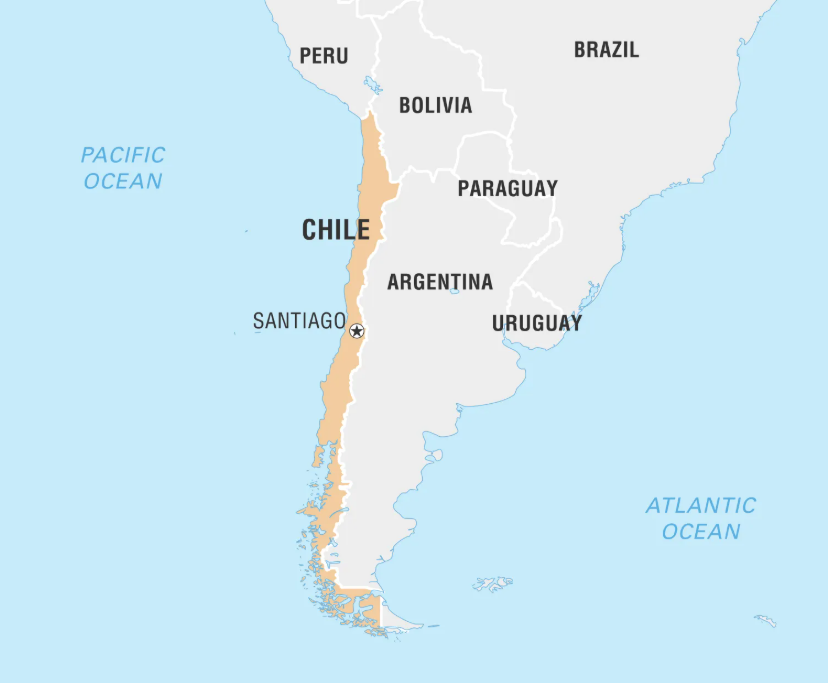
- Chile is a sovereign country in western South America, known for its extreme geographic diversity and highly developed economy (the first South American member of the OECD).
Geography: It occupies a long, narrow strip of land between the Andes Mountains to the east and the Pacific Ocean to the west.
Borders: Peru, Bolivia, Argentina and the Drake Passage.
Geographic Features
- Atacama Desert: Located in the north, it is known as the driest non-polar place on Earth.
- Central Valley: A Mediterranean-climate region that is the agricultural and population heartland of the country.
- The South: Characterized by alpine tundras, glaciers, fjords, and lakes.
- Insular Territories: Includes the famous Rapa Nui (Easter Island) in Polynesia and the Juan Fernández Archipelago.