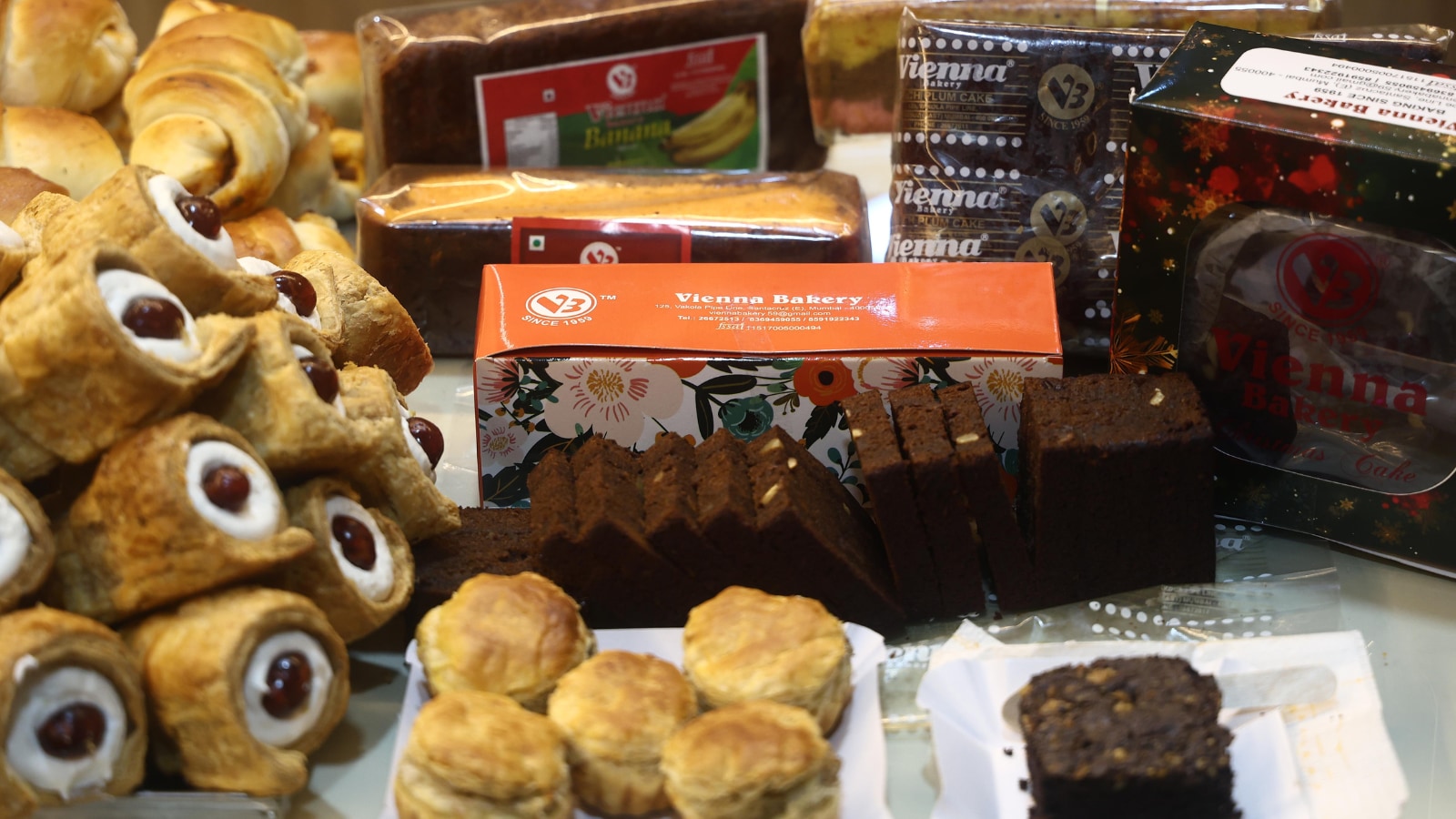
Come Christmas, long queues begin forming on Vakola Pipe Lane in Santacruz East, often spilling on to St Anthony Road. The reason is singular and seasonal: Vienna Bakery’s legendary rich plum cake. Dense, dark and deeply aromatic, it is packed with fruits, nuts, warm spices and raisins, and has, over the years, become a Christmas ritual for generations of Mumbaikars.
While refusing to reveal exact numbers, Tara Raj (41), third-generation custodian of the bakery, admits with a smile that they sell thousands of loaves every day during the festive season. “The demand starts from the second week of December and continues till the first week of January,” she said.

“Even though we’re present in several bakery shops and retail outlets across the city, people still prefer coming here and buying directly from us,” Raj added. While plum cakes are available at Vienna throughout the year, the Christmas version is special. “It has an extra dash of orange flavour and more spices, in the spirit of the festival.”
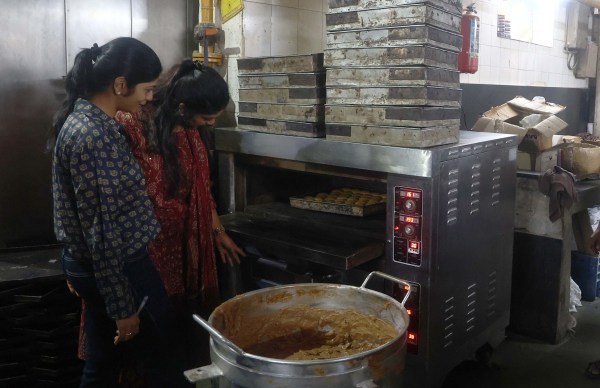 Sisters Indu Natesan and Tara Raj check on freshly baked puffs at Vienna Bakery’s production facility. (Express photo by Amit Chakravarty)
Sometimes, the cakes are just fresh out of the oven and therefore too hot to be sealed in plastic packaging. “People are happy to take them home wrapped simply in butter paper,” she said. That freshness, perhaps, is what keeps customers returning year after year to this bakery that has operated under its current owners since 1959. “Although it’s rum-flavoured, there is no rum in it. The flavours come entirely from raisins,” she explained.
A humble beginning
Like many bakeries that emerged in the early to mid-1900s, Vienna had modest beginnings. Though the bakery ‘Vienna’ is believed to have existed for over a century, it came into the hands of its current owners in 1959.
In pre-Independence India, a young P K Appoo from Thrissur, Kerala, moved to Bombay in search of a livelihood. He found work at a bakery called Vienna. In the late 1950s, as Europeans began leaving the country, the owner decided to shut shop and offered to sell the machinery. Appoo bought it, opened his own bakery in Bandra, and continued with the same equipment and name.
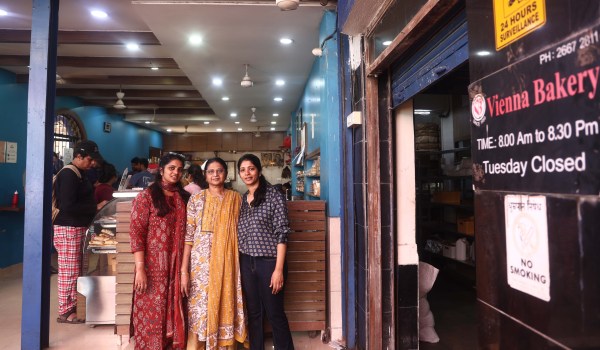 Indu Natesan (left) and Tara Ray (right) with their mother, Jiji Ramakrishnan, at Vienna Bakery in Santacruz East. (Express photo by Amit Chakravarty)
Over the years, the bakery moved from Bandra to Kandivali, before finally settling in Vakola, where it has been for decades. “We began with breads and pavs,” Raj recalled. “We followed the traditional pheriwala system — vendors would load red boxes filled with breads and pavs onto their bicycles and deliver them door to door.” Tarts, cakes and puffs existed, but largely for counter sales.
Story continues below this ad
The business expanded significantly when Raj’s father, P A Ramakrishnan, a law graduate, joined in the 1970s. He added a catering vertical focused on Christian weddings. “Back then, weddings were often in the evening and catering meant snacks like sandwiches, rolls, puffs, cake and ice cream,” Raj said, adding, “Pattices later gave way to chicken lollipops.”
It was also during his tenure that Vienna’s most iconic product took shape. While a traditional plum cake existed earlier, slicing it often caused fruit loss. “So the recipe was changed to include more nuts, raisins and spices,” she explained. “It retains the fruit and doesn’t crumble while slicing.” Introduced around 1975, the rich plum cake quickly became a bestseller.
Vienna uses minimal preservatives, which is why the cake has a shelf life of 20 to 22 days, far shorter than the six months often claimed by commercial plum cakes. A 400-gram and 800-gram sliced bar is priced at Rs 200 and Rs 400 respectively, while the 400-gram round, unsliced version, which is richer in fruits, retails at Rs 350.
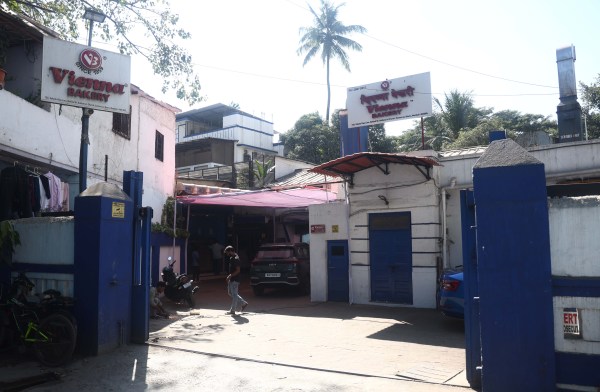 Vienna Bakery’s journey began in Bandra as a bakery known primarily for its ladi pavs and breads. (Express photo by Amit Chakravarty)
Food Legends: How a cake without plums became ‘plum cake’
A sudden loss, and a matriarch who took over
Story continues below this ad
In 1996, tragedy struck when Ramakrishnan passed away at just 42. His wife, Jiji Ramakrishnan, stepped in to run the business, joined soon after by their elder daughter, Indu Natesan. Under their leadership, Vienna expanded rapidly. “In the early 2000s, we launched 11 outlets across Mumbai, including Andheri, Vikhroli, Mahim and Malad,” Raj said. Natesan also introduced a fresh counter serving puddings, custard, Black Forest and pineapple cakes.
Raj, who studied craft baking at Sophia College, joined the family business in 2016. “We’ve tried to keep things exactly as they were, but now that we understand the science behind our processes, we’ve made small improvements without changing the taste,” she said. One such tweak involved reducing fat in puffs and croissants by about 10 per cent through better layering rather than extra fat in the dough.
The sisters also introduced an eggless range and expanded their selection of snacks and tea cakes. Among Vienna’s popular offerings today are patties, rolls, burgers, pizza cutlets, sandwiches, and tea cakes such as banana, walnut, dry fruit, plum and ribbon cake.
Holding on to loyalty
Like most businesses, Vienna was impacted by the pandemic, but it bounced back quickly. What changed was the consumption style. “People suddenly wanted everything delivered home,” Raj said. Today, 40 to 50 per cent of the bakery’s business comes through Swiggy and Zomato.
Story continues below this ad
With a flood of new patisseries offering brownies, tea cakes and celebratory desserts, competition has intensified. Yet Vienna’s customer base remains steady. “We are a low-margin business,” Raj noted. “Even a Rs 5 price increase disappoints people, they tell us so directly. And we like it that way. This is a place built on relationships, and we want to continue serving the people who’ve grown up with us.”