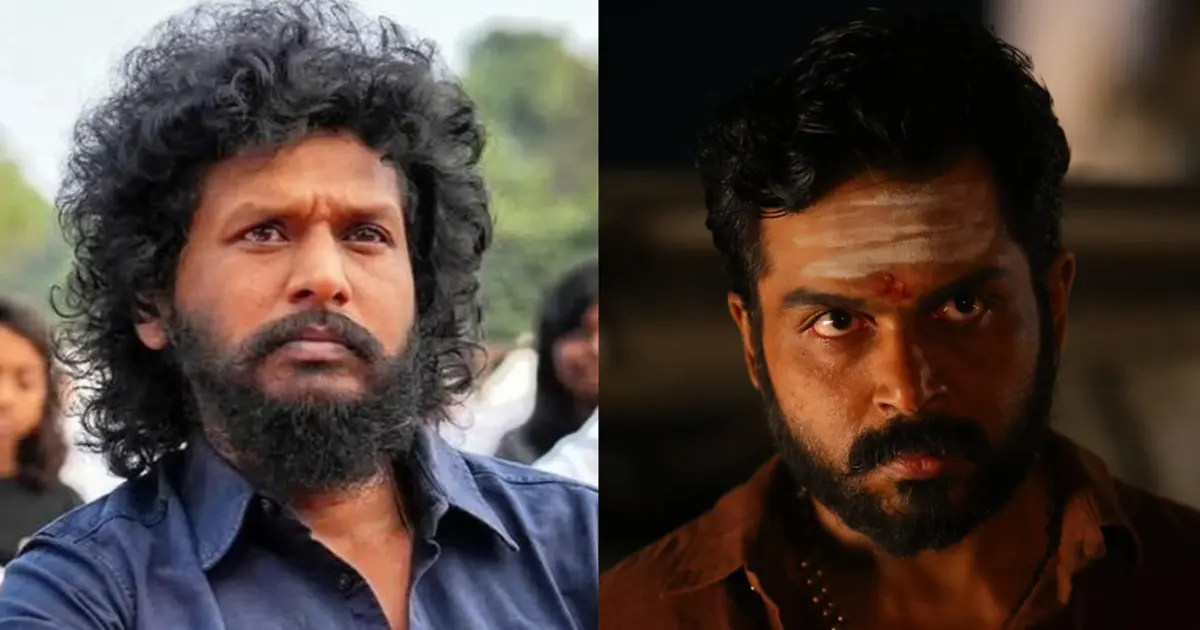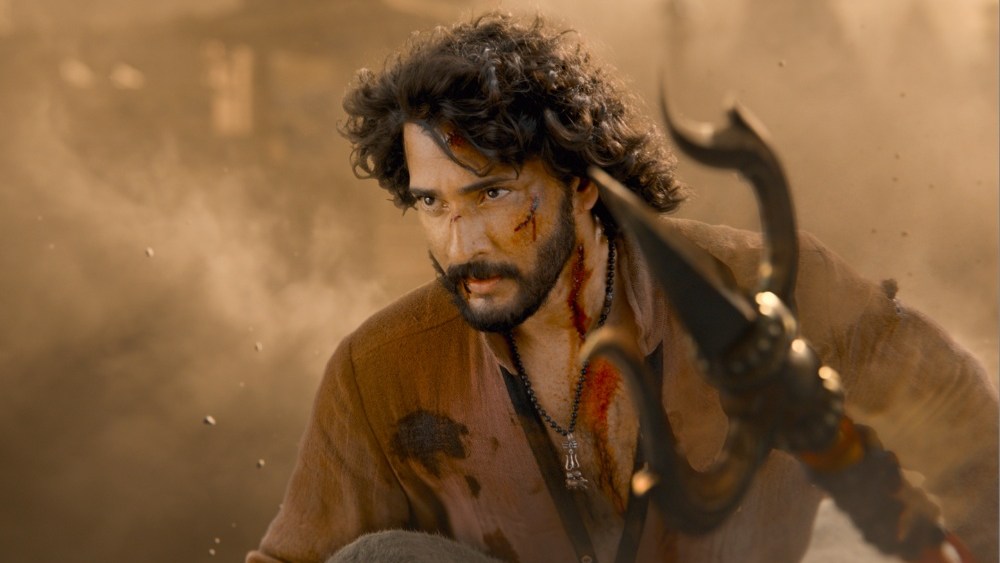
The cast of “RRR” director S.S. Rajamouli‘s “Varanasi” has opened up about the ambitious production’s demanding shoots, from filming with wild animals in Kenya’s Maasai Mara to the physical transformations required for their roles.
The film’s story spans thousands of years and traverses multiple continents, with locations ranging from Antarctica to Africa to the titular Indian city. Mahesh Babu plays the dual roles of the protagonist Rudhra and Hindu God Rama, Priyanka Chopra Jonas plays a character named Mandakini and the main antagonist Kumbha is played by Prithviraj Sukumaran.
Babu, who spent a year preparing for the role, underwent three months of Kalari martial arts training solely to adjust his posture for the character’s period-appropriate bearing. “I’m playing Lord Rama’s character, it required posture… you can’t stand like modern characters,” he explains.
He also trained with a track and field team for several months to modify his running style. “When I saw the shot, I was really happy. It was worth it, because that six months of training for that one shot was really worth it,” he says. “The way I walked changed, the way I stood changed, everything changed.”
Sukumaran’s Kumbha is a character confined to a wheelchair who can only move his face. “All that you see here is practical. It’s not like a CGI image that you’re seeing. The wheelchair and me in it, and everything is practical,” he says. “The challenge was that this is only the face that is mobile, and everything that this character has to convey has to be done through just the face with no particular body language associated with it.”
He describes the character as “a very interesting dichotomy, because he is severely limited in his physicality, but he is also very dangerously unlimited in his mentality.”
The production’s Africa sequence, filmed during the wildebeest migration in Kenya’s Maasai Mara, proved particularly challenging. The filmmakers received extensive support from the Kenyan government to access the protected lands.
“I don’t think many people have had that kind of freedom or access to the land of Maasai Mara, besides probably poachers, maybe,” Chopra Jonas says. “Being able to go in there and actually work with real animals was intimidating and exhilarating at the same time.”
The production timed their shoot around the migration. “Everything was animal dependent. So the crew hardly slept,” she explains. “When the family of elephants would move, that’s when we had to go and say our lines.”
Babu describes their first day filming as surreal. “We had these vehicles, and they would take us there, drop us and Sir [Rajamouli] was somewhere in another vehicle, because he had to go around the wildebeest,” he recalls. “Then the vehicle which dropped us went away, and then we realized that we’re just standing there with the wildebeest. All of a sudden we can just hear the ground shaking, because these animals were just [running].”
The actor recalls Rajamouli directing from a distance via walkie-talkie. “He was very excited. He was like, ‘It’s very nice, very nice. Just keep moving.’ And we knew he was getting his take.”
After the day’s shoot, the actors discussed the uniqueness of their experience. “I don’t think any other actor would have done what we did. And it was quite an achievement,” Babu says.
Rajamouli explains that visiting Africa’s wilderness had long been on his bucket list. “Once you land in Africa, you are not hit by it. But as you travel into the wilderness, you are not just hit, you are literally swept off your feet,” he says. “It’s an incredible feeling — like you really know your size in the world.”
Despite the film’s heavy reliance on visual effects, Rajamouli emphasizes using practical elements wherever possible. “This movie is so VFX heavy, he’s very, very specific about having parts of it which are absolutely real,” Chopra Jonas says. “He’s so specific about making this movie an amalgamation of actual production design, real sets, real interaction and VFX. So we only go to VFX with things we can’t achieve practically.”
For Chopra Jonas, “Varanasi” marks her return to Indian productions after focusing on Hollywood projects. The actress, who doesn’t speak Telugu, initially expressed concerns about the language barrier.
Her first meeting with Rajamouli in Hyderabad helped allay those fears. “He took me into his office, and it was just him and I, and he said that, ‘Priyanka, there’s no version of this film that goes out to the world if it’s not the best version of you in every frame, and that’s my promise to you,’” she recalls.
She describes her experience making the film as transformative. “If there was any way of coming back to Indian cinema, it would be with the biggest Indian movie being made, and that undertaking is this film,” she says. “I think Sir’s vision is unlike anyone in this country or abroad. His cohort, if I may say so, is the Spielbergs of the world, the Nolans of the world, the Finchers of the world.”
Addressing the film’s title, Rajamouli acknowledges the cultural and religious significance of naming a film after one of India’s most sacred cities. “It is the name of an ancient [city], the first city, and which is so fondly revered by millions of people,” he says. “I know it carries a weight. I know it carries a religious significance. And of course, that makes me even more responsible in how I use it.”
He even got emotional during the final mixing session. “The moment that got me goosebumps and tears in my eyes was when the ‘Varanasi’ title was coming onto the screen,” he says. “So I thought, yes, we are right in naming the film ‘Varanasi.’”
Chopra Jonas, who was raised in Uttar Pradesh, also has a personal connection to the city. “I’m a big Shiva Bhakt [Hindu God Shiva who is Varanasi’s presiding deity]. So hearing the story and understanding why it’s called ‘Varanasi’ was amazing,” she says. “There was no part of me which felt that this story does not do justice to the history and the gravity of the city.”
Sukumaran calls the title perfect for the material. “There really isn’t a more apt title for what this film is about and what the plot of the film entails,” he says. “How this narrative arc travels has got a lot to do with Varanasi itself.”
For Rajamouli, the project represents a creative leap he’d long envisioned but didn’t expect to make so soon. “All my films, I take inspiration from [Indian epics] ‘Ramayana’ and ‘Mahabharata.’ But here, it’s not an inspiration. It’s actually a piece of ‘Ramayana’ that we are putting into the film,” he says. “I kept imagining at some point in my life I will be making these epics, but I did not expect it to happen so soon.”
“Varanasi” will open in theaters worldwide on April 7, 2027.