We have not really tried many high-concept movies in Malayalam. The latest Malayalam thriller, Anomie, starring Bhavana and Rahman in pivotal roles, is an attempt to blend science and fiction uniquely. However, the problem is that the script feels like an idea where they chose the extremely cliched path to reach a high-concept that itself looks like a derivative of several Hollywood movies. With the genericness of the narrative that we have to endure for almost 80% of the movie, taking away hope for something fresh, Anomie aspires to be big by borrowing already established sci-fi elements and ends up looking like an undercooked movie.
Zara Philip is a forensics expert, and she has a brother Ziyan who is recovering from the trauma caused by the death of their parents in an accident. One day Ziyan goes missing, and the search for him leads to a scenario where Zara realizes that people with conditions similar to Ziyan’s were killed pretty soon after they went missing. Zara’s efforts to find her brother and her tussle with Officer Ghibran, who took a sloppy approach in this case, are what we see in this movie.
There is a sci-fi element towards the end of this story where the antagonist is shown as someone who disbelieves his actions are psychopathic. I mean that whole area where we hear about death and conscience can be used as a BookMyShow summary to entice people to book a ticket for this movie. But rather than exploring that concept, Riyas Marath is trying to use this as an excuse to claim freshness to a story that feels very familiar with every other serial killer movie out there. The first half of the movie has Bhavana doing the whole investigation on her own, and since she is a forensic expert, there are no logical issues. But when we see the movie approaching the interval by almost declaring war on the police force, we don’t feel the kind of elevation the movie wants us to feel.
The movie was shot in 2023 and got released now, almost 3 years later. I am talking about the delay because one can see traits in Anomie that filmmakers now wouldn’t use in a movie. The most evident one is the main character, a police officer, dealing with past trauma. While movies like Joseph and Officer on Duty used that element for the sake of the story, here it is like a very lame reason for the officer to act sloppily. When you hear the story that made him this grumpy character, it almost felt like their excuse to show Rahman as a hero in the second half, who punches and screams. Even when the investigation expands to new characters and revelations, rather than feeling surprised, you are sort of doubting the movie’s capabilities to amaze you. A lot of the stunts and chases that we see in the second half of the movie are mostly fillers or useless build-ups that don’t add much to the plot when you realize what triggered all this.
Sujith Sarang’s cinematography plays with the color grade pretty extensively to maintain that thriller+gloomy mood of the movie. This is Harshavardhan Rameshwar’s first Malayalam movie as a composer, and in the background score, there are areas where he elevates moments, even though the drama in the script wasn’t reaching that level. The movie, on a script editing level, has flaws, as the second half is completely taken over by the officer character, and we almost forget that Bhavana’s character began the whole thing. The production design might have done some of the cool stuff based on the director’s inputs. Even though it felt authentic, you can sense them basically copying the sci-fi sensibilities of Hollywood films. The dreamy sequence in the movie that talks about the equation of death was visualized impressively. Even though that bike chase was insignificant for the plot, the way the sound mixing of that portion was done with all those reverbs created a terrific impact.
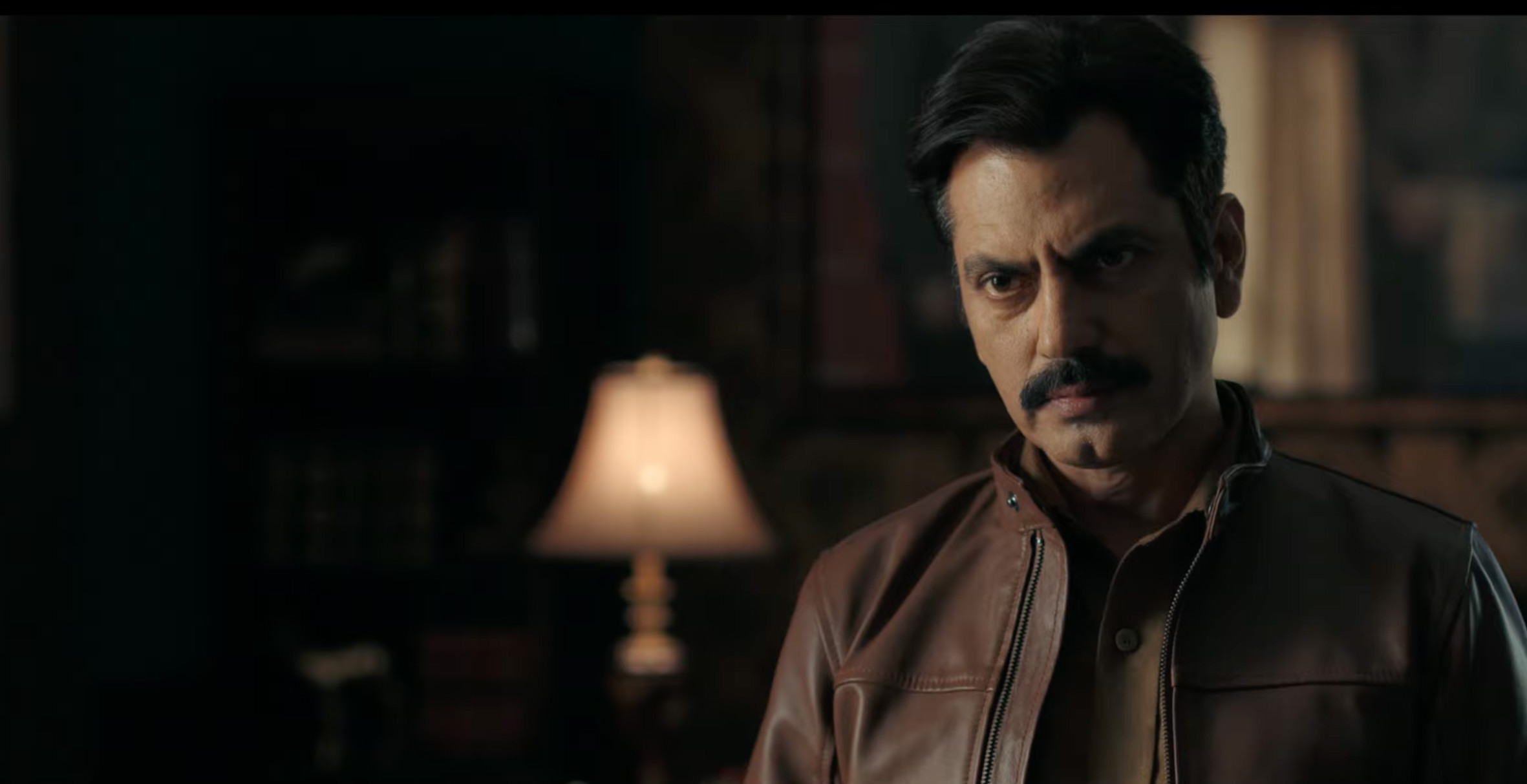
Bhavana, as this caring and determined sister, performed her part neatly on screen. Even though this character is going through a lot of tough moments, it isn’t a role that challenges her abilities. Rahman, on the other hand, gets a character that, on paper, has a lot of acting challenges. But when it comes to performance, he fails miserably to convey the emotional space of the character. His character Ghibran is said to be someone who became cranky after he failed to provide justice to a girl, and that affected him emotionally. But when we analyze Rahman’s performance in the first half, it won’t feel like a trauma response. Arjun Lal plays a significant character in the movie. Shebin Benson plays the part of the brother character. Sreejith Babu, Vishnu Agasthya, Binu Pappu, etc., are the other names in the cast.
The philosophy of the villain is the only thing that can be considered fresh in Anomie. However, to reach that high concept, Riyas Marath is making us sit through a serial killer story that feels like it has borrowed tropes from every race-against-time thriller we have seen to date. There is a moment in the movie where Rahman’s character tells his subordinates to break the stereotypical image about a killer, and the next moment, we see the script assigning a very stereotypical vehicle to this killer. If you aren’t exposed to high-concept movies much, there is a good possibility that you might forgive the unimaginative part of this movie simply because of its climax.