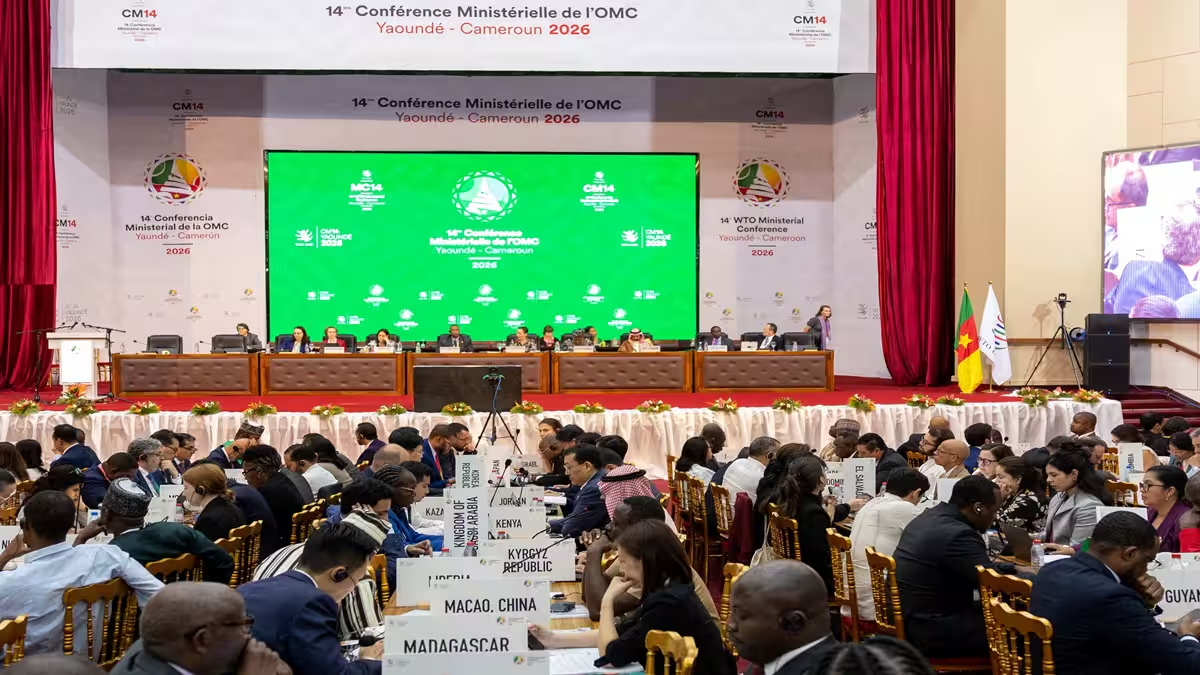
Countries participating in the 14th WTO Ministerial conference are close to sign a reform plan. This comes even as divisions among them persist over extending a long-standing moratorium on customs duties for electronic transmissions such as digital downloads.
Countries participating in the 14th World Trade Organisation (WTO) Ministerial Conference in Cameroon are edging closer to a reform agreement, according to a report by Reuters.
This comes even as divisions among them persist over extending a long-standing moratorium on customs duties for electronic transmissions such as digital downloads.
Negotiations till now have particularly focused on narrowing differences between the United States and India over the future of the e-commerce moratorium, which is set to expire later this month. First introduced in 1998 to promote the growth of digital trade, the moratorium has become a critical test of the WTO’s ability to remain relevant amid rising global trade tensions.
Reform roadmap gains traction
According to the report, a draft reform plan is beginning to take shape after initial resistance from several member states. According to diplomats familiar with the discussions, the revised roadmap outlines a timeline for progress and identifies key structural issues within the WTO.
Among the priorities are improving decision-making within the WTO’s consensus-based system, which is often criticised for allowing a handful of countries to block progress, and reassessing the scope of benefits extended to developing economies.
The reform push also includes efforts to increase transparency around subsidies. The US and the European Union have argued that current rules have been exploited by China in a way that puts other countries at disadvantage.
Earlier, India has opposed the incorporation of China-led plurilateral investment facilitation agreement. New Delhi argues that such agreements risk undermining the WTO’s foundational principles.
E-commerce moratorium remains sticking point
Alongside broader reform talks, the fate of the e-commerce moratorium continues to dominate discussions.
According to the report, India has indicated that it may support a two-year extension. Meanwhile, the US has pushed for a much longer extension, viewing it as essential for ensuring predictability in global digital commerce.
A draft proposal seen by negotiators includes provisions to address developing countries’ concerns, such as support mechanisms and a review clause to reassess the moratorium’s impact over time, according to the report.
Business groups have warned that failure to extend the moratorium could disrupt digital trade flows and create uncertainty, potentially leading to the introduction of new tariffs on electronic transmissions.
A test for WTO’s future
With negotiations entering a critical phase, both the reform package and the e-commerce moratorium are seen as pivotal to restoring confidence in the the trade organisation.
The coming days are likely to determine whether member countries can bridge their differences, or divisions will further strain an institution already under pressure.
End of Article