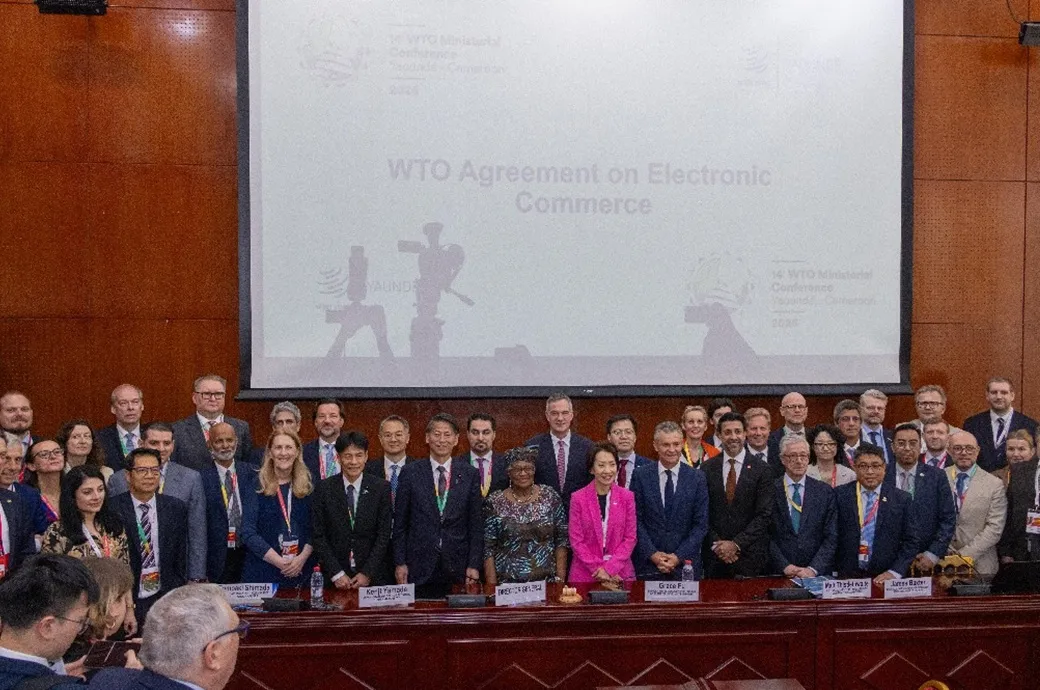
This was announced by co-convenors at the 14th WTO Ministerial Conference (MC14) taking place in Yaounde, Cameroon.
Sixty-six WTO members have adopted a pathway to bring into force the Agreement on Electronic Commerce through interim arrangements while continuing to work towards its incorporation into the WTO legal framework.
This was announced by co-convenors at the 14th WTO Ministerial Conference in Cameroon.
The pact will unlock opportunities for MSMEs by cutting regulatory barriers and enhancing access to markets.
With digital transactions accounting for over 60 per cent of global gross domestic product (GDP), there is an urgent need to implement global digital trade rules that allow businesses and consumers to seize the benefits of digital trade.
Research by the WTO and the organisation for Economic Cooperation and Development (OECD) shows not implementing the E-Commerce Agreement leaves around $159 billion worth of trade on the table every year.
The E-Commerce Agreement will significantly bolster stability and predictability for businesses and consumers around the world. It will unlock new opportunities for micro, small, and medium enterprises by reducing regulatory barriers and enhancing access to global markets, Australia’s Department of Foreign Affairs and Trade, Japan’s Ministry of Foreign Affairs and Ministry of Economy, Trade and Industry, and Singapore’s Ministry of Trade and Industry, Singapore said in a joint press release.
Recognising the importance of inclusive growth, the agreement will also support developing and least-developed countries through flexible implementation periods, technical assistance and initiatives under the Capacity Building Framework.
The 66 WTO members will now proceed with their respective domestic procedures. The agreement will enter into force for those members that have accepted it after 45 members have deposited their instruments of acceptance.
Fibre2Fashion News Desk (DS)