
Toyota believes start-up companies will help it transform from a car manufacturer to a mobility provider. By Megan Lampinen
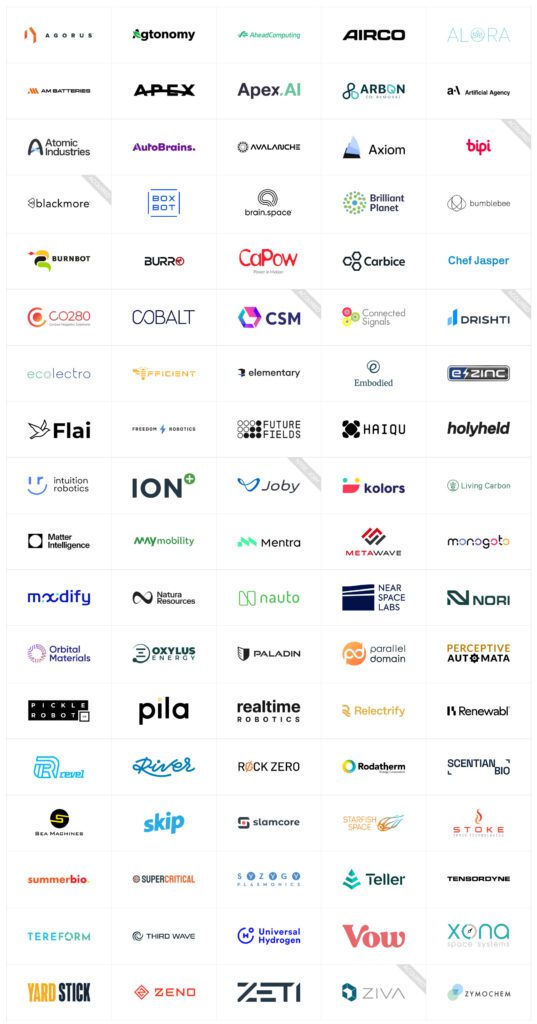
Over the past decade, Toyota has more than doubled down on venture capital (VC) investments as it accelerates the transition from car manufacturer to mobility provider. Its dedicated VC arm Toyota Ventures now has more than 100 early-stage investments across AI, robotics, climate tech and mobility.
Based in the San Francisco Bay Area it has a front-row seat to Silicon Valley innovation, but that’s just the tip of the iceberg. Founder and General Partner Jim Adler tells Automotive World that its mandate is truly global. As well as the US, the business is actively tracking exciting innovation emerging from tech hubs in Europe and Asia, where varying economic conditions, urban densities and regulatory environments create unique “laboratory conditions” for market experiments.
How is Toyota Ventures helping Toyota Motor to future-proof?
Disruptive innovation cannot be centrally planned. It comes more from the scientific method of hypothesis, experimentation, and analysis. We see start-ups as experimenters in a market laboratory. By investing in these start-up market experimenters, Toyota has a seat at the lab bench, where we celebrate their successes and learn from their failures.
What metrics do you prioritise when scouting for potential new portfolio additions?
When we evaluate a new portfolio addition, we prioritise three core pillars: a world-class team, a truly disruptive product, and a scalable business model. We look for mission-driven founders who have the grit to persevere through daunting challenges, the confidence to keep the faith through them, and the humility to learn from the lessons the market teaches. We also believe that financial returns precede any potential strategic returns for Toyota, because a start-up must be a successful business in its own right to have any meaningful impact for Toyota. Frankly, bankruptcy has little strategic value.
Can you highlight some of the more significant investments over the years?
Our investment in Joby Aviation exemplifies our strategy, pairing venture capital with Toyota’s manufacturing expertise for the electric vertical take-off and landing (eVTOL) aircraft market. By also backing pioneering founders like May Mobility and Intuition Robotics, we are actively building the ecosystem for autonomous transport and human amplification. These aren’t just bets; they are Toyota’s bridge to a mobility company from an automotive OEM.
How much money does Toyota Ventures invest annually in new mobility start-ups?
Since 2017, we’ve scaled from US$100m to more than US$800m in assets under management across six venture funds as Toyota has more than doubled down on venture capital. We don’t chase quotas, but we are entering 2026 with an aggressive mandate to find ‘zero to ten’ breakthroughs across frontier and climate companies. The mission is simple: fund the future.
Which technologies do you expect to shape the mobility industry over the coming five years?
Over the next five years, air and space mobility will increasingly be part of our everyday movement. I also expect the convergence of generative AI and robotics to fundamentally redefine how machines interact with the physical world. More generally, AI is generating an energy thirst that will drive innovation in hydrogen, nuclear, geothermal, and alternative energy storage.
What important challenges does the mobility industry have yet to solve? Are start-ups currently tackling these?
Driven by Big Tech and new OEMs, the mobility industry is currently seeing a quickening unlike that felt since oil price shocks and new emissions standards of the 1970s. Air mobility is emerging to relieve urban congestion and save commuters precious time. Space mobility is driving down launch costs, providing better navigation systems, and expanding communications. AI is making autonomous vehicles ubiquitous and increasingly driving robotics into automotive manufacturing. The power requirements in AI are mandating disruptions in energy production, providing new market opportunities for hydrogen, nuclear, and geothermal. No one knows exactly who, where and how these innovations will impact our daily lives, but one thing is certain: start-ups will be central to them.