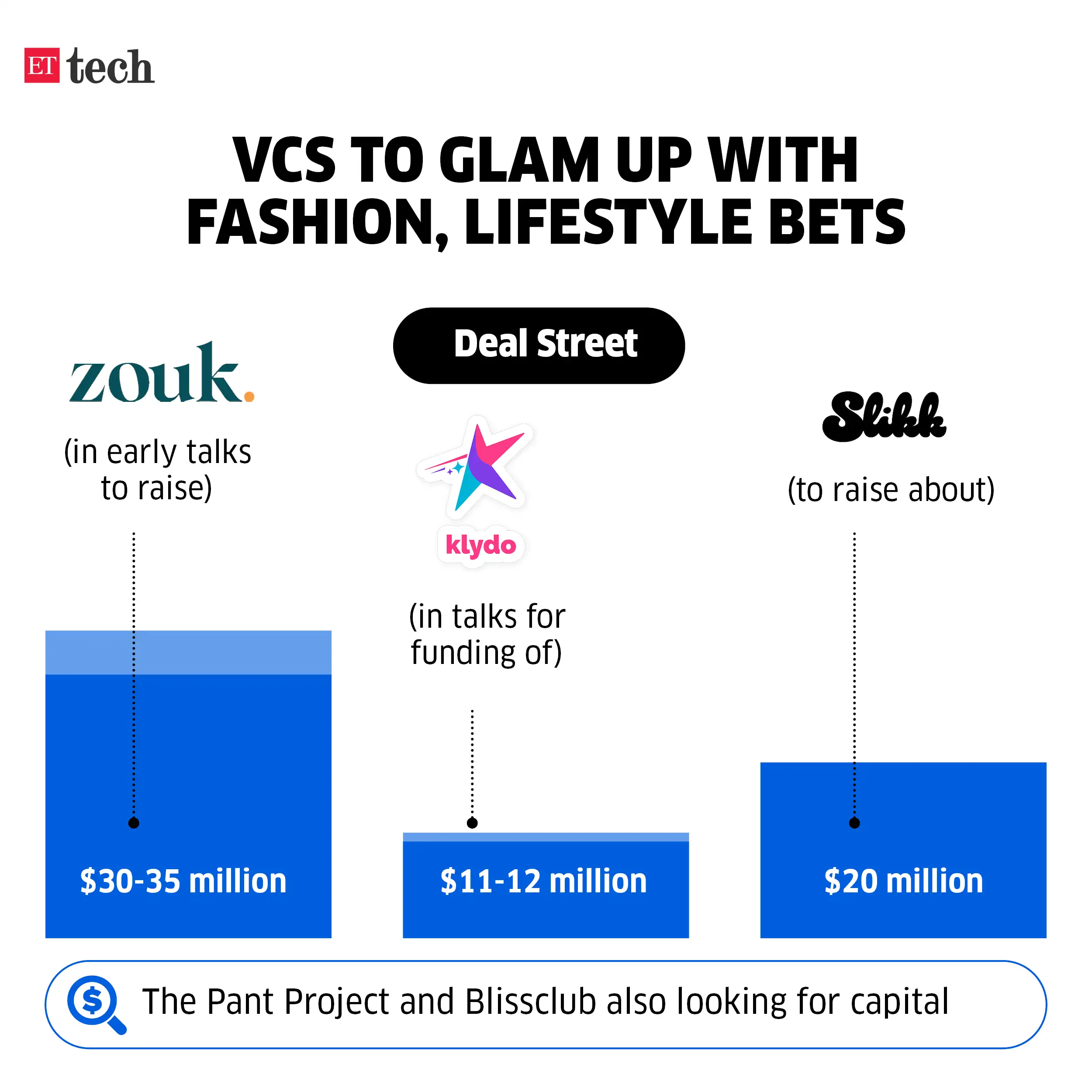
Bags manufacturer Zouk is in early discussions with Tata Capital and IvyCap Ventures to raise $30-35 million, people in the know of these talks said. So far, the direct-to-consumer brand has raised about $15 million from investors like Stellaris Venture Partners, Titan Capital and Aavishkaar Capital.
Fashion quick commerce, where platforms offer delivery in 30-60 minutes, is also gaining VC attention. Bengaluru-based Slikk, which is backed by Lightspeed and Nexus Venture Partners, is in talks with Susquehanna Asia VC to raise $15-20 million.
 ETtech
This space has seen multiple funding deals over the past three to four months, including by Zilo, which raised $15 million in February led by Peak XV, and Knot that closed a $5 million funding from 12Flags, Kae Capital and Boundless Ventures.
Fast fashion marketplace Klydo, founded by former Udaan senior executive Pradeep Yadav, is looking to secure $11-12 million in a round likely to be led by a global investor.
 ETtech
In the D2C segment, men’s bottom wear brand The Pant Project and active wear brand Blissclub are exploring fundraising as venture capital activity in the segment has picked up.
According to a report by Redseer, India’s apparel market stood at roughly $70 billion in 2024 and is expected to reach $130-150 billion by 2030, expanding at a 10-12% compound annual growth rate.
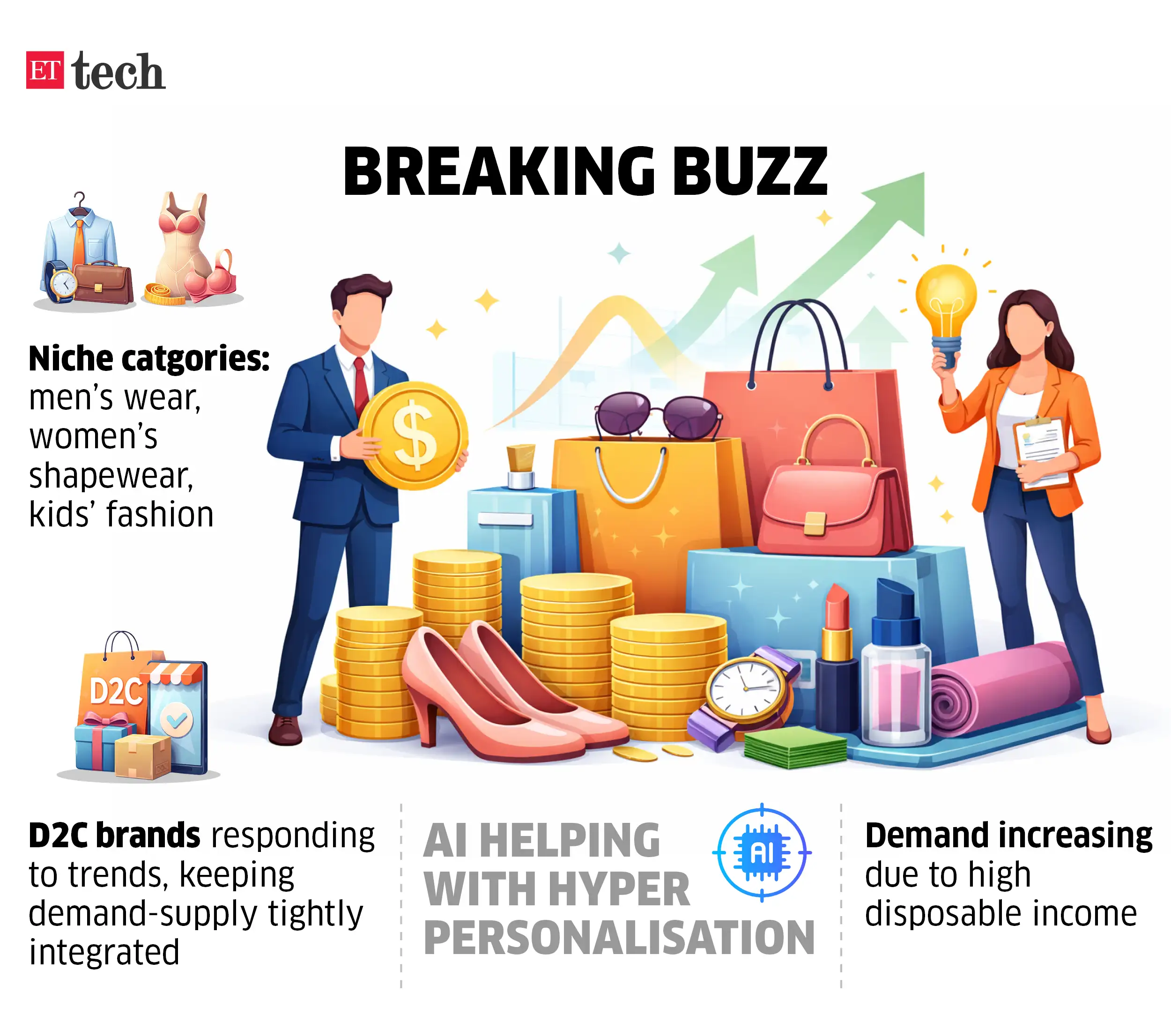
Niche categories like men’s fashion, women’s shapewear, Gen Z clothing and kids fashion are some gaps in the segment that will push more brands to enter the market in the upcoming fiscal year. This, in turn, will serve as an attractive investment opportunity, according to industry watchers.
The companies and investors named above did not respond to ET’s queries.
What’s changing
One of the key reasons that put investors away from fashion investment was complexities with inventory. Managing inventory at scale is often challenging, especially in fast fashion, since trends change rapidly.
“There are always questions around inventory and the fact that there haven’t been many big successful outcomes in fashion, but that is certainly changing,” said Dipankar Basu, partner at Fireside Ventures.
The segment is regaining investor confidence, thanks to more success stories like the initial public offering of Vedant Fashions which owns ethnic brand Manyavar, he said.
“The (investor) scepticism was valid mainly due to the nature of changing fashion that leads to high SKU (stock-keeping unit) complexity,” said Dhruv Toshniwal, founder and chief executive at The Pant Project. New-age brands are getting better at being responsive to trends and keeping the demand-supply engine tightly integrated, he said.
On the current fundraising activity, he said: “A retail business requires capital to scale. In due course, at the right moment, when we find the right partner, we will pick up capital to continue our store and digital expansion.”
Another key development in the segment is the entry of artificial intelligence. “Consumer experience is getting revamped, because there is a lot more use of LLMs and AI which is helping in hyper personalisation of the platforms,” said Anant Vidur Puri, partner at Bessemer Venture Partners.
Fashion and accessories have found a breath of fresh air in the quick commerce wave. Several startups like Knot, Slikk and Zilo have come up in the past year which are delivering within 30-90 minutes in cities like Mumbai, Gurugram and Bengaluru.
“Quick commerce allows fashion brands to have another big channel,” said Rahul Chowdhri, partner at Stellaris Venture Partners. “India doesn’t have too many multi-brand fashion outlets. If digital brands have to go offline, they have to build their own store, which is a capex-intensive business.”
Quick commerce gives fashion brands a new channel since it provides the same convenience of offline and variety of online, he said. “It also solves the return problem because it’s a last-minute event-led purchase; the chances of returning are lower.”