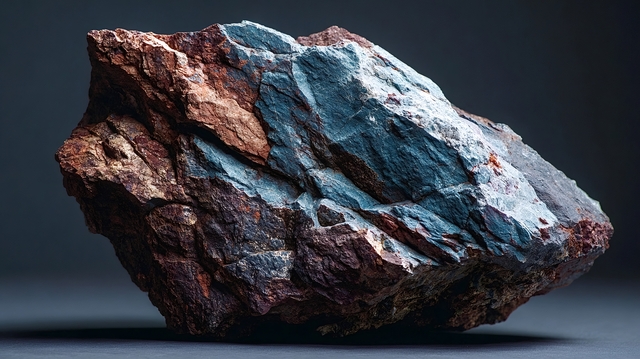

The budget’s proposal to establish a dedicated rare earth corridor is already reshaping investor sentiment. Industry experts and venture capital (VC) firms say the initiative sends a powerful long-term signal that India is serious about strengthening its deeptech, clean mobility, and advanced manufacturing ecosystem. While the immediate focus remains on mining and extraction, investors believe the larger ambition is far more strategic — building domestic capabilities across materials science, power electronics, and critical components that underpin next-generation technologies.
Beyond Mining: Building a Complete Value Chain
Instead of limiting efforts to resource extraction, policymakers aim to create an integrated value chain that spans refining, processing, and component manufacturing. This shift is crucial because most of the economic value lies downstream, not at the mining stage. Consequently, venture investors say the corridor could reduce supply chain risks for startups developing electric vehicles (EVs), battery systems, robotics, and advanced hardware solutions. By securing local access to critical materials, India can cut its dependence on imports and improve manufacturing resilience.
If implemented effectively, the policy may also attract global collaborations, encouraging multinational companies to partner with Indian deeptech firms on material development and R&D. Such partnerships could accelerate intellectual property (IP) creation and boost India’s position in high-value technologies.
Processing and Conversion Hold the Real Value
Experts highlight that refining and conversion capacity — not just mining — determine long-term competitiveness. “What China has built over decades is large-scale refining and permanent magnet manufacturing capacity. The real value lies in processing and conversion, not just mining,” said Vasudha Madhavan, Founder of Ostara Advisors. Her view underscores a key industry lesson: without downstream capabilities, raw material advantages deliver limited economic gains.
Rare Earths Power the Next-Gen Economy
Rare earth elements (REEs) comprise a group of 17 critical metals essential for modern technologies. Today, they enable applications across EVs, renewable energy systems, robotics, IoT devices, semiconductors, and advanced electronics. Although India possesses significant reserves, it still lacks large-scale refining and magnet manufacturing infrastructure. As a result, much of the value creation happens outside the country. By developing this missing infrastructure, India can capture greater economic benefits while strengthening domestic supply chains.
Greater Confidence for Venture Capital
From an investment perspective, the corridor could significantly de-risk early-stage funding. Investors say that policy clarity and supply chain stability make it easier to commit long-term capital to hardware-heavy and deeptech startups, which typically require higher upfront investment.
“By formalising a rare earth corridor, India is signalling that it wants to move up the value chain — from extraction to processing to IP creation,” said Manu Iyer, Managing Director at Bluehill VC. “That clarity is what long-term capital looks for when backing hard-tech startups.” He added that the policy opens opportunities to invest in material innovation ventures. Similarly, Alok Chauhan of Axilor Ventures noted that the initiative allows funds to underwrite investments in clean mobility and deeptech with greater confidence. However, he stressed that sustained investment across the ecosystem — including post-processing, refining, and domestic offtake — remains essential.
Global Demand Set to Surge
The timing also aligns with rapidly rising global demand. According to the International Energy Agency (IEA), demand for rare earth elements is expected to grow sevenfold by 2040, driven by the clean energy transition, EV adoption, and advanced electronics manufacturing. Against this backdrop, India’s rare earth corridor could position the country as both a strategic supplier and an innovation hub.
A Strategic Bet on India’s Deeptech Future
Taken together, the policy marks more than a mining initiative. It represents a broader strategy to strengthen India’s technology manufacturing base, attract venture capital, and accelerate deeptech innovation. As reported by msn.com, for investors and startups alike, the message is clear: the government is laying the groundwork for a self-reliant, future-ready ecosystem — and capital is likely to follow.