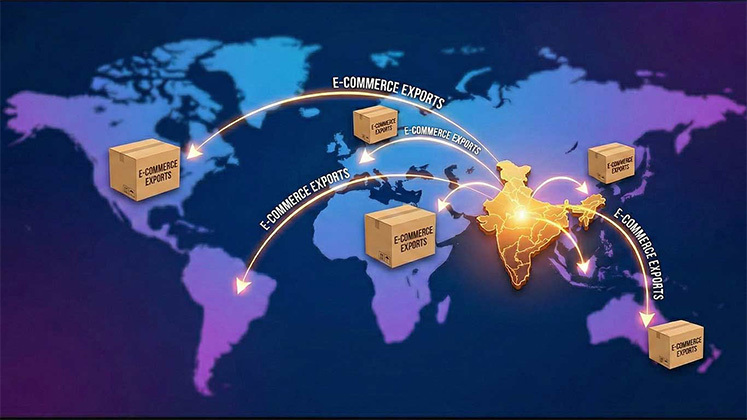
In a significant push to cross-border e-commerce, the government has overhauled customs rules to place exports made through postal channels on par with regular cargo shipments, a move expected to accelerate clearances and unlock long-denied export incentives for online sellers.
The reforms, which came into effect on 15th January ahead of the 1st February Union Budget, are set to enable faster processing of e-commerce exports routed through postal services and provide smoother access to key export incentives, including duty drawback, the Remission of Duties and Taxes on Exported Products (RoDTEP), and the Rebate of State and Central Taxes and Levies (RoSCTL). These benefits were previously unavailable to exporters using postal routes due to procedural constraints.
The changes address a longstanding bottleneck that had kept postal exporters—particularly micro, small and medium enterprises and digital-first sellers—outside the mainstream export incentive framework. The move is expected to directly benefit e-commerce companies and thousands of small online sellers who rely on India Post and international postal networks to ship low-value, high-frequency consignments overseas.
Through a series of notifications, the Central Board of Indirect Taxes and Customs (CBIC) granted electronic export entries filed for postal shipments the same legal status as shipping bills or bills of export used for air and containerised cargo. The board also amended duty drawback rules to explicitly allow refunds of customs and excise duties against these electronic postal export entries.
As part of a broader push towards digitisation, CBIC has also notified new electronic Postal Bill of Export formats, with separate forms for e-commerce parcels and other postal exports. This is expected to enable automated processing of export incentive claims and reduce manual intervention.
While postal exports have expanded rapidly alongside the growth of e-commerce, many compliance processes and export benefits remained linked to traditional shipping bills, resulting in uncertainty, delays and denial of incentives for postal exporters. Industry experts said the latest measures remove ambiguity around eligibility, ease compliance burdens and improve cash flows for exporters operating on digital platforms.
Saurabh Agarwal, tax partner at EY India, said the changes represented more than a procedural adjustment, describing them as a strategic realignment of India’s trade infrastructure with global e-commerce trends. He added that, at a time of heightened global volatility, a seamless and digital-first refund mechanism would help last-mile exporters remain price-competitive and strengthen India’s overall export competitiveness.