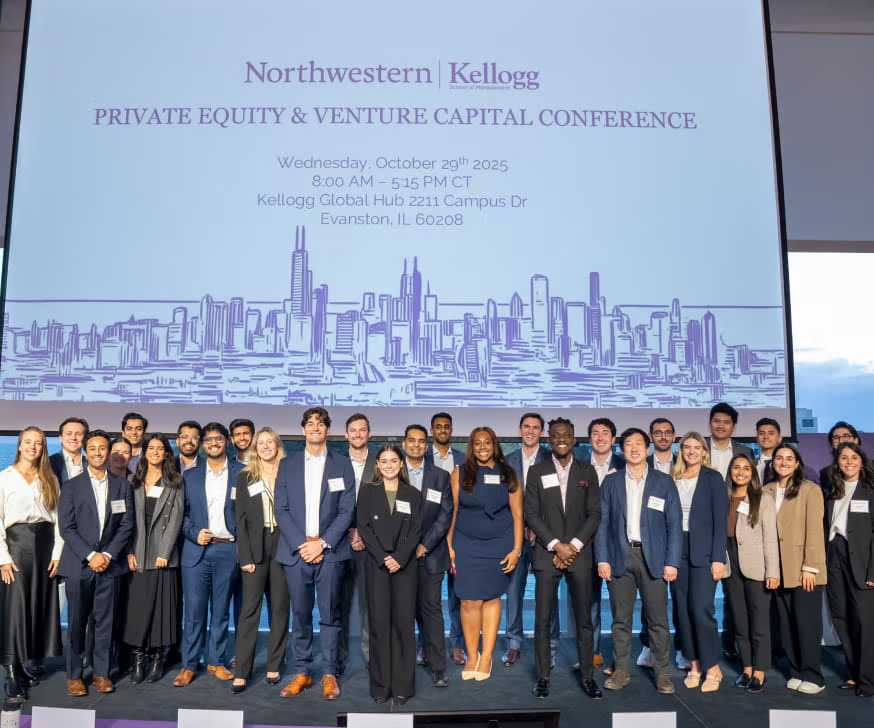
Meet Camille Scheyer ’26 Two-Year MBA Program and João Amá ’26 MBAi Program, they share how stepping into leadership has opened doors, built confidence and provided them with an unforgettable, community‑driven conference experience.
Kellogg: What drew you to get involved with the PE/VC Conference?
Camille: I came to Kellogg already interested in venture capital (VC), especially the defense tech space — but didn’t have prior VC experience. I applied to the student conference committee last year and joined the speakers & content team. This opportunity— which serendipitously focused on the role of private capital in defense — was one of the best decisions I made as a first-year MBA student. It gave me invaluable exposure to the VC world at a time and also helped me land my firm for Venture Lab, as well as my summer internship.
I remember being impressed with how much access the conference created for students, allowing them to engage directly with a wide variety of industry leaders across the investing space. When the chance to co-chair the 2025 conference came around, it felt like a no-brainer. Not only would I be able to deepen my own understanding of the industry but also help deliver an exceptional experience for my peers and Kellogg alumni — one that would strengthen our community and keep them returning to the conference for years to come.
Joao: My experience attending the 2024 conference was a defining moment of my first year. It was my first time attending a conference, and I was blown away by the caliber of the speakers and the depth of the insights shared. Coming into my MBA with the goal of pivoting into private equity (PE), I have been intentional about immersing myself in the school’s PE community. I saw co-chairing the conference as the perfect way to accelerate my experience curve.
Co-chairing was an enriching opportunity to learn from our incredible team of students, staff and alumni. Having benefited so much from the Kellogg community’s support during my own pivot, I wanted to apply my technical and industry knowledge and skills to serve the next class. Leading this year’s conference provided me with that opportunity to give back and contribute to the high-impact environment that inspired me as a first-year.

Kellogg: What’s one leadership lesson you learned while organizing this event?
Camille and Joao: A strategy only succeeds with disciplined follow-through. A compelling vision is important, but it stays theoretical unless you’re willing to roll up your sleeves and execute. Across all the conference committees, success depended on layers of consistent follow-up, coordination and attention to detail at every stage.
It was a reminder that what feels urgent to our team is not always top-of-mind for others, so we need to drive momentum, close loops and ensure contingency plans are ready when needed. All 41 student leaders spearheaded operational rigor across all facets of the conference, with the help of the school’s fantastic corporate engagement team and faculty advisors. That behind-the-scenes work is ultimately what brought the conference to life.
Kellogg: What skills did you gain or sharpen? And how did this experience boost your confidence to succeed in private equity, venture capital or wherever your career takes you?
Camille and Joao: Kellogg already does an excellent job of forcing students to balance competing priorities, but the conference added an entirely new level of whack-a-mole. It pushed us to seamlessly juggle a wide range of co-chair responsibilities on top of course work, recruitment, our summer internships and other extracurriculars — much like a true management role in the real world.
We also had the privilege of working with exceptional leaders across private equity and venture capital who were generous with their limited time. That required real intentionality, preparing thoroughly and ensuring we made interactions as seamless and high value as possible. The combination of interfacing directly with those professionals and absorbing the insights shared across panels made the entire experience incredibly rich.
What made this especially unique is that we were engaging with industry leaders not under the implied pressure of recruiting but rather in a genuine partnership to build something meaningful for the Kellogg community. With curiosity and shared purpose as driving forces, the conference flourished, offering an important parallel to how genuine synergy is created in the working world.
Kellogg: What role did alumni or industry partners play in shaping the event — and your perspective?
Camille and Joao: The caliber of our alumni and industry partners is what transforms this conference from a student event into a highly respected anchor of the Kellogg experience. In most cases, we began with topics that reflected our overarching theme and then reached out to alumni whose expertise aligned with the conversations we hoped to create. We collaborated closely to shape each panel, ensuring the agenda reflected both the insights they were uniquely positioned to offer and the takeaways we believed would be most valuable for students. It became a genuine win-win: our audience heard leaders speak on issues they care deeply about, and our panelists had a platform to share perspectives they felt were important for the next generation of investors and operators.
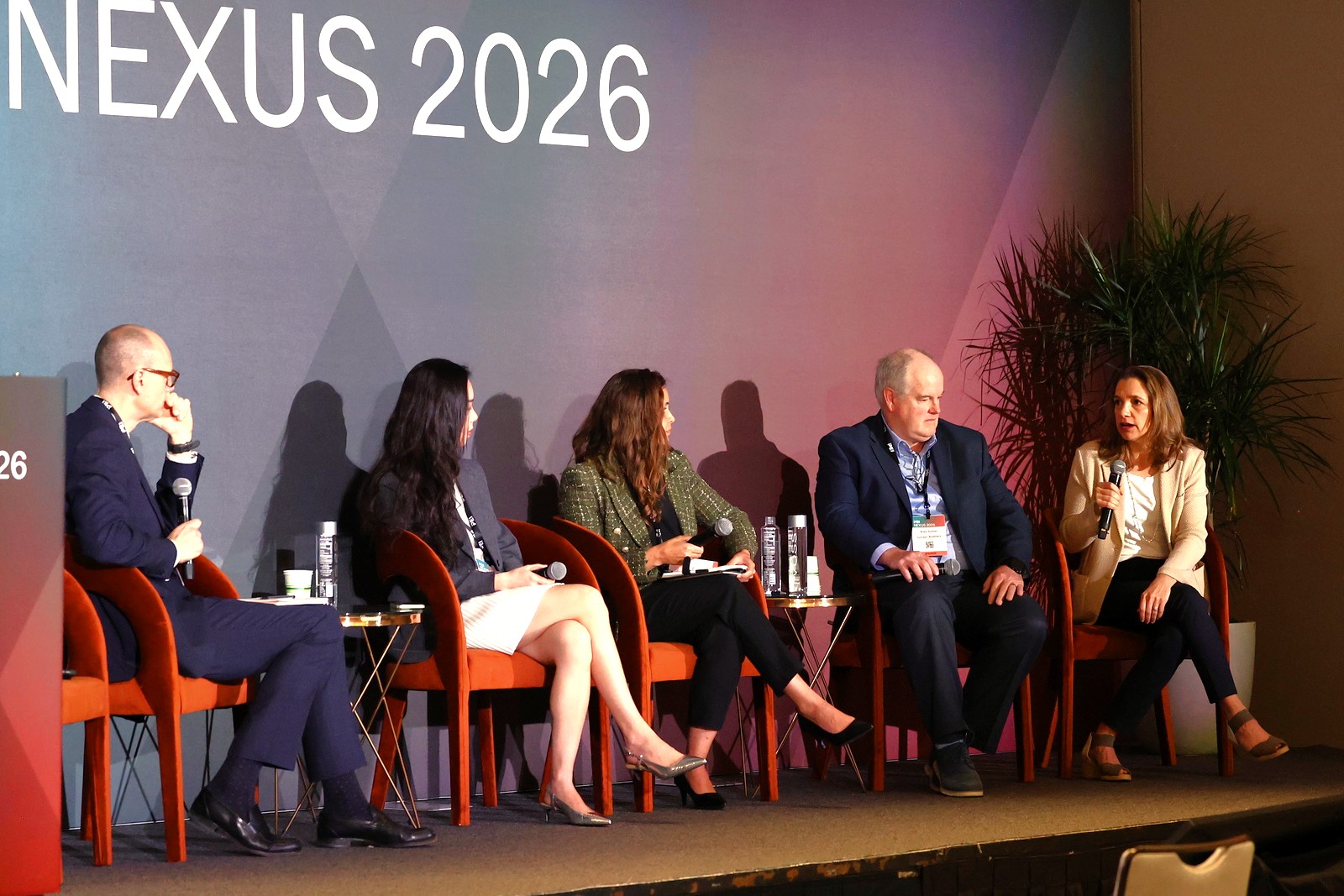
Our sports Investing showcase panel is a perfect example. Sudhir Ravi ’24 MBA approached us with remarkable enthusiasm and a clear vision for how to bring the topic to life. His energy and subject-matter expertise underpinned the panel, and he played a pivotal role in bringing Matt LaPorta ’24 MBA to moderate, as well as Mark Affolter ’00 MBA and Rob Ryan ’00 MBA. They brought a level of candor and expertise that offered a rare inside look at how top investors think about the future of sports.
Further, our alumni keynotes brought tremendous energy and clarity to the day’s themes. Chuck Templeton ’06 MBA opened the conference by reflecting on how building OpenTable shaped the hands-on, founder-first mindset he now brings to his work at S2G Investments. His perspective offered students a rare window into how entrepreneurial experience translates into truly value-add investing.
Mark Strauch ’98 MBA closed the day by shifting the focus to people and leadership. He illustrated how Alpine Investors’ long-term success is rooted in identifying exceptional leaders, investing deeply in their growth and building cultures that empower them to thrive. His message reinforced that sustained value creation is ultimately a function of who you bet on and how you support them.
The scale and momentum of the conference reflect the generosity of our alumni and industry partners, who dedicated their time, energy and trust. This is an enduring testament to the strength of the Kellogg community, which we intend to carry forward and contribute to as alumni ourselves.

Kellogg: Were there any new insights from the industry that you didn’t expect?
Camille and Joao: One of the most striking parts of the conference was seeing the extraordinary range of sectors where private capital is now driving meaningful change. In conversation after conversation, it became clear that investors are pushing into areas once dismissed as too complex, too regulated, too slow-moving, or in the case of sports, simply untouched.
Sara Crown Star ’21 MBA (FemHealth Ventures) illustrated how women’s health is entering a period of long-overdue innovation. Lucas Pasch from Alumni Ventures showcased the breadth of opportunity emerging across a number of industries like cybersecurity, AI, healthcare and more. And in advanced manufacturing, Allison Lechnir and Joe Musselman demonstrated how private capital is accelerating modernization in a space that historically resisted disruption.
What stood out was not only the diversity of industries but the momentum behind them. These leaders are helping reshape entire ecosystems, creating the conditions for new technologies and business models. For students in the audience, it was a powerful window into what investing can achieve. Beyond the dollars deployed, private capital can unlock pathways that wouldn’t have existed otherwise, influencing the trajectory of industries with real societal impact.
That exposure broadened our collective understanding of what it means to build a career in investing. It highlighted that the role of private capital extends beyond sourcing opportunities and generating returns to advancing progress in sectors that truly matter.

Kellogg: What advice would you give to someone who’s on the fence about getting involved next year?
Camille and Joao: We encouraged students who were on the fence this year to apply regardless of whether they saw themselves pursuing careers in VC or PE. For those interested in the investing world, there is truly no better or faster way to learn. You’re immediately exposed to the language, the dynamics and the people who help shape the space — all within your first few weeks at Kellogg.
You also build relationships with classmates who share similar interests and have the opportunity to engage directly with outstanding industry leaders. The first few months of Kellogg can feel overwhelmingly busy, but getting involved early gives you exposure most students don’t gain until much later. Even if you’re unsure where your career will take you, if you are even a little bit curious, lean in and apply.

Read next: How Kellogg prepares you for bold career shifts
The views and opinions expressed in this post are those of the author, and do not necessarily reflect the position of the Kellogg School of Management or Northwestern University.