Indian family offices are entering a more institutional phase. Recent research from Julius Baer and EY shows that the number of Indian family offices has risen sharply in recent years, supported by intergenerational wealth transfer, liquidity from listings and exits, and the growing complexity of multi-generational wealth management. At the same time, offshore allocation is becoming a more deliberate part of portfolio construction, driven by diversification, governance, and long-term capital preservation rather than simple return-seeking alone.
For many family offices, the question is no longer whether to invest globally, but where Indian capital has a genuine edge. The best cross-border opportunities are usually not the most fashionable ones. They are areas where patient capital, flexibility, and a willingness to underwrite complexity can create an advantage over traditional institutional investors.
Commercial Real Estate: Opportunity in Dislocation
One of the clearest examples is U.S. commercial real estate. The sector continues to face a large refinancing burden, with S&P Global Market Intelligence indicating that the maturity wall remains elevated through 2027. Multi-Housing News, citing Kaplan Group data, noted that $957 billion in commercial real estate debt matured in 2025, with multifamily and office loans accounting for the largest portions.
That does not mean all real estate is attractive. It means opportunities are likely to emerge where refinancing stress is forcing recapitalisations, rescue financing, preferred equity structures, or discounted acquisitions. Multifamily remains easier to underwrite than office because the long-term demand base is more durable, while office requires far more selectivity because of structural shifts in how space is used. For family offices with long holding periods, this is less a trading opportunity than a capital-structure opportunity: backing experienced operators through a period of dislocation.
The Small-Business Succession Wave
A second compelling theme is the U.S. small-business ownership transition now underway. McKinsey estimates that by 2035, about six million small and medium-size businesses will face ownership transitions as baby boomers retire. More than one million of those firms may be viable candidates for sale or transfer, representing up to $5 trillion in enterprise value. McKinsey also notes that these businesses employ more than 60 million workers and generate roughly 35% of business revenue.
For Indian family offices, this creates an interesting pathway into operating businesses rather than purely financial assets. Fragmented sectors such as home services, specialty manufacturing, distribution, accounting, and business services offer scope for consolidation, professionalisation, and digital upgrading. These are rarely glamorous assets, but they can be resilient, cash-generative, and well suited to investors who are comfortable with longer holding periods and hands-on governance.
Digital Infrastructure and Technology
Digital infrastructure deserves a separate category. Bloomberg recently reported that Blackstone is launching a publicly traded acquisition company focused on data centers, a sign that stabilized, leased digital infrastructure is increasingly being treated as an income-generating infrastructure play rather than a purely speculative technology bet.
Family offices do not need to build platforms from scratch to participate in this theme. Exposure can come through specialist funds, co-investments, structured credit, or partnerships with operators in data centers, fiber, and adjacent infrastructure. The key is to distinguish between assets backed by durable demand and assets whose economics depend too heavily on aggressive assumptions about future growth.
In the broader technology market, family offices should remain selective. The United States continues to dominate in areas such as AI, semiconductors, cloud software, cybersecurity, and developer tools, but these are crowded spaces where access and manager selection matter far more than broad enthusiasm.
Healthcare and Life Sciences
Healthcare and life sciences remain attractive areas for cross-border capital, especially where Indian investors can combine sector familiarity with global partnerships. The most interesting opportunities are likely to sit in diagnostics, medical devices, contract manufacturing, healthcare services, and companies that can combine Indian operating capabilities with overseas intellectual property, regulatory approvals, or distribution channels.
This is also one of the few sectors where Indian strategic know-how can travel well. Family offices with patience and domain understanding can back companies that need time to build credibility, secure certifications, and expand into regulated markets. In such cases, capital is only one part of the value proposition; strategic alignment matters just as much.
Venture Capital and Private Equity
Venture capital and private equity remain important, but they should be approached with discipline rather than fashion. Crunchbase reported that global startup funding reached $425 billion in 2025, with roughly half of all venture funding going to AI-related fields. Venture funding to AI alone reached $211 billion, up 85% from 2024.
That scale of capital formation is impressive, but it also means competition and valuation risk are significant. McKinsey’s 2026 private markets report argues that private equity has moved into a tougher environment where returns depend less on easy multiple expansion and more on disciplined entry pricing, operational value creation, leadership, liquidity management, and the effective use of AI.
For Indian family offices, that argues for a more selective route: backing high-conviction managers, participating in co-investments where underwriting can be done properly, and focusing on sectors where the family office can bring insight or networks instead of behaving like a generic pool of capital.
A More Strategic Global Role
The most important shift is philosophical. Global investing for Indian family offices is no longer only about diversification for its own sake. It is becoming a strategic exercise in matching long-duration capital with markets and situations where flexibility is rewarded.
That points toward a practical shortlist: dislocated real estate, succession-driven business acquisitions, digital infrastructure, selected healthcare platforms, and specialist private-market strategies. In each of these areas, the advantage of a family office is not scale alone. It is the ability to move patiently, think across cycles, and stay invested where short-term capital often cannot.
If approached with discipline, cross-border investing can become more than an offshore allocation. It can become a defining part of how Indian family offices preserve capital, build institutions, and create multi-generational value.
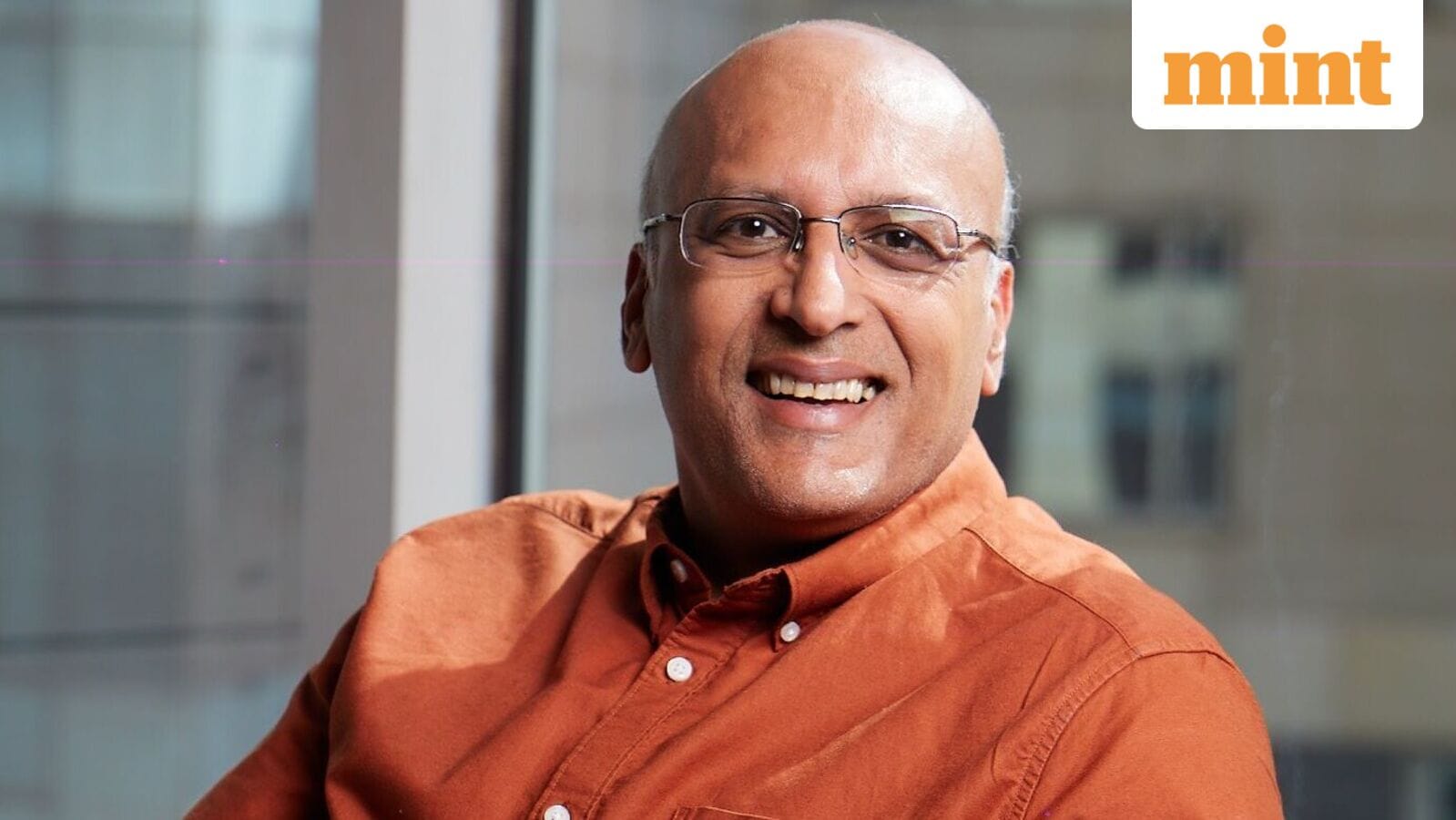
Dr. Saji Salam, MBBS, MBA, is a management consultant with extensive experience advising Fortune 500 organizations in the United States. He is also the founder of Careventures Capital, a Houston-based private equity and advisory firm.
saji@careventurescapital.com
Note to readers: This article is part of Mint’s paid consumer connect Initiative. Mint assumes no editorial involvement or responsibility for errors, omissions, or content accuracy.
Want to get your story featured as above? click here!