Weather impacts sales. Every retailer knows it. But for most, the likelihood that it might rain, snow, or sleet on the third of March somewhere in the Midwest is rarely used.
Vendors such as Weather Trends have offered accurate, long-range forecasts for more than 20 years. But the opportunity is not predicting the weather; it’s knowing what to do with the data.
AI might change that.
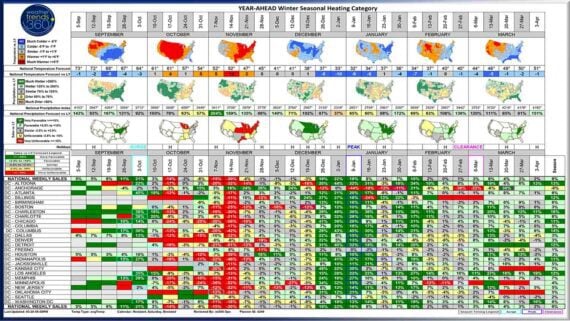
How does a retailer apply Weather Trends data to everyday decisions?
Ecommerce Challenges
Artificial intelligence is becoming the panacea for common ecommerce challenges, including weather-related, such as:
- Demand forecasting,
- Pricing and markdown optimization,
- Personalization,
- Weather-informed fulfillment and delivery promise,
- Triggered marketing and advertising.
Demand forecasting
In 2017, when Boise, Idaho, experienced “snowmegeddon,” the farm and ranch retailer I worked for knew it was coming. The company subscribed to long-term weather prediction data that warned of record snowfall.
The business increased its wholesale orders for snow-related products, but cautiously. Company leadership doubted the data.
They were rightly concerned about the cost of a mistake. Underestimates can lead to stockouts and missed revenue (which happened in this case).
Yet overestimates increase carrying costs, markdown risk, or spoilage in perishable categories.
It was difficult to weigh the potential losses and benefits. Looking back, AI may have made that decision easier, not in predicting the snowfall, but clarifying the risk.
Pricing optimization
Pricing and markdown decisions are demand forecasts expressed in dollars. Retailers estimate how quickly products will sell and adjust prices to preserve margins.
Weather complicates those decisions. An online merchant in sunny Florida might mark down winter goods just as one in Bismarck, North Dakota, is facing the next snowstorm.
AI-informed pricing solutions may help merchants resolve this mismatch in demand perception.
Rather than showing every customer the same prices, AI can incorporate local variables, such as regional weather patterns, forecast probabilities, and conversion behavior, to find the just-right price for each region and each weather forecast.
Instead of applying a single markdown logic, AI pricing engines can adjust promotions based on expected demand in a shopper’s locale.
Personalization
Personalization tools infer shopper intent from behavior and context. Weather introduces another powerful signal.
Shoppers browsing during a cold snap, heat wave, or storm likely have unique needs. Demand for seasonal goods, comfort-related products, or event-driven purchases often shifts in response to immediate weather conditions.
AI-driven personalization engines may incorporate weather data (real-time or forecast) to adjust recommendations, site search results, category emphasis, and promotional messaging.
Thus outerwear, hydration products, or indoor activity items may receive greater visibility depending on conditions.
Unlike pricing, merchandising decisions typically carry low risk. They influence what shoppers see rather than what merchants commit to.
Fulfillment expectations
Weather affects logistics as much as demand. Snow, storms, and temperature extremes can disrupt carrier networks, delay shipments, and reshape delivery expectations. Yet many ecommerce platforms generate delivery estimates from static assumptions.
That is a problem. Most shoppers expect fast delivery and sometimes react harshly, such as initiating chargebacks, when delayed.
AI-driven fulfillment models can incorporate weather variables, carrier performance patterns, and regional risk factors when calculating estimated arrival windows.
Triggered marketing
Weather also creates short-lived demand, such as umbrellas on a rainy day.
An AI agent connected to Meta Ads could automatically trigger campaigns based on weather-influenced demand. The AI would write copy, generate images or video, set budgets, and even learn from its successes and failures.
Competitive Advantage
The combination of AI and weather data could give merchants a competitive advantage, but separating hype from reality will require testing.
If weather impacts sales, AI might predict those changes and optimize for them.