[ad_1]
Quote of the Day Today: Yoko Ono on Creative Freedom
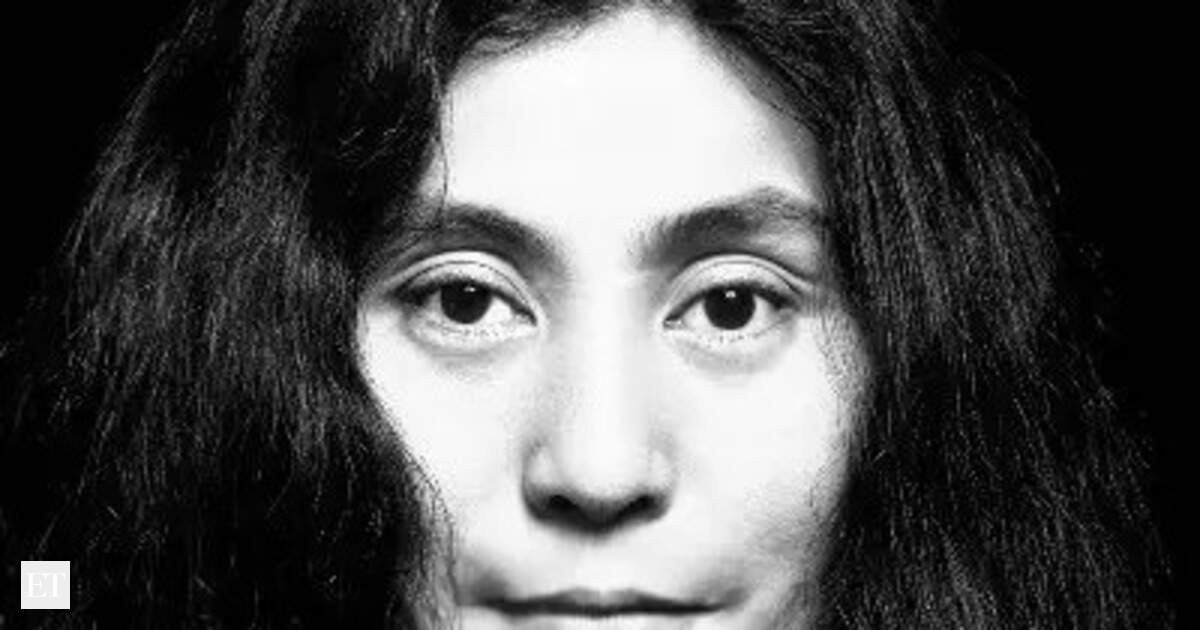
Quote of the day by Yoko Ono:
“If you have too many quotes from other people in your head, you can’t create. You have to keep your head empty. That’s why I am constantly enjoying the sky, the park, the walk,” as per BrainyQuote.
Quote of the Day February 18: Meaning Behind Yoko Ono’s Words
At first glance, Ono’s quote may seem like a simple reminder to spend time outdoors. But the deeper message speaks to creativity and mental space. Here’s how to understand what she’s saying:
Quote of the Day by Yoko Ono: Meaning Explained
Too Much Input Can Block Original Thought: Ono warns against filling your mind with too many external influences, even meaningful quotes. When the mind is crowded with others’ ideas, it becomes harder to generate your own.

Quote of the Day Meaning: Creating Space for Your Own Ideas
Creativity Requires an “Empty Head”: Don’t mistake “empty” for empty‑mindedness. Ono suggests making space inside your head, clearing out the noise, so your own thoughts and ideas can emerge.
Quote of the Day: Everyday Practices That Encourage Creativity
Presence and Simplicity Feed Authentic Expression: The ways she “keeps her head empty”, observing the sky, enjoying a park or taking a walk, are simple, everyday actions grounded in presence. They remind us that creativity often flows when we step away from screens, comparisons and cluttered thoughts.
Yoko Ono: A Pioneer in Avant-Garde Art
She has been a key figure in avant‑garde art and cultural expression for decades, and this quote reflects her broader philosophy about imaginative freedom and self‑exploration. Rather than copying or accumulating what others have said, she champions a mindful approach that creates space for new ideas to flourish.
Yoko Ono’s Early Life and Artistic Training in Tokyo and New York
Yoko Ono, born February 18, 1933, in Tokyo, Japan, has spent her life reshaping the boundaries of art, music, and public consciousness. From a childhood immersed in poetry, plays, and classical music, to a career that spans conceptual art, performance, and experimental rock, Ono has remained a relentless explorer of creativity.
Raised in a wealthy Tokyo family, Ono showed early artistic promise, studying piano, voice, and writing. She became the first woman admitted to the philosophy program at Gakushūin University in 1952, though she soon moved to New York, joining her family in the US, as per a Britannica report. There, she studied at Sarah Lawrence College while searching for her artistic voice.
Her early years in New York introduced her to the avant-garde scene, particularly through her marriage to Japanese composer Toshi Ichiyanagi and collaborations with experimental artists like La Monte Young. Ono’s loft in downtown Manhattan became a hub for performance art, where she encouraged audience participation in works such as Painting to Be Stepped On (1960), as per the Britannica report. Many of her conceptual pieces existed as instructions or ideas rather than traditional objects, a philosophy she later compiled in her 1964 book Grapefruit.
Yoko Ono: Iconic Performances and Conceptual Works
Ono’s performances in the 1960s, including Cut Piece (1964), challenged conventions and engaged audiences in profound ways. By inviting spectators to cut parts of her clothing, Ono explored vulnerability, control, and societal norms, creating a landmark work in feminist and conceptual art. Her experimental approach extended into film during her time in London, including works such as No. 4 (Bottoms), and led to her fateful meeting with John Lennon in 1966, as per the Britannica report.
Yoko Ono’s Collaboration and Legacy with John Lennon
Her collaboration and eventual marriage to Lennon in 1969 elevated her public profile, blending activism, performance, and music. Together, they staged the famous “bed-ins” to promote peace, while Ono continued her avant-garde experiments. Their music projects, including Unfinished Music No. 1: Two Virgins and Double Fantasy, reflected both intimacy and controversy, pushing artistic boundaries. Even after Lennon’s tragic death in 1980, Ono’s creativity persisted, with works like Season of Glass (1981) capturing grief and resilience, and later projects such as Rising (1995) and Between My Head and the Sky (2009) continuing her innovative musical explorations.
Yoko Ono: Recognition, Retrospectives, and Ongoing Influence
Ono’s influence has been recognized through retrospectives at major institutions, including the Whitney Museum in 1989, the Japan Society Gallery in 2000, and the Museum of Modern Art in 2015. Her contributions to conceptual art and music earned her a Golden Lion for Lifetime Achievement at the 2009 Venice Biennale.
Beyond music and art, Ono has acted in films and lent her voice to projects like Wes Anderson’s Isle of Dogs (2018). She has continued to preserve and promote Lennon’s legacy, overseeing unpublished works and receiving recognition as a songwriter on the iconic song “Imagine” in 2017, as per the Britannica report.
At 93, Yoko Ono remains a figure of relentless creativity and boundary-breaking innovation. From her early poetic and musical training to her pioneering conceptual works, her life exemplifies a dedication to exploring art, challenging norms, and inspiring generations worldwide.
Iconic Quotes by Yoko Ono
Here are a few more quotes by Yoko Ono:
- “Smile in the mirror. Do that every morning and you’ll start to see a big difference in your life,” as per BrainyQuote.
- “When people ask me what the most important thing is in life, I answer: ‘Just breathe,'” as per BrainyQuote.
- “We are all dreamers creating the next world, the next beautiful world for ourselves and for our children,” as per BrainyQuote.
- “When you are suffering, you become more understanding about yourself, but also about other people’s sufferings too. That’s the first step to understand somebody is to understand their sufferings. So then love follows,” as per BrainyQuote.
- “The sky is always there for me, while my life has been going through many, many changes. When I look up the sky, it gives me a nice feeling, like looking at an old friend,” as per BrainyQuote.
[ad_2]