[ad_1]
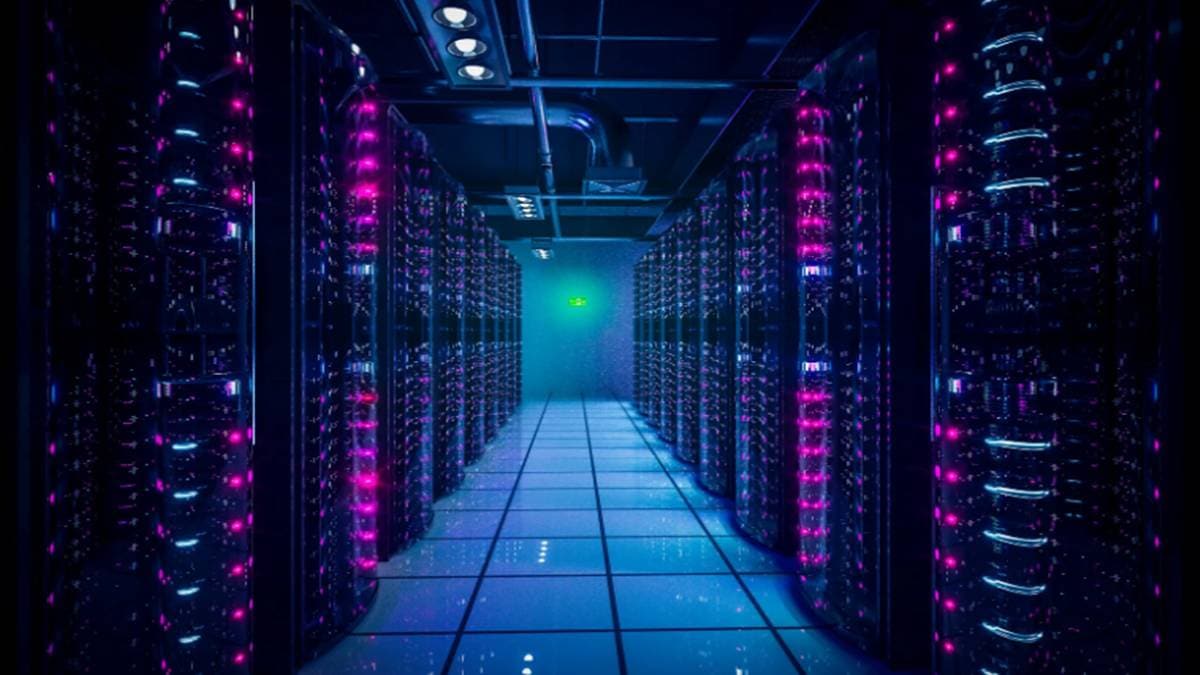
Sify Infinit Spaces is the first pure-play data centre company to have received approval from the Securities and Exchange Board of India (Sebi) for a Rs 3,700 crore initial public offering, marking a shift in how data centre players are funding their expansion amid limited appetite from venture capital firms.
Funding the AI Pivot
As the data centre ecosystem scales up, companies are increasingly queueing up to tap the IPO market to raise capital for infrastructure-heavy expansion plans. Of the total issue size, around Rs 1,325 crore has been earmarked for data centre outlay, underlining that the offering is largely geared towards building and expanding capital-intensive AI infrastructure.
Bharti Airtel is also preparing an IPO for its data centre arm, Nxtra Data, within the next couple of years. The proposed listing is expected to value the business at around $3 billion, or roughly Rs 20,500 crore. The company has earlier said it plans to invest between Rs 4,500 crore and Rs 6,000 crore to acquire land and expand facilities, with the aim of doubling capacity from the current 80–100 MW over the next three years.
Other players are also exploring the public markets. Yotta Infrastructure, which had earlier weighed a listing on Nasdaq, is now pursuing an India listing within the next year. CtrlS Datacenters is considering an IPO to fund a $2 billion infrastructure development roadmap.
VC Paradox
Despite the AI-driven infrastructure boom, venture capital firms have largely stayed away from direct investments in data centre companies, citing concerns around capital intensity and returns. Rishi Kapoor, co-chief executive and chief investment officer at Investcorp, said at the recent Davos summit, “Ironically, we are not really going big and deep into data centres mainly because too much capital has gone into it. Returns have gotten compressed to levels where arguably, you can get a better risk-return trade-off in other areas.”
For over a decade, data centre growth has been driven primarily by hyperscalers such as Google, Amazon and Microsoft to support cloud services. Sid Ugrankar, co-founder and CEO of Qila.io, said that as cloud growth slowed in recent years, demand for large, power-intensive facilities also eased. “This demand has been re-energised with large language models in AI that require infrastructure in terms of power and compute facilities. However, the return on investment for data centres is uncertain as use cases are not justifying the investment,” he said.
A November report by PitchBook echoed similar concerns in the US market, staing that “exit horizons are complicated by the fact that no one can say with confidence whether the returns being underwritten today will hold up,” while warning of overcapacity risks from aggressive build-outs.
Indian companies are also watching global precedents such as CoreWeave, which went public last year but, like hyperscalers, carries significant debt.
“Data centres are critical to AI infrastructure, but they are not a natural VC play,” said Natasha Malpani, founder and general partner at Boundless Ventures. “They are highly capital-intensive: closer to real estate or utilities than venture. Globally, institutional and sovereign investors fund data-centre build-outs; VCs back the intelligence that runs on top.”
Joint ventures and strategic partnerships are emerging as another funding route, particularly after the Union Budget proposed a 10-year tax holiday for foreign companies building data centre infrastructure in India. The move is expected to attract Big Tech investments as global firms ramp up AI infrastructure spending.
Naresh Singh, senior director analyst at Gartner, said India’s advantage lies beyond tax incentives. “India’s edge is that it also offers access to an already significant and rapidly growing talent pool and affordable power tariffs — both of which are important for managing costs and improving operating margins,” he said.
[ad_2]