[ad_1]

Revenue,
2025
USD 9.73 Bn

Forecast Year,
2035
USD 29.63 Bn


What is the Human Papillomavirus Hpv Vaccines Market Size?
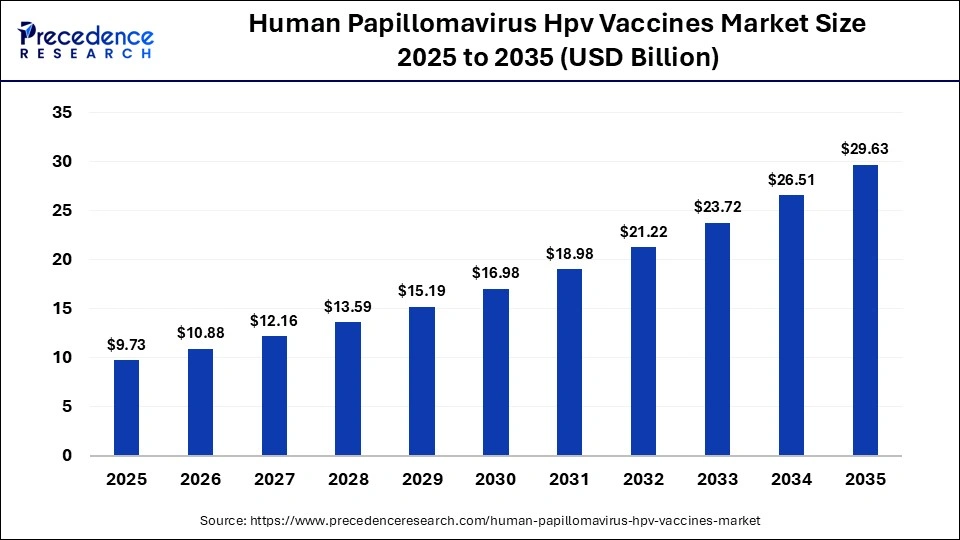
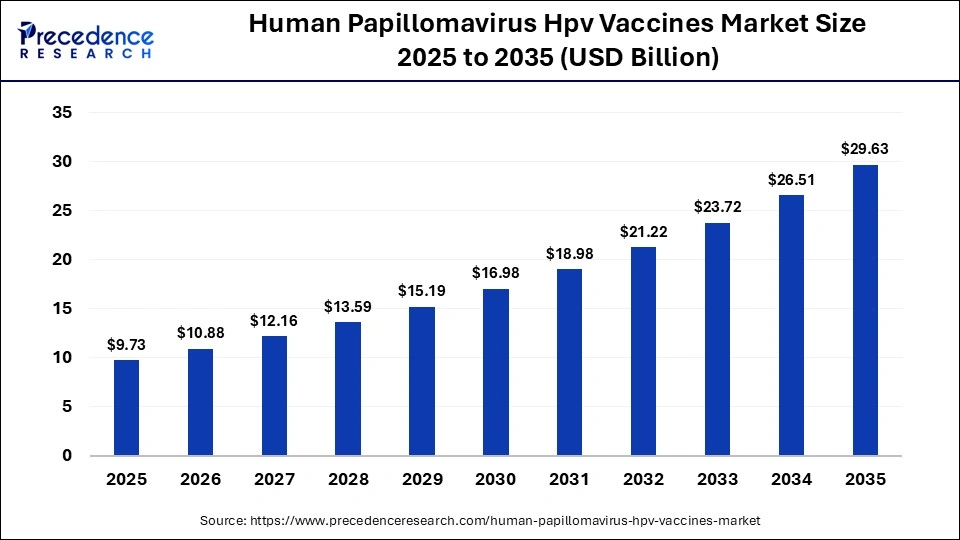
The global human papillomavirus Hpv vaccines market size was calculated at USD 9.73 billion in 2025 and is predicted to increase from USD 10.88 billion in 2026 to approximately USD 29.63 billion by 2035, expanding at a CAGR of 11.78% from 2026 to 2035. The market is experiencing robust growth, driven by heightened awareness, government immunization programs, and rising HPV-related cancer prevention efforts, driving strong global demand and consistent uptake across age groups.
Market Highlights
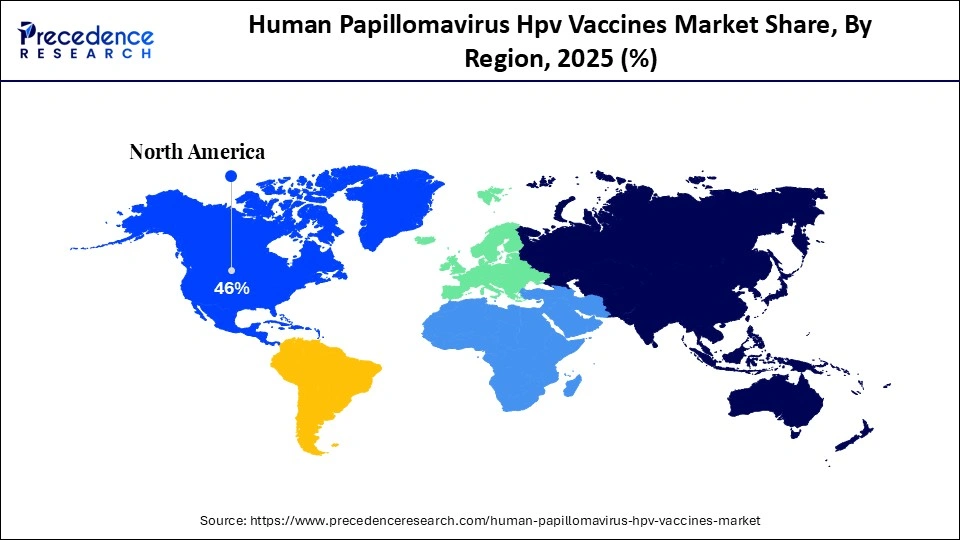
- North America led the human papillomavirus (Hpv) vaccines market with the largest market share of 46% in 2025.
- Asia-Pacific is expected to expand the fastest CAGR in the market between 2026 and 2035.
- By type, the tetravalent segment dominated the human papillomavirus Hpv vaccines market in 2025.
- By type, the nonavalent segment is expected to grow at the fastest CAGR in the market between 2026 and 2035.
- By disease indication, the cervical cancer segment led the global market in 2025.
- By disease indication, the anal cancer segment is projected to grow at a solid CAGR between 2026 and 2035.
- By industry vertical, the public and private alliances segment led the market in 2025.
- By industry vertical, the government entities segment is expected to expand at the fastest CAGR from 2026 to 2035.
Are HPV Vaccines Shaping Preventive Healthcare?
The human papillomavirus Hpv vaccines market encompasses preventive vaccines that have been linked to the development of cervical cancer and other Hpv-associated illnesses. Most Hpv vaccines are administered through the public and private sectors via an immunization program. With increased awareness regarding the potential for the prevention of cancers associated with Hpv, in addition to increased rates of adolescent vaccination, many governments have taken a more proactive role in promoting government-based immunization programs.
Through the addition of male patients to vaccination programs, the potential patient population has significantly increased. Additionally, advances in vaccine technology have developed greater available protection for multiple viral variants, enhancing the likelihood that patients will receive the Hpv vaccine.
Emerging economies will likely see an increase in the market through greater access to healthcare and through public health campaigns focused on Hpv vaccinations. Overall, the Hpv vaccine market demonstrates the trend of a shift towards preventive healthcare; vaccination is the primary means to reduce long-term cancer risk by protecting individuals from Hpv infections.
How is AI Transforming the Human Papillomavirus Hpv Vaccines Market?
Artificial Intelligence (AI) is leading the way in how organizations and the public health sectors approach the market. By leveraging AI, many companies and organizations have successfully implemented AI-enabled chatbots that provide custom vaccine information for parents. AI chatbots result in increased levels of commitment and scheduling for Hpv vaccinations during real-world trials in China and globally.
On the commercial side, AI tools have enabled vaccine manufacturers and public health entities to enhance stakeholder engagement, lower costs associated with marketing and educating, and improve forecast accuracy for demand. AI-based data insights have simplified the market research process and aided in developing competitive strategies, enhancing the rate of innovation and increasing adoption in emerging and established markets.
Human Papillomavirus Hpv Vaccines Market Trends
- Expanded Coverage: Hpv vaccine developers have pivoted towards an all-inclusive approach, expanding their strain coverage to cover more high-risk Hpv types and providing long-term protection against cervical and other Hpv-associated cancers across a greater range of ages.
- Male Vaccination: The focus on vaccinating males and females has created an opportunity to improve vaccination programs. Vaccination of males will contribute to reducing the sexual transmission of Hpv to females and will help build herd immunity within the general population.
- Public Health Programs: Government initiatives are improving the accessibility of Hpv vaccines through extended national immunization schedules, advertisements, and in many cases, schools.
- Formulation Innovations: Vaccine formulation development is continuously evolving, thereby providing vaccines with longer, more durable immune response rates and reducing the number of doses needed for full immunity, coupled with improvements in the vaccine’s ability to be stored at common cold storage temperatures.
Market Scope
| Report Coverage | Details |
| Market Size in 2025 | USD 9.73 Billion |
| Market Size in 2026 | USD 10.88 Billion |
| Market Size by 2035 | USD 29.63 Billion |
| Market Growth Rate from 2026 to 2035 | CAGR of 11.78% |
| Dominating Region | North America |
| Fastest Growing Region | Asia Pacific |
| Base Year | 2025 |
| Forecast Period | 2026 to 2035 |
| Segments Covered | Type, Disease Indication, Industry Vertical, and Region |
| Regions Covered | North America, Europe, Asia-Pacific, Latin America, and Middle East & Africa |
Segmental Insights
Type Insights
Which Type Segment Dominated the Human Papillomavirus Hpv Market?
The tetravalent segment held the largest revenue share in the market in 2025, due to the high efficacy of tetravalent vaccines against Hpv types 6, 11, 16, and 18, and the practice of using the tetravalent vaccine since the vaccines’ introduction, physicians’ familiarity and knowledge with the tetravalent vaccine. The wider use and support for the tetravalent vaccine as part of national immunization programs boost the segment’s growth. In addition, the balanced protection profile and established safety record of the tetravalent vaccine further solidify the use of the tetravalent vaccine in routine vaccination schedules, particularly in relation to public health programs and school-based immunization programs.
The nonavalent vaccine segment is expected to grow with the highest CAGR in the market during the studied years, as it provides additional protection against five more high-risk HPV strains. Increased knowledge related to comprehensive cancer protection against cervical cancer and oropharyngeal cancers is driving increased adoption of the nonavalent vaccines.
Healthcare providers are increasing their support for the nonavalent vaccines to decrease the risk of developing cancers over their lifetime. Current increase in regulatory approvals, decrease in the cost to consumers, and increase in recommendations for vaccinating adults, potentiate the use of nonavalent vaccines in developed and emerging markets.
Disease Indication Insights
Why Did the Cervical Cancer Segment Dominate the Human Papillomavirus Hpv Market?
The cervical cancer segment registered its dominance over the global market in 2025 because of its well-documented connection to high-risk Hpv. Numerous screening programs, public education, and health promotion policies have put a lot of emphasis on cervical cancer prevention. Demand for the vaccine is driven by continued vaccination efforts directed toward adolescent girls and young women, while global organizations dedicated to eliminating cancer also add to cervical cancer’s prominence as an Hpv vaccination indication.
The oropharyngeal cancer segment is expected to be the fastest-growing segment in the coming years, due to a rapid rise in the use of Hpv vaccines against oral and throat cancers. This is attributed primarily to the increasing incidence of throat cancer caused by Hpv, particularly among younger and middle-aged adults. Increased clinical evidence showing the association of Hpv with oropharyngeal cancers has resulted in increased efforts to promote the use of vaccines. Improving screening practices and expanding distribution of HPV vaccine recommendations augment the segment’s growth.
Industry Vertical Insights
Which Industry Vertical Segment Led the Human Papillomavirus Hpv Vaccines Market?
The public and private alliances segment led the global market with a share in 2025, due to their increasing involvement with the large-scale procurement, distribution, and awareness of vaccines. Healthcare organizations, non-profit organizations, and private stakeholders collaborate to combine resources, funding, infrastructure, and outreach capabilities. Alliances enable the providers to necessitate the use of Hpv vaccines on a long-term basis.
The government entities segment is expected to witness the fastest growth in the market over the forecast period. National Immunization Programs increasingly prioritize getting as many people vaccinated for Hpv as possible. In addition, government entities are continuing to invest larger budgets and provide greater support for policies encouraging Hpv vaccination to increase vaccine coverage. Governments are also creating stronger preventive healthcare frameworks by providing support for preventive healthcare services, reducing the long-term costs associated with cancer treatments.
Regional Insights
How Big is the North America Human Papillomavirus Hpv Vaccines Market Size?
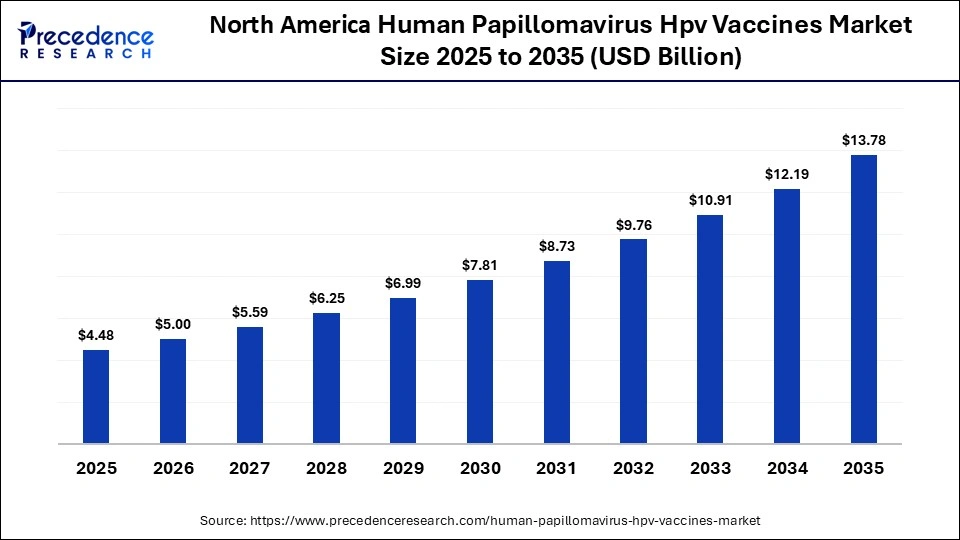
The North America human papillomavirus Hpv vaccines market size is estimated at USD 4.48 billion in 2025 and is projected to reach approximately USD 13.78 billion by 2035, with a 11.89% CAGR from 2026 to 2035.
Which Factors Govern the Human Papillomavirus Hpv Vaccines Market in North America?
North America held a majority revenue share of the market in 2025, due to its solid vaccination policies, strong public health programs, and coordinated public-private sector. The implementation of routine vaccination campaigns, school-based vaccination programmes, and ongoing screening initiatives supports young women receiving protective vaccines before the development of Hpv-induced cancers. In addition, there is a strong focus on providing adequate information about ways to protect against Hpv-related cancers through cancer prevention education, as well as having an integrated pathway to receive the Hpv vaccine as part of an overall adolescent preventive medical care system.
- In April 2025, Quest Diagnostics launched an FDA-cleared Hpv screening solution to introduce the self-collection option for patients. The company planned to roll out its solution at 2,000 Quest service centers to increase cervical cancer screening accessibility.
What is the Size of the U.S. Human Papillomavirus Hpv Vaccines Market?
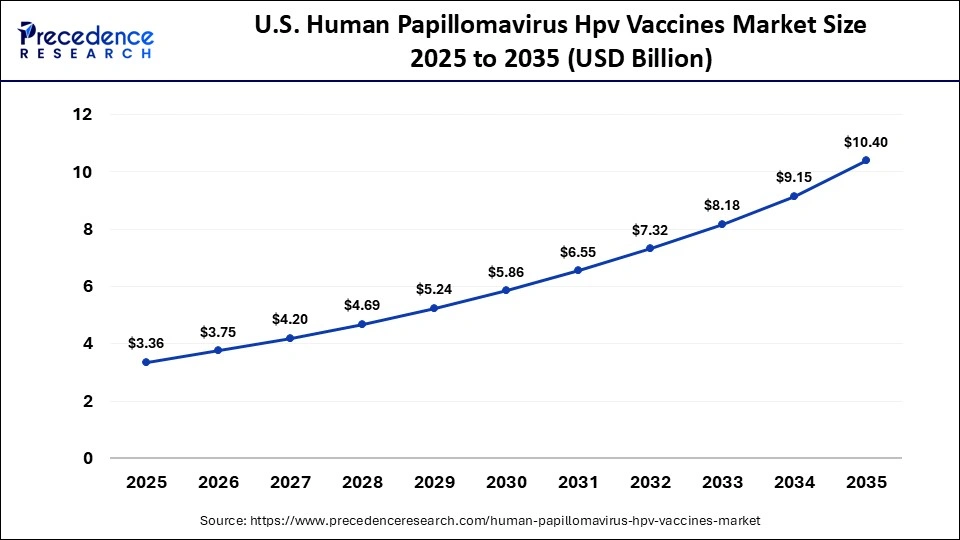
The U.S. human papillomavirus Hpv vaccines market size is calculated at USD 3.36 billion in 2025 and is expected to reach nearly USD 10.40 billion in 2035, accelerating at a strong CAGR of 11.96% between 2026 and 2035.
U.S. Human Papillomavirus Hpv Vaccines Market Trends
The U.S. plays a key role as the central player in the region, driven by its well-defined disease burden associated with Hpv and the considerable national emphasis being placed on proactive disease prevention. Annually, approximately 49,908 Hpv-induced cancer cases are diagnosed within the U.S., of which 27,081 are female, and 22,827 are male. This data highlights the significance of powerful advocacy for vaccination, broad educational campaigns, and continued implementation of Hpv vaccination as part of the national immunisation schedule.
How is Asia-Pacific Growing in the Human Papillomavirus Hpv Vaccines Market?
Asia-Pacific is expected to witness the fastest growth during the predicted timeframe, due to an increasing awareness of the importance of preventing cervical cancer, as well as a disparity in cervical cancer disease burdens across the various countries. In particular, many countries are enhancing their immunization frameworks and expanding their access to preventive healthcare, especially in densely populated and underserved communities.
These efforts include the implementation of screening initiatives and education programs, gradually incorporating Hpv vaccination into the larger set of public health activities within the region. Thus, these combined efforts will drive increased uptake of HPV vaccines and position the region as a primary growth factor for Hpv vaccines.
China Human Papillomavirus Hpv Vaccines Market Trends
China is significantly growing in the region, due to the gap between the prevalence of Hpv infection and the rates of vaccination coverage. The adjusted prevalence of Hpv infection is between 13.1% and 18.8% in China. In addition, the rate of vaccination among adolescents is approximately less than 3%, and the overall vaccination rate is less than 6%. Furthermore, the diverse geography of China has led to a variety of Hpv genotypes being present in different regions, creating a unique opportunity to create targeted vaccination strategies and focused promotional campaigns to increase efforts to reduce cervical cancer within the country.
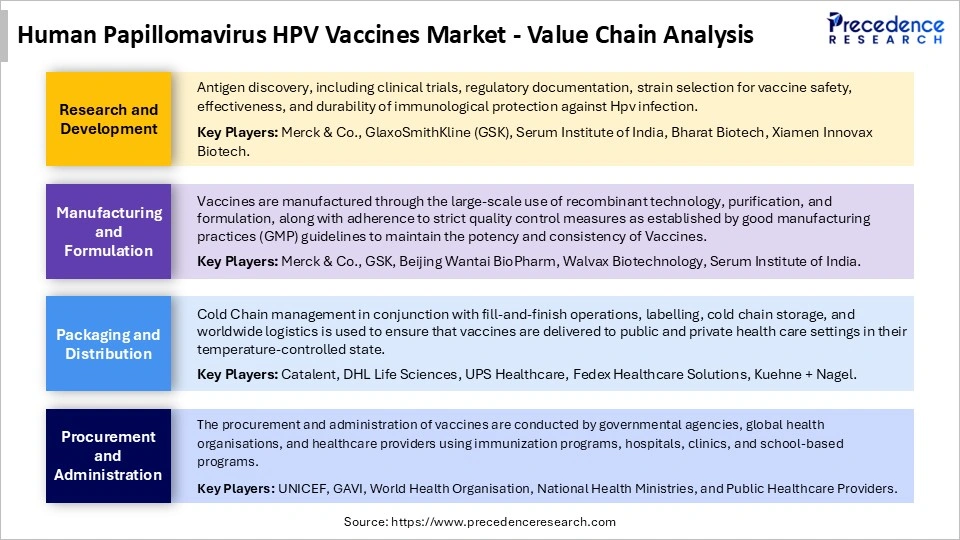
Human Papillomavirus Hpv Vaccines Market Value Chain Analysis
Who are the Major Players in the Global Human Papillomavirus Hpv Vaccines Market?
The major players in the human papillomavirus Hpv vaccines market include Sanofi, Bharat Biotech, GlaxoSmithKline plc., Serum Institute of India, Johnson & Johnson, Xenetic Biosciences, Inc., Novartis AG , AstraZeneca, Inovio Pharmaceuticals, Inc, and Merck & Co., Inc.
Recent Developments in the Human Papillomavirus Hpv Vaccines Market
- In December 2025, Tamil Nadu announced the launch of pilot-free Hpv vaccination in four high cervical cancer incidence districts, including Ariyalur, Perambalur, Tiruvannamalai, and Dharmapuri, targeting about 27,000 14-year-old girls in government-aided schools.(Source: https://www.thehindu.com)
- In November 2025, Angola begins its first national HPV vaccination campaign to immunize 2.2 million girls aged 9-12 to prevent cervical cancer, supported by WHO, UNICEF, Gavi, and partners. It planned to conduct a vaccination drive in two phases, of which the first phase focused on 1.3 million school-going girls.(Source: https://www.gavi.org)
- In October 2025, Ghana launched its first nationwide Hpv vaccine campaign to protect 2.4 million girls aged 9-14, offering free shots and integrating the vaccine into routine immunization to protect against cervical cancer. The campaign aims to ensure long-term and equitable protection for future generations.
(Source: https://www.gavi.org)
Segments Covered in the Report
By Type
- Tetravalent
- Nonavalent
- Bivalent
By Disease Indication
- Cervical Cancer
- Anal Cancer
- Vulvar & Vaginal Cancer
- Penile Cancer
- Oropharyngeal Cancer
- Others
By Industry Vertical
- Public and Private Alliances
- Government Entities
- Physicians
- Others
By Region
- North America
- Europe
- Asia-Pacific
- Latin America
- Middle East & Africa
[ad_2]