[ad_1]
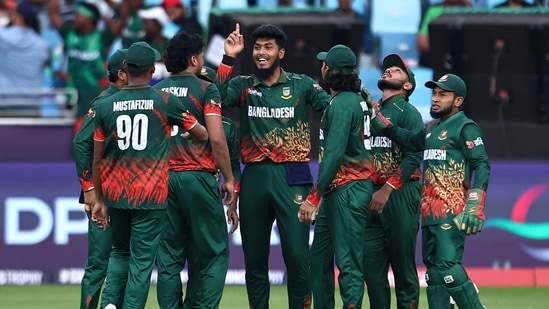
Bangladesh Cricket Board finance committee chairman Nazmul Islam has claimed the board will not take a financial hit even if Bangladesh pull out of the ICC T20 World Cup, insisting the players would be the ones to feel it immediately through lost match-day earnings.

Speaking on the fallout of a potential withdrawal, Nazmul’s remarks — quoted by Cricbuzz — come soon after he courted controversy by claiming former Bangladesh captain Tamim Iqbal was an “Indian agent”, a jibe that has kept the World Cup debate boiling beyond the cricket field.
“There will be no loss for the Bangladesh Cricket Board [if we don’t take part in the World Cup] as the loss will be for the players,” Nazmul said. “Up to 2027, our revenue will not be hampered because in the 2022 ICC financial meeting, this was already fixed. Future World Cups or future bilateral or international events may have relevance, for example whether teams will come to us under the FTP. Those are valid questions. But this World Cup does not affect that,” he said.
Nazmul’s central argument is that the board’s ICC income for the current cycle is already settled, so this tournament, by itself, does not change the BCB’s balance sheet. The money that disappears, he says, is the money that is earned only by playing.
“The players will lose because when they play, they receive a match fee for every match. If someone participates in a match, or becomes man of the match, or has some kind of special performance, then according to ICC rules and match regulations they get what is due to them. That money belongs exactly to the player. The board has no connection with that. Meaning the board does not gain or lose anything from this. Whether Bangladesh plays here or not, the board has no profit or loss from this, at least not for this World Cup,” he said.
While laying out the immediate numbers, Nazmul also pointed to possible downstream consequences in the longer run — future World Cups, bilateral cricket and the wider FTP ecosystem — but he stressed those would be separate questions from what happens if Bangladesh skip this event.
For now, his message is blunt: the board’s core revenue, in his view, stays protected; the players’ earnings, tied to participation and performance, do not. The only certainty, he suggests, is that the first bill would land in the dressing room.
[ad_2]