[ad_1]
Fireworks, bells, and watermelons – new year’s traditions across the globepublished at 10:30 GMT
 Image source, AFP via Getty Images
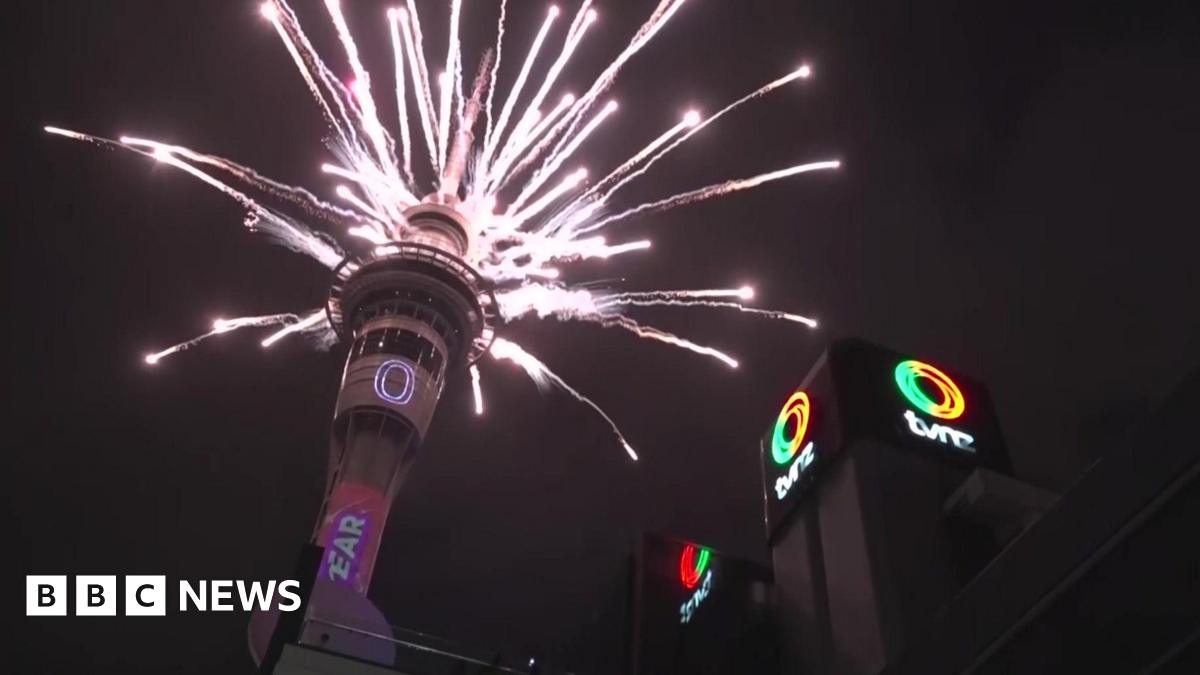
As we’ve been reporting, so far a few islands in the Pacific have started seeing in 2026 – and in around 30 minutes or so, New Zealand, Tonga and Samoa will be joining them too.
While we wait for celebrations there to get under way, here’s a look at how countries across the globe celebrate the new year.
Big displays
Fireworks are a pretty universal way to do so. Big displays take place across the world as midnight sets in, from Sydney Harbour in Australia to Copacabana Beach in Rio de Janeiro, Brazil.
Smashing plates
One of Denmark’s traditions is to smash plates on your friends’ doorsteps, which the Danish say will bring them good luck over the next 12 months.
In the US, people in New York count down to the Times Square ball drop – when a glittery ball moves down a flag pole, reaching the bottom as the clock strikes midnight.
Watermelons and grapes
Meanwhile, people in Vincennes, Indiana, are known for dropping watermelons on the ground.
Staying with the fruit theme, head to Spain and grapes will be your midnight snack of choice. It’s their tradition to eat one grape each time the clock strikes at midnight – so 12 grapes in quick succession – hoping for 12 lucky months in the year ahead.
Bell ringing (and ringing… and ringing)
Ringing bells is another tradition for some in Japan and South Korea. In Japan, bells are rung 108 times – making for a noisy start to the year.
Lots of legumes
Lentils symbolise tidings of good fortune in the new year for those in Brazil, so many there will eat plenty of them as part of their celebrations.
And some people celebrate the new year at a different time – in some cases because they use a different calendar.
[ad_2]