[ad_1]
Often music has a way of evoking a cultural memory vividly, even though the film that harbours it neither acknowledges nor perhaps understands its theme in the entirety.
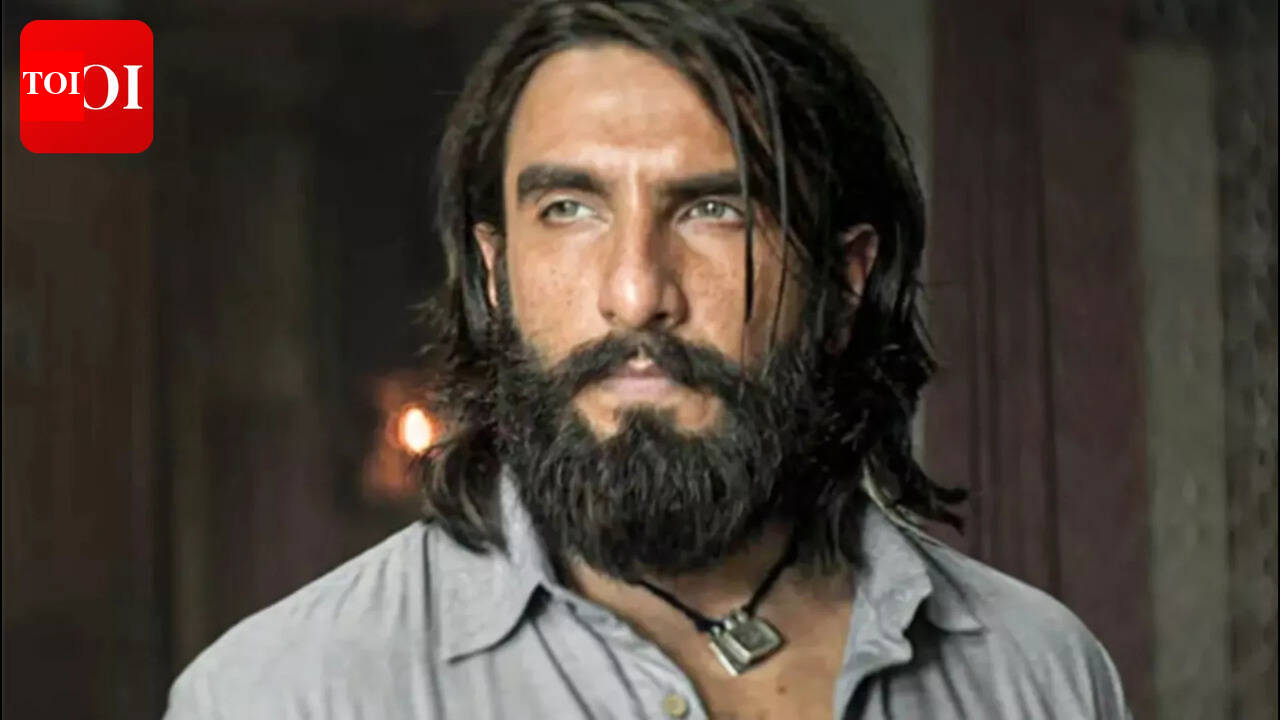
The irony is at the heart of director Aditya Dhar’s recent outing and Ranveer Singh and Akshaye Khanna starrer Dhurandhar, a spy thriller that borrows an age-old qawwali from Pakistan, even as it puts out the ideology that echoes with the political temper of the times.

Set in Lyari, a Karachi neighbourhood one associates with rich musical heritage and football, the film was released months after India-Pakistan tensions earlier this year in the aftermath of the Pahalgam attack. The film is about an Indian intelligence officer (Ranveer Singh) infiltrating the area once known for local gang wars and gun violence to uncover links between local crime lords and political power. He’s also placed it all among real-life incidents like the Kandahar hijack and 26/11 and merged the two narratives.
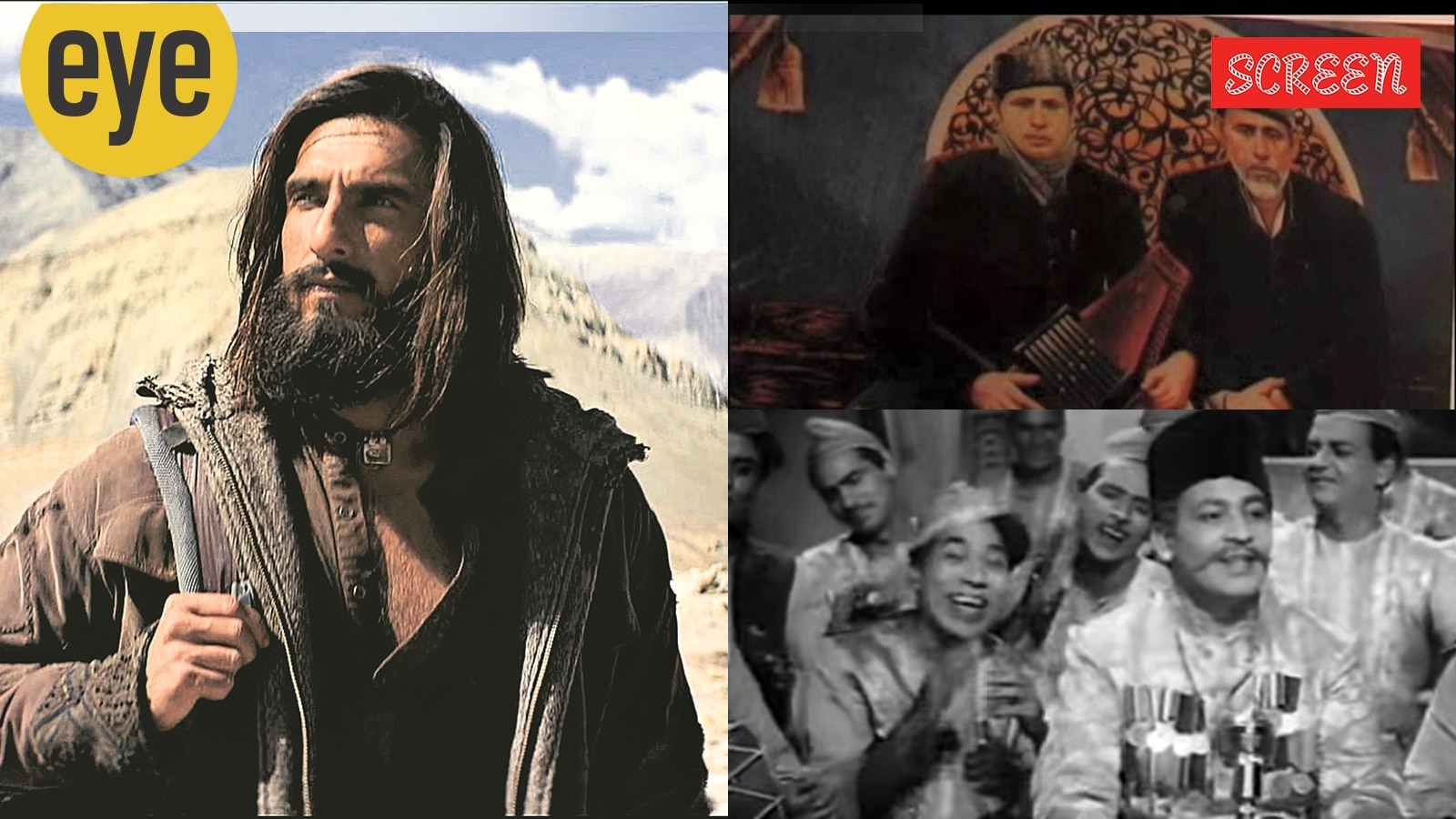
In merging fact and fiction, while Dhar has streamlined a world that surprisingly has not much complexity, adopting the polish and slickness of a highbrow thriller, a song and a secular philosophy has slipped through the cracks. The film has inherited an age-old qawwali and turned it into Ishq jalakar (Karvaan), which, according to Dhar, “captured the soul of Dhurandhar.” He collaborated with composer Shashwat Sachdev to present this contemporary track with a punchy beat that leans into Na toh karvaan ki talaash hai, na toh humsafar ki talaash hai – the famed qawwali by composer Roshan and lyricist Sahir Ludhianvi in the Madhubala and Bharat Bhushan starrer Barsaat ki Raat (1960), which remains a magnum opus in the history of Hindi film qawwali. “It’s like they say, ‘Never before this, never after this’,” said playback singer Sonu Nigam, describing the qawwali in the Netflix series, The Roshans.
But the concept of provenance, when stemming from shared cultures, rarely walks a straight line. One wonders if Dhar knew of the origins of the Barsaat ki Raat qawwali, which was actually born in Lahore, a two–hour plane ride from Karachi. The original qawwali was written by Sufi poet Ameer Bakhsh Sabri, who was born in Bulandshahr, moved to Lahore after Partition and wrote the lines: Na toh butkade ki talab mujhe/ Na haram ke dar ki talaash hai/ Jahan lut gaya hai sukoon-e-dil, usi rehguzar ki talaash hai (Neither do I desire the temple, nor do I seek the doors of the holy sanctuary (the mosque)/ I want the intoxication of belief itself).
The poem became quite popular and eventually found a home in Faisalabad (Lyallpur earlier), where it was composed by qawwal duo Ustad Fateh Ali and Ustad Mubarak Ali — Ustad Nusrat Fateh Ali Khan’s father and uncle — who sang it often. As the story goes, in the ’50s, the two visited India and performed the same qawwali at a get-together at Dev Anand’s home, where the mehfil with leading actors and producers went on till the wee hours of the morning. This is where R Chandra, producer of Barsaat ki Raat, was also present. The film was already in production and composer Khayyam had been signed on and was working on the music. The tale also finds a mention in Khayyam’s biography (Khayyam, The Man, The Music), Chandra asked Khayyam to adapt the song for the finale qawwali competition, but he refused to work with someone else’s composition. Roshan agreed, not knowing that this long 13-minute version of the composition will prop him up along contemporaries like Shankar-Jaikishen and Naushad among others. As he turned Na toh karvaan ki talaash hai into the epitome of the Hindi film qawwali — written by Ludhianvi — he also charmed the nation with the refrain Ye ishq ishq hai without sounding trite, despite the secular metaphors that followed.
While it remains an iconic piece, with numerous additions musically and lyrically, Barsaat ki Raat never acknowledged the original creators of the qawwali. Dhar has bought the official rights to use Na toh karvaan and credited Roshan and Ludhianvi. The music of Ishq jalakar serves the present in terms of popularity, besides reminding us of the beautiful 1960 version that came from across the border.
Story continues below this ad
But it also drags that memory, which the film is now unable to control. In all of this lies the deeper resonance of qawwali as a genre. Its syncretic space in the current context brings to the fore an interesting idea: Dhurandhar, which includes the lines Kabhi koi sarkar toh aayegi jisko desh ki chinta hogi (One day a government will come that worries about the country), and Yeh naya Hindustan hai, Yeh ghar mein ghusega bhi, aur marega bhi (This is a new Hindustan. This will enter homes too and kill too), ignores what a simple repurposed qawwali has managed to do: it has carried the actual history of a shared heritage with it.
Also Read – Dhurandhar pushes a bigoted vision, gaslighting the audience into accepting it as entertainment
In a film about terrorism, when a filmmaker chooses othering instead of nuance, it ignores the valuable lessons that the history and meaning of its own song are citing for him. The question is whether we are listening.
[ad_2]