[ad_1]
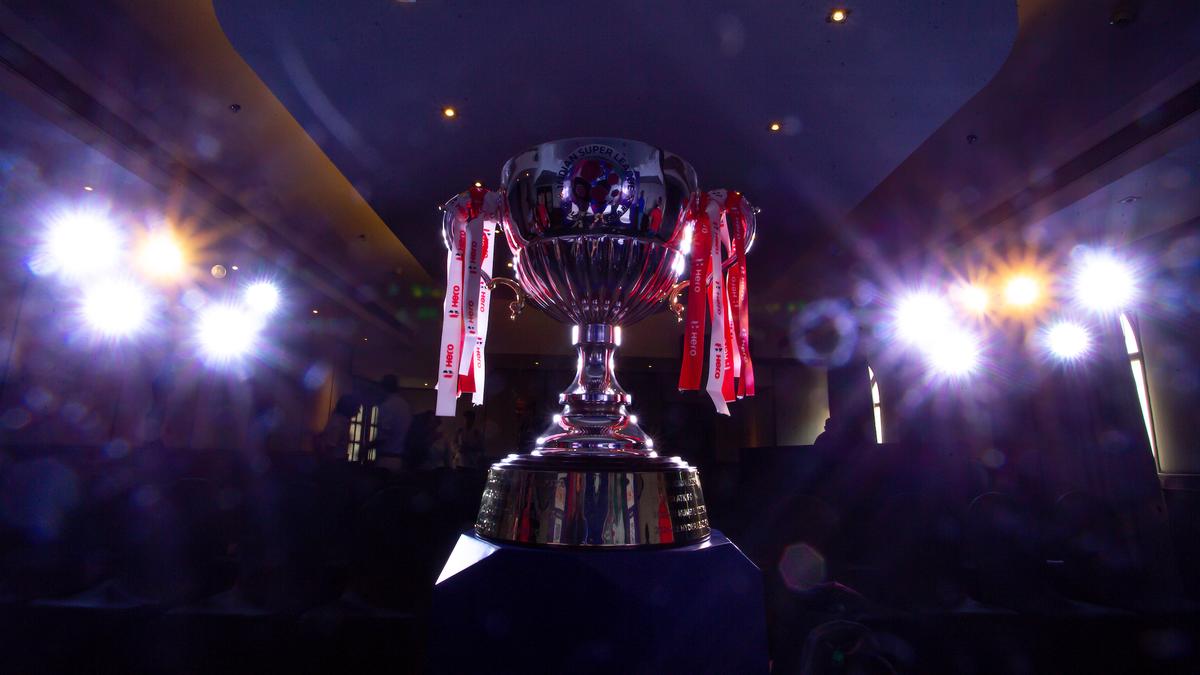
The All India Football Federation (AIFF) met with all the Indian Super League (ISL) clubs to find a solution to hosting the league, and laid out a long-term plan for the future of the league.
According to the new plan, the ISL will be ‘owned and operated’ by the AIFF — in accordance with the new constitution — for the next 20 seasons.
“The AIFF has put this proposal to the ISL Clubs, and the two guiding principles have been to ensure the league starts as soon as possible and to ensure that we are in line with the recently adopted Constitution as directed by the Supreme Court,” M. Satyanarayan, the Deputy Secretary General of the AIFF, told Sportstar.
The new league cycle — from 2026-27 — will run from June 1 to May 31 every year and will have promotion and relegation, abiding by the regulations of the Asian Football Confederation (AFC).
The first season of the ISL, under the new plan, will run with a ‘Central Operational Budget’ of Rs. 70 Cr. and each club will have to pay a ‘standard participation fee’ of Rs. 1 Cr. annually to the AIFF.
The Federation will keep 10% of the revenue share, while 30% will be reserved for a potential commercial partner.
A commercial partner will have to pay Rs. 12 Cr. to acquire four per cent of the stake in the revenue pool, in addition to its allotted 26%, as part of the League Membership Contribution. After every season, it will need to pay four% of the previous season’s net league revenue or Rs. 12 Cr., whichever is higher.
The ‘Central Operational Budget’ will cover all expenses, including the prize money, and any money saved will be redistributed among all stakeholders except the commercial partner.
“The meeting went on positively, and representatives of all 14 clubs were present. We have proposed our models to the clubs, and we hope to start the league by February 5,” Caetano Fernandes, the president of the Goa Football Association, who was one of the members of the Committee formed to find a league model, told Sportstar.
“The clubs have asked for a day or two for their deliberation, and we are optimistic that the league will begin very soon.”
WHAT WILL THE CLUBS GET?
Once the league breaks even, following a total revenue of Rs. 96 Cr., 60% of the revenue has been reserved for clubs.
Fifty per cent of the revenue will be equally distributed to all clubs, and the remaining 10% will be allocated to clubs that invest in an additional ‘revenue share’ of the central revenue pool and protect a portion of its investment even after its relegation.
Moreover, clubs which have had participation in the League for more than eight years will get up to 1% of fixed revenue share, while those whose licences have had participation for three to eight years will get 0.5% of fixed revenue share.
Newer clubs in the league, whose licences have had a participation of up to three years, will get up to 0.25% share of the fixed revenue.
WHAT ABOUT ISL 2025-26?
As mentioned above, the league is likely to start on February 5, but the format is yet to be finalised.
The AIFF had proposed two models to the clubs on December 24: the two-conference model — as seen in Major League Soccer in USA — in two centralised venues, or the Swiss format, in which teams would have both home and away games and would involve travelling.
Sources have told Sportstar that there are split opinions among the clubs, with several sides choosing against centralised venues as they feel that could prove to be unfavourable for cost-cutting, while another faction holds the opposite opinion.
The clubs are scheduled to have a meeting by December 28 to decide on this season’s details.
“If we start on February 5, we will be able to play about 190 matches. Accordingly, we will ask AFC to consider (the situation) because of a crisis, and allow the champion to compete in Champions League Two. FC Goa has already qualified as one of the clubs for Asia through the Super Cup,” an AIFF official told Sportstar.
WHAT NEXT?
The Federation is expecting a seal of approval from the clubs and will next discuss operational expenses, salary cap and long-term protection of investment in the league.
“Two more meetings have been scheduled on December 28 and December 29. The latter is a physical one, and hopefully, together with the stakeholders, we will have more clarity that helps to now shift the action to the football pitch as soon as possible,” Satyanaryan added.
“We will also need to get this ratified by the AGM of AIFF once we have agreed on the way forward.”
Published on Dec 26, 2025
[ad_2]